
Reviewed · SCUBA DIVING
3-Tank Scuba in Marine Reserve and Corridor for Certified Divers
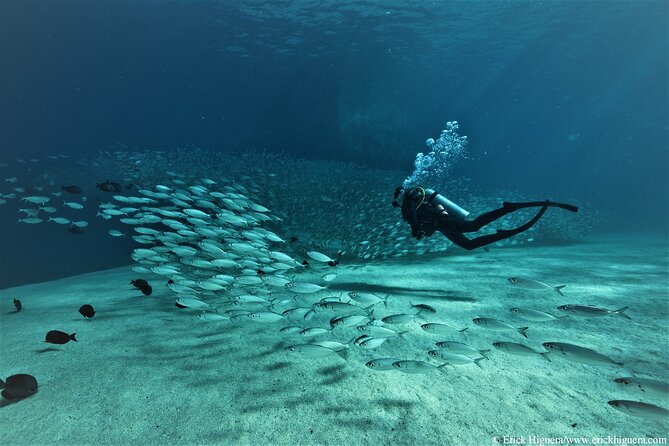
Cabo’s best underwater variety is packed into one six-hour morning here. You’ll visit the Marine Park and Corridor on the same three-tank outing, moving between different habitats instead of spending the day at one site. Sea lions, rays, eels, octopus, turtles, sharks, and even passing humpback whales are all possible sightings.
I like the small-group approach and the capable crew. Guides such as Polo, Angela, Costas, Brandon, Mercedes, and Baptiste have earned praise for calm briefings, careful gear handling, and sharp eyes for marine life. I also like the practical setup: the shop is near the marina, the walk to the boat is short, and lunch and water are included.
The main catch is cost clarity. The $210 price does not include the $40 gear-rental fee, and sea conditions can change the route, visibility, water temperature, and time spent at a site. This is a strong choice for certified participants with one free day, but not a guaranteed greatest-hits tour at every stop.
Key details before you book
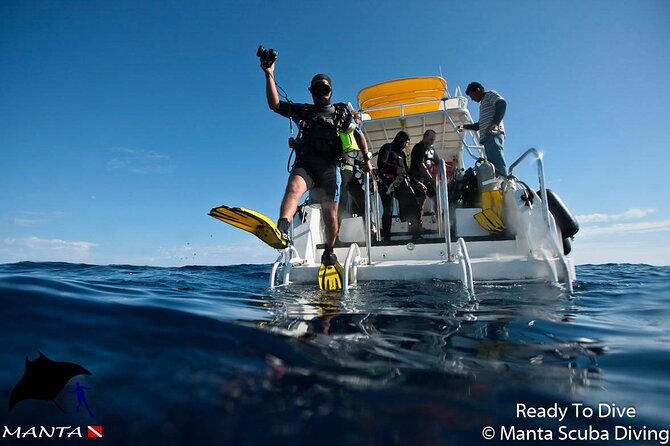
- Three tanks in about six hours: You get a full morning on the water, with three separate boat-based descents and surface time between them.
- Two underwater zones: The Cabo San Lucas Marine Park and the Corridor offer different settings, making this more varied than a single-area trip.
- Small-group guiding: The advertised maximum is six people, though the boat may carry several small groups with more than one guide.
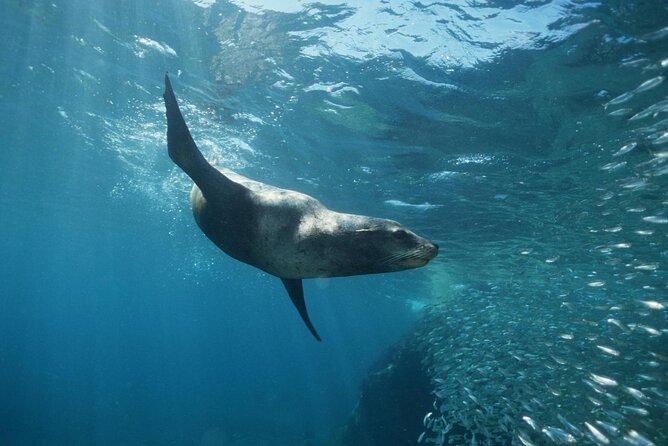
- Marine life can be excellent: Sea lions, eagle rays, stonefish, eels, octopus, sharks, turtles, and tropical fish have all been spotted.
- Gear rental costs extra: Bring your own equipment or budget another $40 at check-in.
- Early start, central meeting point: Meet at Manta Scuba Diving at 7:30 am, at Blvd. Paseo de la Marina 7D in the marina area.
Why three tanks make sense in Cabo
If you have only one day for underwater exploring around Los Cabos, this trip gives you more range than a standard two-tank morning. The first two descents take place in one part of the region, while the third can shift toward the Corridor or Land’s End area, depending on conditions and the captain’s plan.
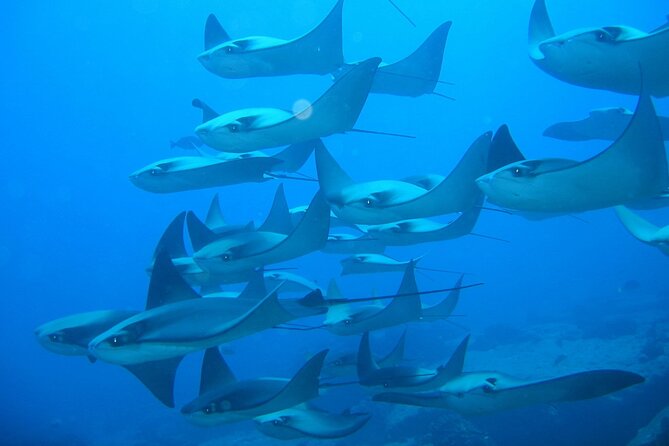
That variety matters. Cabo’s underwater world is not one uniform reef. Water movement, depth, visibility, temperature, current, and marine life can change from one site to the next. A sandy area may bring rays, while rocky formations offer hiding places for eels, octopus, puffer fish, and smaller reef fish. Sea lions and larger animals add another layer of excitement.
The extra tank also gives you a better chance of finding favorable conditions somewhere during the morning. It does not guarantee perfect visibility or a particular animal, but it gives the crew more room to work with than a shorter outing.
You should still expect a real physical commitment. You will carry or wear scuba equipment, climb in and out of a boat, and spend much of the morning exposed to sun, wind, and ocean movement. The operator recommends a moderate level of fitness, and that is a sensible standard.
More Scuba Diving in Cabo San Lucas
- 2-Tank Scuba Dive in Cabo San Lucas Reserve for Certified Divers
★ 5.0 · 263 reviews - Beginner Scuba Diving in Cabo San Lucas
★ 5.0 · 247 reviews - Private Dive Boat for Certified Divers – Cabo San Lucas
★ 5.0 · 210 reviews
Starting at Manta Scuba Diving at 7:30 am
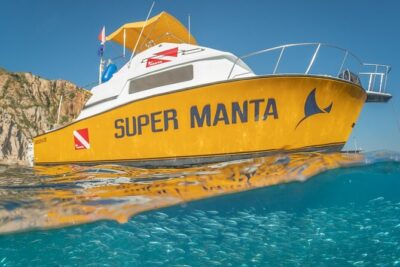
Check-in begins at Manta Scuba Diving, located at Blvd. Paseo de la Marina 7D in central Cabo San Lucas. The shop is close to the marina, and you can expect a short walk to the boat. The crew transports the heavier equipment, so you are not expected to haul your full kit through town.
Several guides may be working with the boat operation. Names that have been praised for friendly and attentive service include Polo, Angela, Costas, Brandon, Mercedes, Lois, and Baptiste. You cannot request a particular guide with certainty from the information provided, but the team includes staff who speak English, and an English-speaking guide can be selected when booking.
The operation is organized around separate groups. The advertised maximum is six people, although the boat itself may carry several small groups and multiple guides. That distinction is worth understanding. Your group may be small underwater, but the boat can feel moderately busy when more than one group is aboard.
Check-in is reported to be quick, and the crew helps with equipment, tank changes, masks, and weight adjustments. One practical point deserves attention: rental weights are carried on a belt rather than integrated into the buoyancy compensator. Some people find weight belts less comfortable, and saltier water plus a thick wetsuit may require extra weight.
First zone: Cabo San Lucas Marine Park
The local Marine Park is the natural starting point for seeing the underwater side of Cabo near the famous rock formations. Depending on conditions and the captain’s choice, sites can include Chileno, Neptune’s Finger, Whale’s Head, and Pelican Rock.
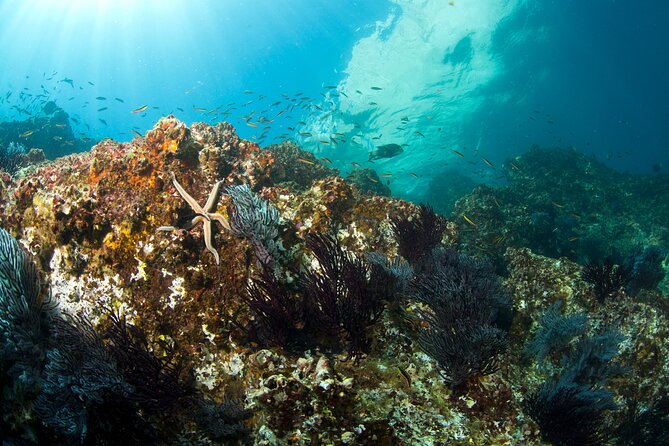
Pelican Rock has been especially rewarding for marine life. The site can offer rays, starfish, schools of fish, and sand falls, with the famous rock scenery overhead. It is also near a heavily visited part of the coast, so you may hear boat traffic above you. That noise is a minor tradeoff for reaching a site with plenty to see.
Neptune’s Finger can involve a canyon entrance and a change in water temperature at depth. One recorded outing found the water noticeably colder around 40 feet, even with a 7mm wetsuit. The canyon was not entered on that occasion because of site traffic and conditions, a reminder that a briefing is not a promise of a precise route.
Chileno and Whale’s Head can offer longer underwater time when conditions cooperate. One participant recorded nearly an hour at each of those first two sites, though your own bottom time will depend on air use, depth, current, and the group’s pace.
The guides are expected to choose the site based on safety and the group’s ability. That may mean giving up a planned canyon or changing the route when visibility drops or current rises. If you want a fixed sightseeing schedule, this flexibility may frustrate you. If you value safe decisions over checking off named sites, it is the right approach.
Second zone: The Corridor and Land’s End
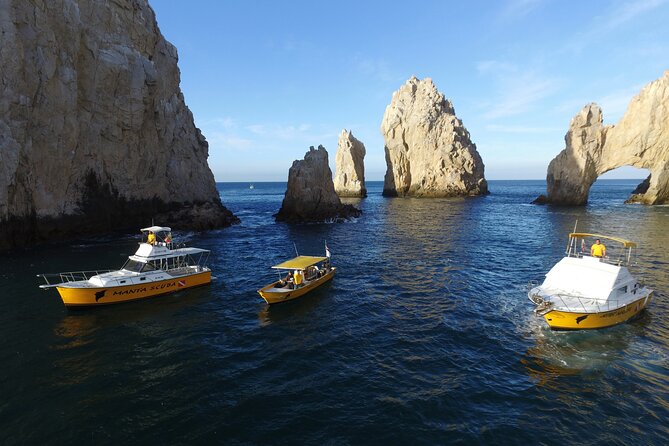
The Corridor stretches between Cabo San Lucas and San José del Cabo, offering a different setting from the local park. The point of this package is to include both areas in one morning, giving you a broader look at the coast rather than repeating similar sites close to the marina.
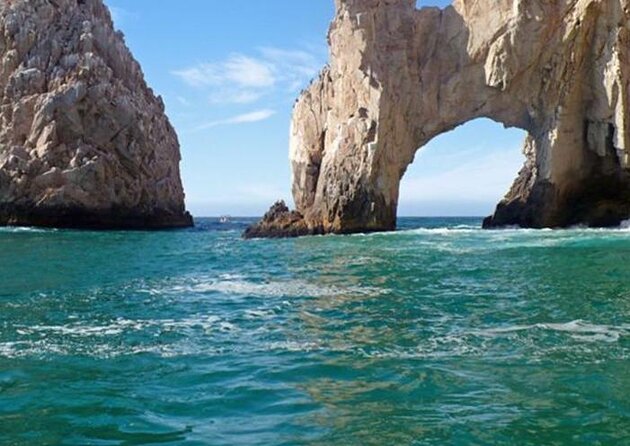
Land’s End, near the Arch of Cabo San Lucas, is a favorite target when conditions allow. Rocky formations create shelter for marine life, and the area has produced sightings of seals, sea lions, sharks, eels, turtles, diving birds, and rays. The Arch itself is the famous above-water landmark, but the underwater terrain around the rock formations is the real reason to pay attention below the surface.
The Corridor can bring current. At Whale’s Head, one outing found enough movement in the water to keep the group from getting very close to the coral. That does not make the site a failure, but it changes the experience. You may spend more time moving with the water and less time hovering over one formation.
You might also see something unusual between descents. Humpback whales have been spotted breaching from the boat, and one group detoured briefly to watch them. Such moments are not part of the guaranteed itinerary, but they show why the boat ride can be more than simple transport.
A completely different kind of day out, same trip:
- Cabo Beach Camel Ride, Mexican Buffet and Tequila Tasting
★ 5.0 · 8,815 reviews - 4×4 ATV Adventure with Tequila Tasting and Mexican Buffet Lunch
★ 5.0 · 5,177 reviews - Outdoor Ziplining and UTV Adventure from Los Cabos
★ 5.0 · 4,181 reviews - Los Cabos Luxury Sailing, Snorkel and Lunch Cruise
★ 5.0 · 3,515 reviews
What you might see below the surface
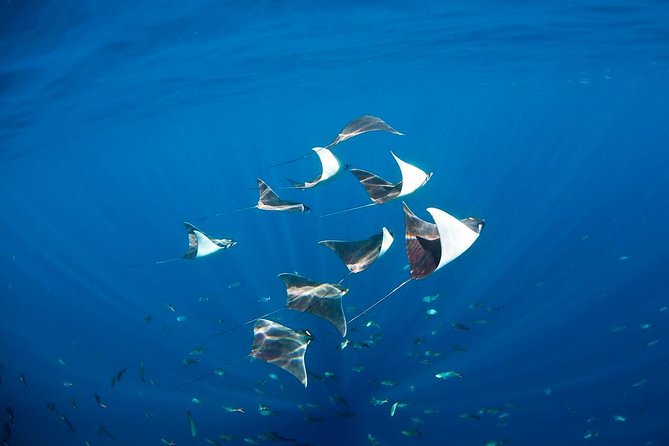
Cabo offers a good mix of large animals and smaller, easy-to-miss life. Sea lions are among the most memorable possibilities, especially when they approach or move around the rocky areas. Eagle rays and other rays may glide over sand, while starfish and schools of fish add color and motion to slower sections.
You might find puffer fish, needle fish, stonefish, eels, octopus, tropical fish, and small sharks tucked into cracks. Guides such as Angela and Baptiste have been praised for spotting creatures that are easy to miss, including a baby shark in a rock crevice.
Visibility is not guaranteed. Wind can stir the water, and one outing encountered murky conditions. Seasonal changes, current, and site choice all affect what you see. The best attitude is to value the variety of habitats rather than judge the day only by water clarity.
Water temperature can also vary by site and depth. One outing reported warm water around 85 degrees, while another found a sharp drop in temperature at depth. Pack or rent exposure protection suited to your certification, experience, and the conditions expected on the day.
Boat comfort, food, and the three-tank rhythm
The boats are described as spacious enough for equipment setup between descents. The crew changes tanks and helps prepare masks and equipment, which makes the surface interval easier, especially if you are traveling with rented gear.
You receive bottled water and sandwiches, with some outings also offering fresh local burritos. The food is useful rather than fancy, but that is exactly what you want after two hours of physical effort. Eat enough to stay comfortable, and remember that the morning may include sun, motion, and a rocking boat.
A three-tank schedule can be tiring. People booked for only two tanks may remain on the boat while the third group is underwater, so the boat may have passengers waiting during the final descent. If you know you are prone to seasickness, think carefully about how you handle a moving boat during surface intervals.
The crew’s practical support is one of the strongest parts of the experience. Guides have helped switch tanks, adjust weights, rinse equipment, and assist people getting in and out of the boat. That kind of attention saves energy and lets you focus on the underwater experience.
Price, equipment, and real value
The base price is $210 per person. Add $40 if you need the operator’s rental equipment. That puts the total at $250 before any other personal expenses, so compare the full cost rather than the advertised starting price.
For a certified participant, the value comes from packing three boat-based descents and two broad coastal zones into one morning. You also receive a professional guide, tanks, weights, water, taxes, and sandwiches. If you bring your own equipment, the price is easier to assess because the extra rental charge does not apply.
The equipment is generally described as being in good condition, but the weight-belt setup may not suit everyone. If you prefer integrated weights, ask about the configuration before booking. You may also need to adjust your weighting after the first descent because Cabo’s saltwater and your exposure suit can affect buoyancy.
This is not the cheapest way to spend a morning in Cabo, but it can be good value if your schedule allows only one underwater day. A two-tank trip may cost less, yet it gives you less room to sample both areas. The third tank is the main reason to choose this package.
Conditions, safety, and who should choose it
You need proof of scuba certification. The minimum age is 10, but age alone does not determine suitability. You should be comfortable with boat-based scuba, moderate physical effort, equipment handling, and changing ocean conditions.
Do not drink alcohol for at least 12 hours before the activity. Arrive rested and ready for an early start. The tour begins at 7:30 am and returns to the same meeting point after roughly six hours.
Sea conditions can lead to route changes, reduced visibility, stronger current, or a canceled outing. In one case, poor weather prevented the trip from operating, and the customer was directed to seek a full refund. This is a useful reminder to avoid scheduling an important same-day flight or tightly timed activity afterward.
The cancellation policy allows a full refund when you cancel at least 24 hours before the start time. Cancellations inside 24 hours are not refunded, and changes during that period are not accepted.
Should you book this Cabo underwater trip?
Book it if you are certified, have one available morning, and want both the Marine Park and Corridor rather than three similar sites. It suits confident participants who value small guided groups, help with equipment, and the chance to see animals such as sea lions, rays, eels, and sharks.
Think twice if you dislike weight belts, motion on a boat, variable visibility, or an itinerary that can change with the sea. Also include the $40 equipment charge in your budget if you are traveling without your own kit.
For the best chance of enjoying it, arrive ready for a full morning, bring realistic expectations about wildlife, and treat the named sites as possibilities rather than guarantees. With that mindset, this is a practical way to see a wide slice of Cabo’s underwater world in a single day.
FAQ
Where does the activity start?
It starts at Manta Scuba Diving, Blvd. Paseo de la Marina 7D, Centro, Marina, 23450 Cabo San Lucas, B.C.S., Mexico.
What time should I arrive?
The activity starts at 7:30 am. Your booking confirmation will provide the details for check-in.
How long does the experience last?
The outing lasts approximately six hours and returns to the original meeting point.
How many descents are included?
The package includes three boat-based descents.
Which areas does the trip visit?
It combines the Cabo San Lucas Marine Park with the Corridor area. Possible named sites include Land’s End, Pelican Rock, Whale’s Head, Chileno, and Neptune’s Finger.
Do I need scuba certification?
Yes. You must provide evidence of scuba certification to participate.
Is equipment rental included?
No. The listed price excludes a $40 equipment-rental fee, payable when you check in.
What is included in the price?
The price includes a professional guide, three boat-based descents, tanks, weights, bottled water, local taxes, and sandwiches.
Can I cancel for a refund?
You can receive a full refund if you cancel at least 24 hours before the scheduled start time. Cancellations or changes made within 24 hours are not accepted for a refund.
Just added around Cabo San Lucas
- All-Inclusive Catamaran Tour | Beaches & Sea Lions from Los Cabos★ 4.5 · 37 reviews
- Snorkel Privately in Cabo San Lucas★ 5.0 · 203 reviews
- Los Cabos Yacht Adventure – Arch, Snorkel, Lunch, Drinks 1-18ppl★ 5.0 · 164 reviews
- Snorkel and arch tour in los cabos★ 5.0 · 178 reviews
- Pura Vida Yacht 42 FT with all inclusive service in Cabo★ 5.0 · 31 reviews
- Whale Watching Experience in Cabo San Lucas★ 5.0 · 41 reviews
- Luxury Sailing catamaran charter in Cabo San Lucas all inclusive★ 5.0 · 67 reviews
- Private Yacht Cruise 4 Hour- Snorkeling & Paddle Boarding★ 5.0 · 74 reviews
Scuba Diving, compared.
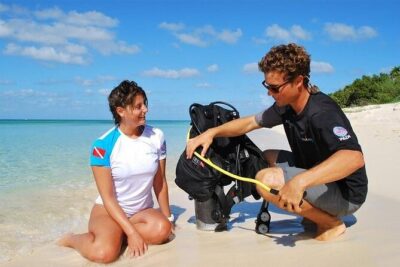
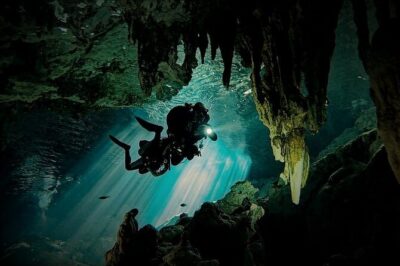
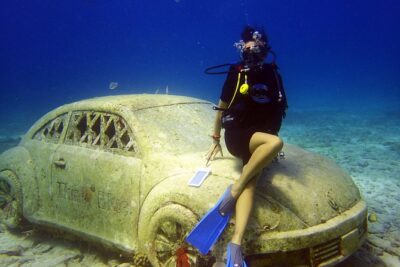
Diving in the Mexican Caribbean for Beginners | 2 Tanks 2 Dives | All Inclusive
Read our review →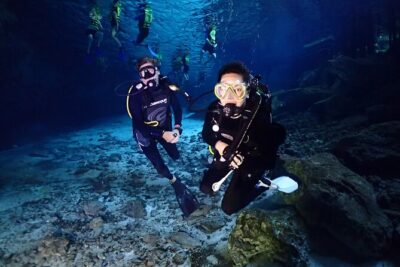
2-Tank Scuba Dive in Cabo San Lucas Reserve for Certified Divers
Read our review →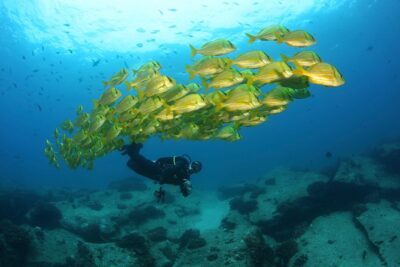
Discover Scuba Diving & Beach Club with Transportation In Riviera Maya
Read our review →
Two Tanks Scuba Diving for Beginners in Cancun
Read our review →Browse the lists this tour appears in