
Reviewed · CHICHéN ITZá TOURS
Chichen Itza: Self-Guided Tour with Audio Narration & Map
Chichén Itzá is easier to appreciate when you know what you are looking at, and this GPS-triggered audio tour gives you that context without tying you to a group. As you walk, stories begin near key monuments, with text and images available in the app as well.
I like the freedom to pause under the shade, replay a section, or wander off for photos and souvenirs before returning to the route. I also like the price: at $9.99, it is a sensible alternative to a private guide, especially for couples who can share earbuds. The main catch is that you must download and test the app before reaching the ruins, and one setup problem or a drained phone battery can spoil the plan.
Key points to know before you go
- Offline GPS narration: Download the tour on strong Wi-Fi or cellular service, then use it inside Chichén Itzá without data roaming.
- More than 37 audio stops: The route covers El Castillo, the Great Ball Court, El Caracol, the Temple of the Warriors, Las Monjas, and smaller structures.
- About two hours of walking: The route covers at least 1.5 miles and may run beyond two miles if you follow every stop and side path.
- English only: The audio, app, and instructions are offered in English.
- Admission is separate: Your $9.99 purchase pays for the audio experience, not entry to the archaeological zone.
- Private and flexible: No guide meets you. Start, pause, repeat, or skip sections at your own pace, with lifetime access after downloading.
What this Chichén Itzá audio tour actually gives you
This is not an entry ticket, a transport service, or a live guided walk. It is a phone-based tour from Walk with Action that uses GPS to play narration as you approach each point. You begin at the Chichén Itzá meeting point, open the separate Action’s Tour Guide app, and follow the recommended route.
The tour includes audio stories, written information, photographs, and an offline map. That mix matters at Chichén Itzá because signs around the site do not always explain enough about the buildings, their purpose, or the details carved into them.
The narration is designed for independent exploring. You are not expected to keep up with a guide or gather around one monument with a crowd. You can listen in the shade, stop for pictures, or repeat a section before moving on.
The full walk is advertised at roughly one to two hours, while the broader experience can take two to three hours. Expect plenty of walking. The route descriptions refer to more than 1.5 miles, and another instruction describes the full route as over two miles with more than 37 stories. The exact distance depends on how directly you follow the route and how many side trips you make.
More Ancient Ruins Tours in Chichén Itzá:
- Chichen Itza, Cenote, and Valladolid Tour
★ 5.0 · 24,293 reviews - Chichen Itza, Cenote & Valladolid Tour with Tequila and Lunch
★ 4.5 · 15,789 reviews - Cancun: Chichen Itza, Cenote & Valladolid Tour with Lunch
★ 4.6 · 6,722 reviews
Download the app before entering the ruins
The most important practical advice is simple: set up the tour before you arrive. After booking, you receive an email and text with instructions and a password. Search for audio tour in your messages if the instructions are not immediately visible.
You then download the separate Action’s Tour Guide app and enter the password. Do this while you have strong Wi-Fi or cellular service. Once the tour is installed, it uses GPS rather than mobile data, so you do not need data roaming inside the archaeological zone.
Before leaving your hotel or rental, open the app and make sure the tour loads. A small number of users have had trouble with the code or app access. One useful fix is to close the app completely and reopen it if the password appears not to register.
Bring headphones or earbuds. The automatic audio works best when you can hear the narration without holding your phone up at every stop. A portable charger is also a good idea. The route can take two hours or more, and one phone battery failure means losing your map and narration.
The app is recommended for an iPhone running iOS 15 or later, an Android device running version 9 or later, or an iPad or tablet with GPS and cellular capability. You do not need to keep cellular service active once the tour has downloaded, but the device must have GPS.
Stop 1: The handicraft market and finding your start
The route begins around the handicraft market, which provides an easy point of reference before you enter the main circuit. This is also where you get your first broad introduction to the Maya world and the long story behind the ruins.
Do not rush this opening. You need to match your position with the first story point so the route and audio line up. Once you are in the right place, the GPS should begin the narration automatically.
The market is also a reminder that Chichén Itzá is a major destination, not an isolated ruin. You may encounter sellers and souvenir stops near the entrance area, so the app’s recommended route helps you move from the modern arrival point into the ancient city.
Stop 2: Orientation with local context
The second point introduces the Maya civilization and its place among the major societies of Mesoamerica. This short stop works as an orientation before the monuments become larger and more complicated.
The narration is brief at several early points, which is useful if you want a clear overview without sitting through a long lecture. If you prefer detailed academic discussion, you may find the audio lighter than a private specialist guide.
A completely different kind of day out, same trip:
- Early morning Chichen Itza Tour: Cenote and Tequila Tasting
★ 5.0 · 6,657 reviews - Chichen Itza Early Access All Inclusive: Hotel Pick up & All Fees
★ 4.5 · 4,123 reviews - Chichen Itza Gastronomic, Valladolid and Cenote Extremo
★ 5.0 · 2,558 reviews - Chichen Itza, Cenote and Valladolid Small Group Day Trip
★ 5.0 · 2,104 reviews
Stop 3: El Castillo, the monument everyone comes to see
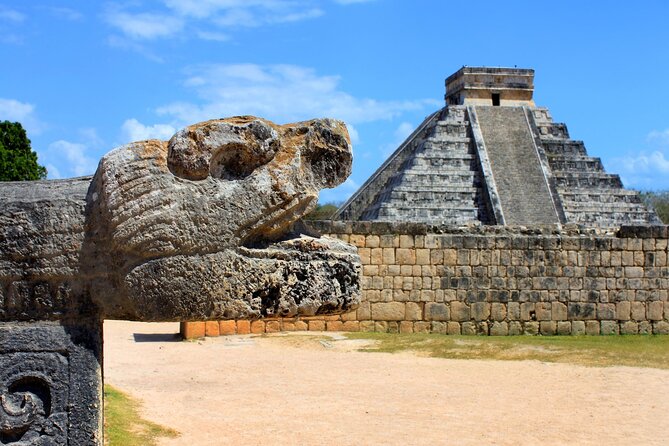
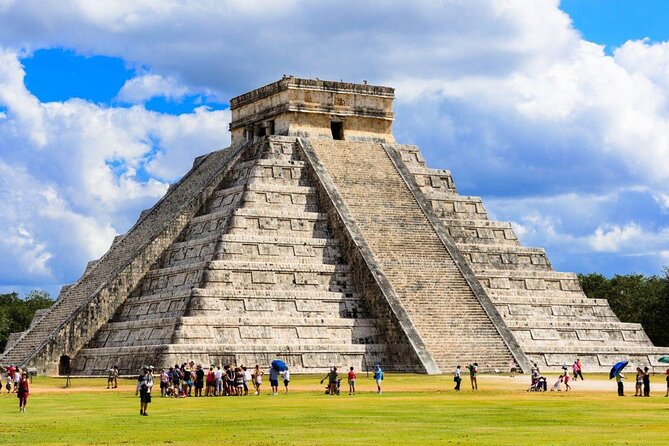
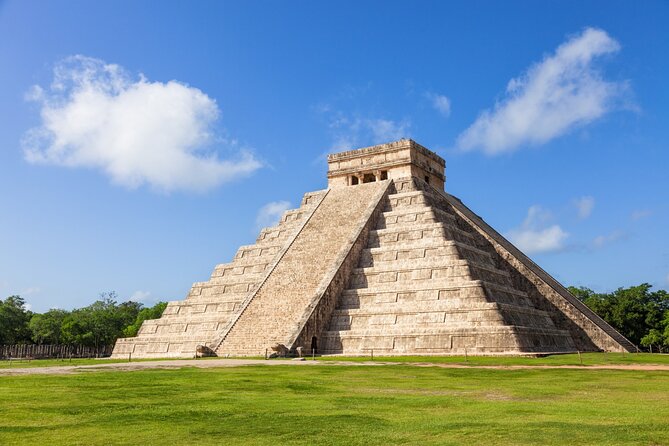
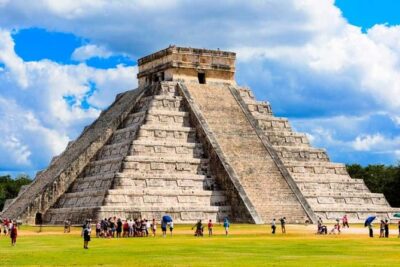
El Castillo, also called the Pyramid of Kukulkan, is the visual center of Chichén Itzá. The pyramid was associated with Kukulkan, the feathered serpent deity, and its strong geometry gives you an immediate sense of the city’s ceremonial power.
The audio helps you look beyond the pyramid’s size. You learn why the structure matters and how its design reflects Maya and central Mexican influences. The route allows about ten minutes here, but you may want longer for photographs and for simply taking in the scale.
You cannot climb El Castillo. The audio tour is particularly useful because it turns a viewing stop into an explanation stop. Instead of seeing only a famous pyramid, you get a starting point for understanding how religion, architecture, and astronomy shaped the site.
Stops 4 through 6: The ball court, skull rack, and ceremonial platforms
The Gran Juego de Pelota is one of the most important stops after El Castillo. It is far larger and more imposing than a modern sports field, with carved reliefs running along the walls. Look closely at the scenes of ball players as the narration explains how the court connected sport, ceremony, and Maya society.
Next comes the Tzompantli, or skull rack. Its carvings show warriors, human heads, skulls, snakes, and eagles. This is a stark stop, and the audio gives you a way to understand the imagery without treating it as mere decoration.
The Eagles and Jaguars Platform is flatter and less immediately dramatic. It appears to have served as a public stage for ritual, dance, or speeches rather than supporting a temple. This is a good example of why a route with narration helps. Smaller platforms can be easy to overlook when the major pyramids are competing for your attention.
These early stops are close enough to make the route feel orderly, but you should still watch your footing and keep the phone accessible. GPS activation can begin slightly before you reach a monument, depending on your position. If that happens, move closer or pause the story and restart it manually.
Stops 7 and 12: El Caracol, the circular observatory
El Caracol is one of the site’s most distinctive buildings. The round upper structure is associated with astronomical observation, and the narration explains how the Maya watched the sky and tracked the movement of planets.
The route lists El Caracol twice. That may reflect two narration points or two approaches to the same building rather than two separate observatories. Do not worry if the map appears to return you to the same structure. Use the second explanation as a chance to hear the information again or move on if you have already understood the main point.
This is one of the places where the audio format works especially well. The building’s shape is unusual, but the reason for that shape is not obvious from the outside. The app gives you a way to connect the structure with the Maya interest in astronomy and timekeeping.
Stop 8: Seeing Chichén Itzá as a whole
The longer central narration places the city in its wider setting. Chichén Itzá developed over many centuries, and different peoples left their mark on its architecture and art. Maya construction methods blend with elements associated with central Mexico, creating the Maya-Toltec character for which the site is known.
This is the point where the route shifts from isolated monuments to a city-wide explanation. You hear how buildings such as El Castillo, the Temple of the Warriors, and El Caracol fit into the larger ceremonial center.
The longer one-hour listing for this stop should not be read as a single hour of audio. It is better understood as the main site portion of the route, including time to walk, look, pause, and visit nearby structures. The entire circuit is still generally described as taking one to two hours, or two to three hours if you explore slowly.
Stop 9: The Temple of the Warriors
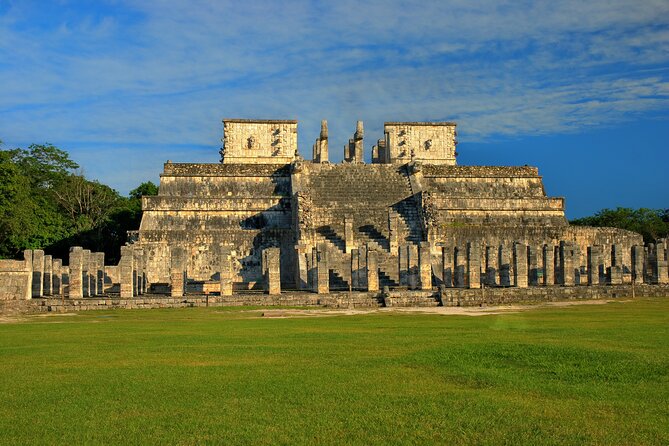
The Temple of the Warriors is a broad, tiered structure with a smaller temple at the top and a forest of carved columns in front. The columns depict Toltec-style warriors and help show how different artistic influences appear across Chichén Itzá.
This stop rewards patience. At first, the building can look like a mass of stone. The audio directs your attention to the tiers, the columns, and the carved figures, giving you details to seek out while you walk.
You will not get the give-and-take of a live guide who can answer a question on the spot. In return, you can stop the narration while taking photographs and replay the explanation as often as you like.
Stops 10 through 13: Smaller buildings and repeated names
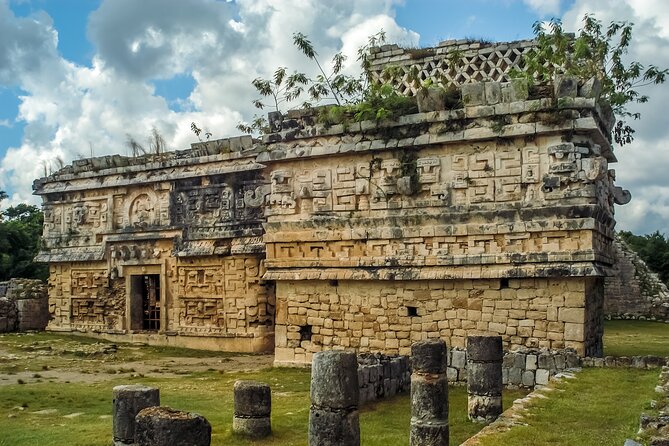
The Red House, or House of Little Holes, is named for the lattice-like detail near the top of the building. Its Maya name is Chichanchob, which may refer to those small openings. This is a short stop, but it shows how a building’s modern name can come from a visual feature rather than a complete understanding of its original use.
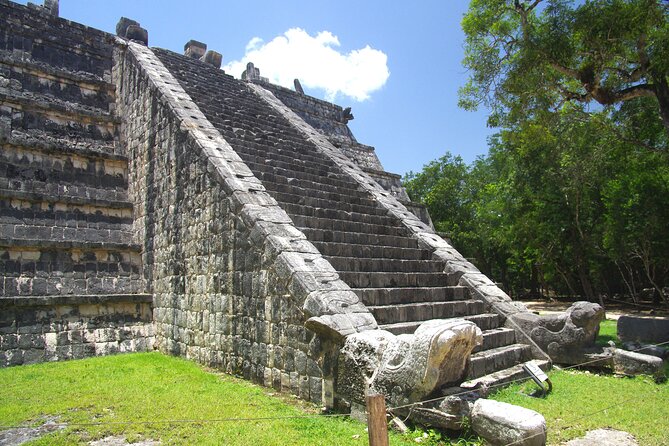
The Ossuary, also known as El Osario or the High Priest’s Grave, is another pyramid with a complicated story. Archaeologists found human remains in chambers beneath it, including seven tombs thought to belong to members of Maya high society. The two names in the route refer to the same general monument, so the repeated entries should not surprise you.
The Ossuary is less famous than El Castillo, yet it adds important context about burial practices and social rank. It also gives you another chance to see how the site’s buildings served more than one purpose: ceremonial, political, astronomical, and funerary.
Stops 14 and 15: Las Monjas and La Iglesia
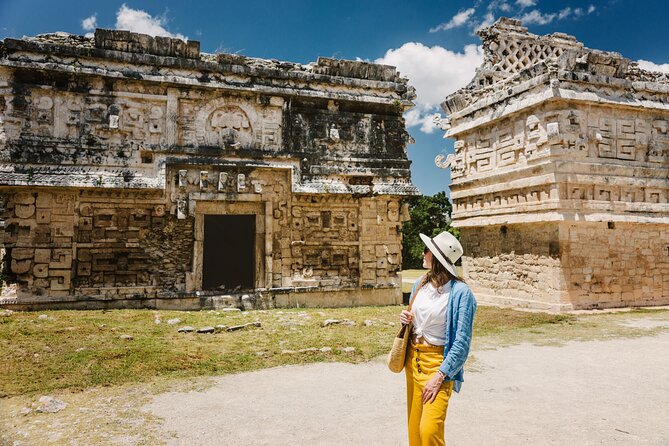
Las Monjas, or the Nunnery, is one of the largest and most important buildings in the southern part of the site. Its walls contain many inscriptions, including references to a ruler named Kakupakal.
This stop is especially useful for anyone interested in written records. The carved texts are easy to miss when you are focused on the building’s shape, and the narration helps explain why the structure matters beyond its name.
La Iglesia is among the most photographed buildings at Chichén Itzá. Its exterior is covered with decorative details, including masks of Chac on the upper levels. Look for the smaller animal figures among the masks: an armadillo, crab, snail, and tortoise.
The final stops reward close looking more than quick sightseeing. The audio gives you a reason to examine the walls and decoration, not simply check another building off your list.
How the GPS route works in real use
The app is meant to be hands-free. As you approach a story point, the audio should start automatically. You can also open a stop manually if you prefer to follow a different route.
The GPS is generally helpful, but it is not a museum-quality indoor navigation system. Some points may trigger slightly early, and the map can be a little off. I would treat the route as a useful guide rather than an exact boundary line.
If you wander away for photographs, refreshments, or souvenirs, the app can help you find your way back. You can pause the tour, take a break, and return later. The lifetime access also means you can replay the audio at home or use it again on another visit.
That flexibility is a real advantage at a site where heat and crowds can affect your pace. You can listen from the shade rather than standing beside the monument, then walk over when you are ready to look.
Is $9.99 good value?
The $9.99 price is attractive because it gives you a structured route and historical commentary for less than a private guide. It is particularly useful for two people sharing wireless headphones, which can reduce the cost per person even further.
You still pay the separate admission fee for Chichén Itzá. The audio tour does not include entry, reservations, attraction passes, transport, or a guide waiting at the gate. Consider the total cost before booking, especially if your admission price is already high.
The value depends on what you want. If you only need a map and a few facts, free signs or online reading may be enough. If you want narration tied to your location, a planned circuit, images, and the freedom to stop whenever you like, the small extra fee makes sense.
The content is fairly concise. Most people will appreciate that because the site is hot and the walk is long. If you want a detailed discussion of Maya politics, language, religion, and the reasons the city changed over time, a live guide or a serious history book will offer more depth.
Who should book this tour?
I would choose this for independent visitors, couples on a budget, families who dislike fixed group schedules, and anyone who wants to avoid standing in a tight cluster around a guide. It also suits people who like to read as well as listen.
It may not suit you if you do not want to use your phone, if you need narration in a language other than English, or if you cannot download apps reliably before arriving. A private guide remains the better choice if you want questions answered as they arise or want a highly detailed interpretation of Maya culture.
The most important preparation is technical, not historical. Download the app in advance, enter the password, test the first story, charge your phone, and bring headphones. Once that is done, the tour gives you a practical way to make sense of a large and sometimes confusing archaeological site.
You can cancel for a full refund up to 24 hours before the scheduled start time. Cancellations or changes made inside that window are not refundable.
Should you book it?
Book it if you want a low-cost, flexible introduction to Chichén Itzá and are comfortable managing the app yourself. The automatic GPS narration, offline access, and recommended route cover the major monuments while leaving you free to pause, repeat, or wander.
Skip it if you expect a deeply detailed lecture, a live expert, or help with entry to the site. For most independent visitors, though, $9.99 is a fair price for turning a walk among impressive stones into a more understandable visit.
FAQ
Is admission to Chichén Itzá included?
No. The $9.99 price covers the self-guided audio tour only. You must purchase your archaeological-site admission separately.
How long does the tour take?
The audio route generally takes about one to two hours. Plan on two to three hours if you walk slowly, stop for photographs, take breaks, or explore beyond the main audio points.
Does the tour work without mobile data?
Yes. You must download it while connected to strong Wi-Fi or cellular service, but it uses GPS offline after installation. Data roaming is not required inside the site.
What language is available?
The tour is offered in English.
Does a guide meet me at the entrance?
No. This is a self-guided activity. You go to the starting point, open the Action’s Tour Guide app, and follow the route and audio prompts yourself.
What device do I need?
The recommended devices are an iPhone with iOS 15 or later, an Android device running version 9 or later, or an iPad or tablet with GPS and cellular capability.
Do I need headphones?
Headphones or earbuds are recommended for the best experience. They let you hear the narration clearly while walking and keep your hands free.
Can I pause or repeat the audio?
Yes. You can start, pause, replay, skip, or return to sections as you explore. You can also take breaks or make side trips before returning to the route.
Can I use the tour again later?
Yes. The tour information provides lifetime access with no expiry, so you can use it on another visit or replay the audio after leaving the site.
Just added around Chichén Itzá
- Mayan Experience in Chichen Itza★ 5.0 · 53 reviews
- Private Guide Service in the Archaeological Zone of Chichen Itza★ 5.0 · 151 reviews
- Chichen Itza Guided Group Walking Tour – Last minute booking★ 5.0 · 32 reviews
- Private Tour in Chichen Itza Official History Guide★ 5.0 · 36 reviews
- Chichen Itza : Walking Tour with Expert Guide and Skip-the-Line Access!★ 5.0 · 30 reviews
- Full Day Tour to Visit Chichen Itza Saamal Cenote and Valladolid★ 4.0 · 77 reviews
- Chichen Itza Ticket with optional Guide★ 3.0 · 91 reviews
- Chichen Itza, Cenote & Valladolid Tour with Lunch★ 4.5 · 111 reviews
Chichén Itzá Tours, compared.
Chichen Itza, Cenote & Valladolid Tour with Tequila and Lunch
Read our review →
Chichen Itza, Cenote & Valladolid Tour with Lunch
Read our review →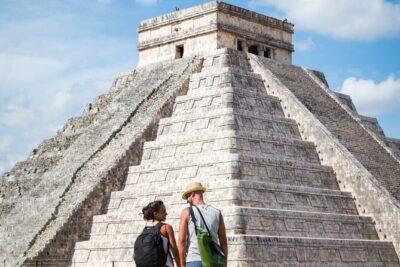
Early morning Chichen Itza Tour: Cenote and Tequila Tasting
Read our review →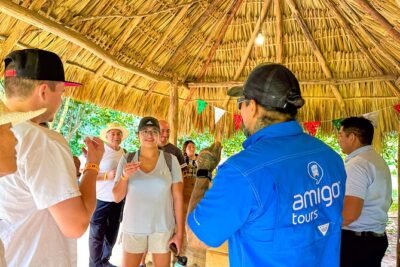
Chichen Itza Early Access All Inclusive: Hotel Pick up & All Fees
Read our review →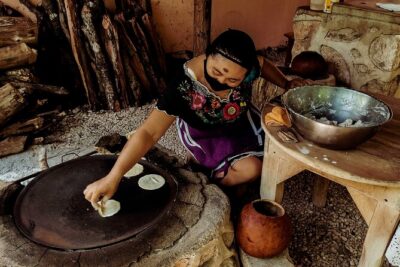
Chichen Itza Gastronomic, Valladolid and Cenote Extremo
Read our review →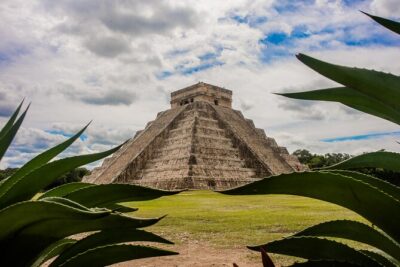
Chichen Itza, Cenote and Valladolid Small Group Day Trip
Read our review →
Browse the lists this tour appears in