
Reviewed · HISTORICAL TOURS
Charreria heritage tour be a charro for a day
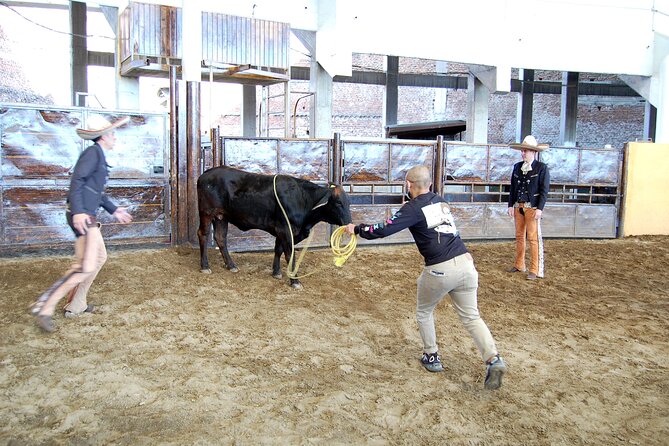
The most memorable part of this Guadalajara outing is that you do not just watch a charro show. You learn the ropes, quite literally, then ride a horse in the arena where charros compete. Guide Jorge Torres explains the customs, coaches your lasso work, and may finish with guitar and mariachi songs.
I like the tour’s direct connection to Jalisco culture, and I like that the activities are hands-on rather than limited to a museum talk. The horses are described as gentle, and Jorge is repeatedly praised for his patience, humor, and care. The main drawback is that three hours can pass without a meal, so eat before you go.
Key points
- Practice lasso work: Learn basic rope handling from an actual charro, then try it yourself.
- Ride in a real charro arena: Horseback riding takes place at Lienzo Charro Jalisco, not on a generic trail.
- Meet the culture through objects and horses: The museum and stables give context before the riding begins.
- Jorge makes the lesson personal: He teaches in English and is known for answering questions patiently.
- Tequila and music close the morning: The tasting is for adults age 18 and older, with traditional Mexican songs.
- Plan your return: Complimentary pickup may be available in the metropolitan area, but the ride back is your responsibility.
Why this Guadalajara tour feels different
Charrería is more than horseback riding. It is a Mexican equestrian tradition tied closely to Jalisco, with its own clothing, riding skills, rope work, competitions, and codes of conduct. This tour gives you a short but active introduction to that world.
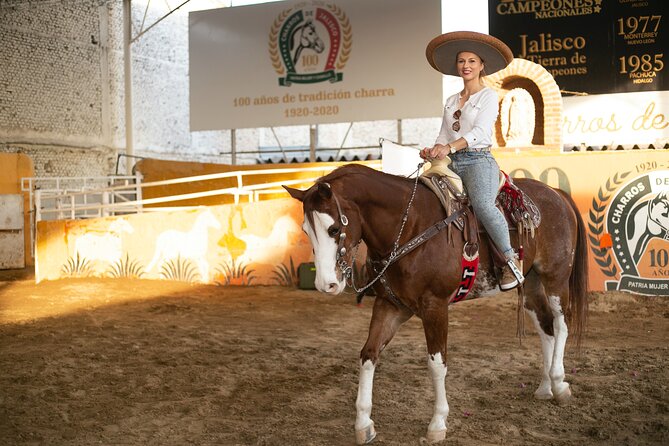
You begin at Campo Charro Jalisco, home of the Lienzo Charro Charros de Jalisco. Instead of treating the arena as a photo stop, the program uses it as a classroom. You see where charros practice and compete, hear how the tradition developed, and then try a few of the skills yourself.
That combination is the reason I would choose this over a standard sightseeing excursion if you have already visited Guadalajara’s historic center. You still learn about local culture, but your hands and feet are involved. You handle a rope, sit on a horse, and spend time around working animals.
The activity has a 4.9 rating from 188 reviews, with 99 percent of participants recommending it. More important than the numbers is the pattern behind them: Jorge’s teaching, the chance to ride, the lasso practice, and the music at the end receive the strongest praise.
More Historical Tours in Guadalajara:
- History and Murals: Walking Tour Guadalajara
★ 5.0 · 237 reviews - Tequila/Guachimontones Tour-cultural heritage route
★ 5.0 · 136 reviews - Guadalajara: Mexican Charro and Charreada Cultural Tour
★ 4.8 · 83 reviews
Arriving at Campo Charro Jalisco
The meeting point is Campo Charro Jalisco at Av. Dr. Roberto Michel 577, in the Rincón de La Agua Azul area of Guadalajara. The scheduled start is 10:00 a.m., and the tour ends back at the same meeting point.
A morning shuttle pickup is available within specified parts of the Guadalajara metropolitan area. You need to send your address by 6:00 p.m. on the day before the tour if you want to request it. This is an arrival transfer only. You pay for your own return transportation, so keep that detail in mind when comparing the overall cost.
If you do not request pickup, go directly to the lienzo for 10:00 a.m. The venue is near public transportation, though the information provided does not specify which routes or stations serve it. I would confirm the exact pickup area and meeting instructions before departure, especially if your hotel or rental is outside central Guadalajara.
The group can include up to 25 people. That is large enough to make the session social, but not so large that the activity must be purely observational. The actual feel may vary with the day’s attendance.
The museum and the charro story
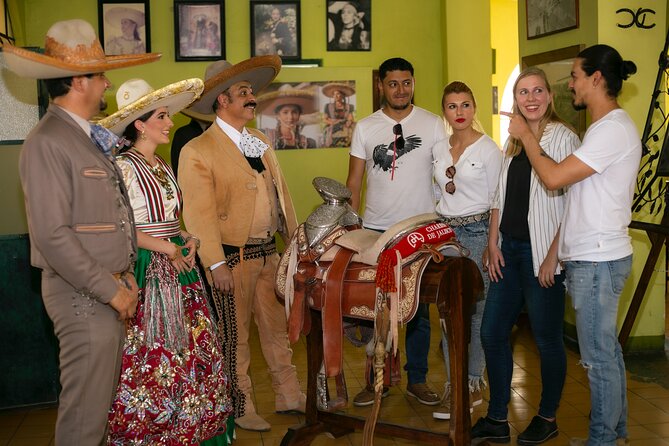
The first part takes place at the charro venue’s museum and horse stables. This is where the outing gains its cultural value. You learn what a charro is, how the tradition developed in Jalisco, and why the arena and riding skills matter.
The museum visit gives you a useful frame for everything that follows. Clothing, equipment, riding methods, and competition customs make more sense once you understand that charrería is a formal tradition rather than simply cowhand-style entertainment.
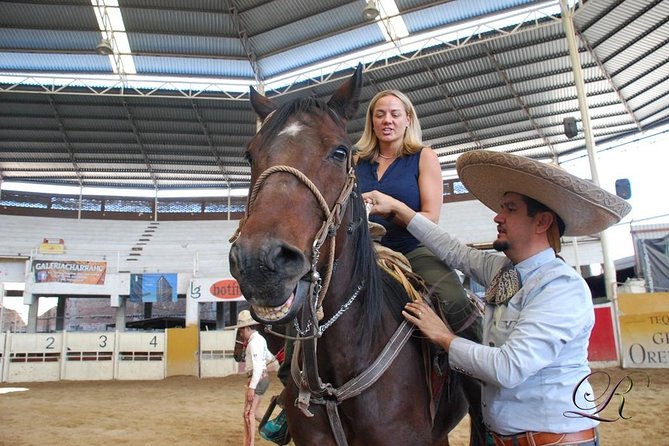
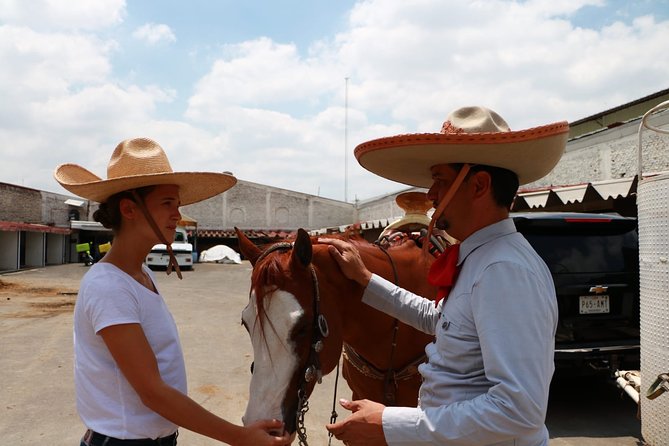
Jorge is a real charro and leads the teaching himself. His role matters because the tour is not presented as a generic Mexican culture lesson. He explains the subject from inside the tradition, while also making room for beginner questions.
Several accounts of the tour highlight his ability to adjust to different comfort levels. That is useful if one person in your group is excited about horses and another is uneasy. The stated policy says most people can participate, and service animals are allowed, but anyone allergic to dust should think twice before booking.
The stables add another useful layer. You get time around the horses before riding, which can make the later activity feel less sudden. The horses are described as beautiful and gentle, and one participant singled out a horse named Tequilera while another remembered riding Pinto.
Learning to handle the lasso
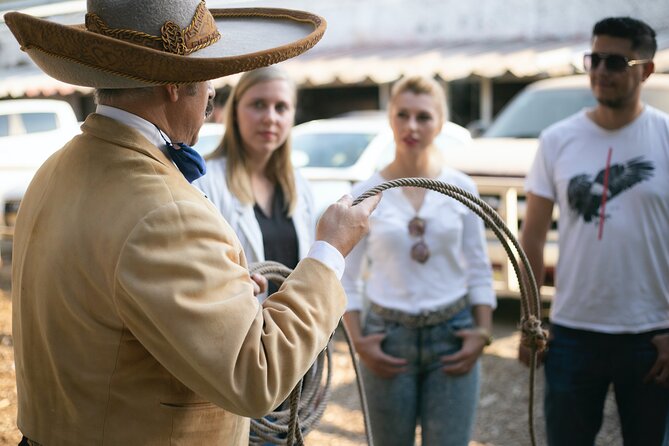
The lasso lesson is the tour’s most unusual feature. Jorge demonstrates how charros handle the rope, then gives you a chance to practice. You may have seen rope tricks in a show, but trying to control the loop yourself quickly shows how much timing and coordination the skill demands.
Do not expect to master the technique in one morning. The value is in learning the basic movement and seeing how the rope is used in charro work. Even a missed loop becomes part of the fun, and the activity is described as lighthearted rather than intimidating.
This portion also gives the tour a stronger connection to the tradition. You are not simply posing beside a horse in a hat. You are attempting one of the practical skills associated with charros, under direct instruction.
The arena surface is soft dirt, and one participant specifically advised dressing for an athletic activity. Wear clothes you can move in and shoes suitable for dust. The supplied information does not set a formal clothing code, but delicate clothing and open footwear would be poor choices for riding and rope practice.
More Shows in Guadalajara:
- Xcaret Park Entry Tickets with Cultural Night Show Included
★ 4.5 · 2,382 reviews - Xcaret Park Day Trip, transportation and Cultural Night Show
★ 4.5 · 1,899 reviews - Rhythms of the night, Sunset Cruise, Candlelit Dinner & Alma Show
★ 4.5 · 1,667 reviews - Jolly Roger Pirate Show and Dinner in Cancun
★ 4.5 · 1,602 reviews
Riding inside the competition arena
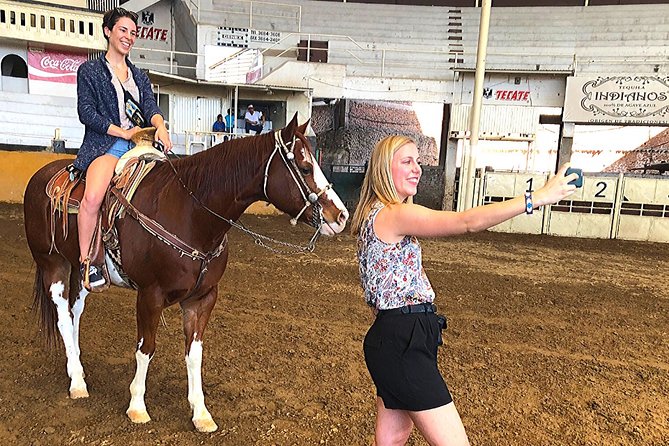
After the lasso lesson, you ride a horse in the arena. The setting is important. This is not described as a long countryside trail ride, and you should not book it expecting several hours in the saddle. It is a short introduction to riding in a real charro venue.
For many people, this will be the emotional high point. You get to sit on a horse in the same type of arena used for charro competitions, while Jorge helps you ride in a way connected to the local tradition.
The activity suits beginners, including people who have never ridden before. One participant said the experience helped overcome a fear of horses, and another described the horses as patient. Still, horseback riding is physical, and the soft dirt can be tiring. If you have limited mobility or serious discomfort around animals, contact the operator before booking rather than assuming the activity will be modified.
The tour includes a riding helmet. Bottled water is also provided. Lunch is not included, and the timing can leave you hungry, so eat beforehand. This is one of the clearest practical lessons from the available feedback: the outing may be labeled a half-day activity, but there is no meal built into it.
If you happen to visit on a Sunday, a charro competition may be taking place. The tour itself is scheduled as a three-hour activity, but you might be able to stay and watch additional events if the day’s program allows. This is not guaranteed, so treat it as a possible bonus rather than part of the core booking.
Tequila, guitar, and mariachi to finish
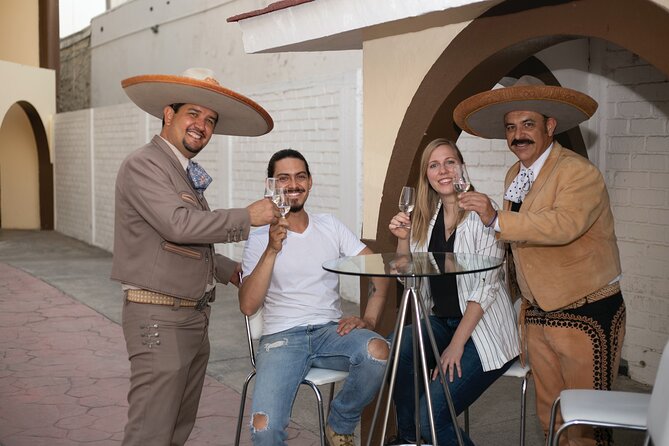
The final part shifts from physical activity to hospitality. Adults age 18 and older receive a tequila tasting, and traditional Mexican music is part of the close.
Jorge is also a singer and guitarist, and the music appears to be more personal than a large staged show. The experience can include guitar playing, singing, and a private-feeling moment with the group. That ending gives the morning a warmer, more social character after the museum lesson and riding practice.
The tequila is limited to adults. If you are under 18, or simply do not drink, the cultural portion remains worthwhile, but you should not expect an alternative alcoholic tasting to be provided. The tour includes alcoholic beverages only for people 18 and older.
I would think of this segment as a cultural welcome rather than a serious tequila education. The supplied details do not promise a visit to a distillery, a formal tasting class, or a meal. You are sharing tequila and music at the charro venue, which fits the personal nature of the tour.
The closing music is also one reason this experience may appeal to people who want more than an activity checklist. The guide’s singing, conversation, and attention to the group help connect the separate parts of the morning.
What the three hours are really worth
No tour price is provided here, so I cannot make a precise peso-for-peso judgment. I can still explain what you are paying for. The package combines admission-style access to the museum and stables, a cultural talk, hands-on lasso instruction, horseback riding, a helmet, water, tequila for adults, music, and possibly a one-way morning shuttle.
That is a strong bundle if you value personal instruction and local culture. You are not paying only for a horse ride. You are paying for the setting, the guide’s time, and access to a tradition that would be difficult to understand from a normal city tour.
The value is weaker if your only goal is a long horseback ride. The riding portion is part of a broader three-hour program, not the whole outing. It is also less useful if you dislike dust, horses, tequila, or participatory activities.
The small-group limit of 25 helps, though the word small should be used carefully at maximum capacity. The best value comes when Jorge can give your group time to ask questions and try the skills at a comfortable pace.
Pickup, timing, and practical planning
The activity starts at 10:00 a.m. and lasts about three hours. Pickup is available in specified metropolitan areas, but you must request it by the previous evening. The included transfer is only the trip to the venue. Arrange your own way back to your hotel or next stop.
The tour is offered in English, which makes the historical explanation and safety guidance easier to follow for English-speaking visitors. Jorge is described as bilingual, so he can answer questions directly rather than relying on a translated script.
Pack water only if you want extra beyond the bottle supplied. More important is breakfast or an early meal, since lunch is not included. Choose clothing suitable for soft dirt and movement, and remember that dust may be present. People with dust allergies are specifically advised not to participate.
Confirmation is provided when you book. The activity requires good weather. If poor weather forces cancellation, you can receive a different date or a full refund. Otherwise, cancellation is free up to 24 hours before the start time. Cancellations or changes made within 24 hours are not refunded or accepted.
Who will enjoy this most
I would recommend this outing to anyone who wants a cultural activity with some action. It works especially well for couples, families with older children, and friends who are open to trying something unfamiliar.
The tour can also suit solo visitors. The lasso practice and shared tequila and music give you natural ways to meet people, while the guide keeps the session moving.
Families should note that the activity is not simply a children’s attraction. Young people may enjoy the horses and rope work, but adults need to decide if the dust, riding, and tequila-centered ending fit their group. Children aged 12 and 16 have taken part successfully, but the operator’s general guidance says most people can participate rather than promising that every age group is suitable.
This is also a good choice for anyone interested in Mexican traditions beyond food, architecture, and tequila bars. You get to see how horse skills, clothing, competition, music, and hospitality connect within Jalisco’s charro culture.
Who should choose another activity
Skip this one if you need a fully passive tour, dislike animals, or have a dust allergy. You should also reconsider if you want a substantial meal, a full-day ranch visit, or a long trail ride.
The return transportation is another possible nuisance. A one-way pickup sounds convenient, but you still need to solve the trip back. If you have a tight afternoon schedule, allow extra time for arranging that ride.
Finally, the experience is physical in small but real ways. You may sit on a horse, handle a rope, move around soft dirt, and spend time outdoors. The helmet and patient instruction help, but they do not turn it into a no-effort sightseeing stop.
Should you book the charro experience?
I would book it if you want an authentic-feeling Guadalajara activity where you learn by doing. The strongest reasons are the setting at Lienzo Charro Jalisco, Jorge Torres’s personal teaching, the chance to practice lasso work, and the warm finish with tequila and music.
I would not book it expecting a long ride or a polished stage production. Think of it as a compact cultural lesson with horses, rope skills, and a generous dose of Jalisco hospitality. Eat first, dress for dust, plan your return, and you will know exactly what kind of morning you are buying.
FAQ
How long does the charro tour last?
The experience lasts approximately three hours.
Where does the tour begin?
It begins at Campo Charro Jalisco, at Av. Dr. Roberto Michel 577, Rincón de La Agua Azul, 44460 Guadalajara, Jalisco, Mexico.
What time does the tour start?
The scheduled start time is 10:00 a.m.
Does the tour include hotel pickup?
A complimentary morning shuttle pickup may be available within specified areas of the Guadalajara metropolitan area. You must provide your address by 6:00 p.m. the day before if you want to request it.
Is return transportation included?
No. The included shuttle service is for arrival only. Each client is responsible for the return trip to their accommodation.
Is the tour offered in English?
Yes. The activity is offered in English, and guide Jorge Torres is described as bilingual.
Will I ride a horse?
Yes. The program includes horseback riding in the charro arena, along with instruction and a riding helmet.
Can I practice using a lasso?
Yes. The tour includes instruction and practice with a lasso under the guidance of a charro.
Is tequila included for everyone?
Tequila tasting is included only for people aged 18 and older.
Is lunch included?
No. Lunch is not included, so eating before the tour is recommended.
What happens if the weather is poor?
The activity requires good weather. If it is canceled because of poor weather, you will be offered another date or a full refund.
Can I cancel for a full refund?
Yes. You can cancel at least 24 hours before the start time for a full refund. Cancellations within 24 hours are not refunded, and changes during that period are not accepted.
Just added around Guadalajara
- Transfer by car to or from Guadalajara Airport★ 4.5 · 49 reviews
- Tlaquepaque and Tonala Private Full-Day Tour★ 5.0 · 31 reviews
- José Cuervo Tequila Day Experience from Guadalajara★ 5.0 · 126 reviews
- Tequila distillery experience, Jose Cuervo & Tequila Magic Town★ 4.5 · 61 reviews
- Guachimontones Archaeological Tour★ 5.0 · 60 reviews
- Tequila Route Experience from Guadalajara★ 5.0 · 102 reviews
- Tequila Express★ 4.5 · 110 reviews
- Private Tequila Tour with Local Expert★ 5.0 · 45 reviews
Historical Tours, compared.

Mexico City Historical Centre Food Tour with 7 Authentic Tastings
Read our review →
Historical and Cultural Walking Tour of San Miguel de Allende
Read our review →
Historical and Cultural Walking Tour of San José del Cabo
Read our review →
Browse the lists this tour appears in