
Reviewed · HISTORICAL TOURS
Walking Tour Across the Historic Center in Merida
Mérida’s story is written across a compact walking route: Spanish colonial power at Casa Montejo and the cathedral, government murals at the Palacio de Gobierno, and music, theaters, and university life farther along. This is a useful first look at the city, especially if you want context before exploring on your own.
I like the small maximum group of 20 and the easy two-hour length. I also like the practical finish at Santa Lucía Park, where you can continue with lunch or dinner in the city center. The main drawback is that Casa Montejo is viewed from outside, and the $22 fee may feel high when free public walking tours are also available.
Key points at a glance
- Casa Montejo begins the route: You meet at one of Mérida’s best-known colonial buildings, but admission inside is not included.
- The tour stays central: Most stops are around the main square and nearby streets, so you cover little distance without missing major landmarks.
- Murals add political context: The Palacio de Gobierno gives you a look at Mérida through large-scale public art.
- Guides make the difference: Max, Luis, Gabriella, Mauricio, Maria Fernanda, and others have been praised for clear English, humor, and useful local suggestions.
- Santa Lucía is a practical finish: You end near restaurants and cultural venues rather than being dropped far from the center.
- It is best for first-time orientation: You get a broad introduction, not long indoor visits or specialist-level history.
A smart first morning in Mérida
This tour works because it gives you a framework for Mérida before the heat, crowds, and independent wandering take over. At 9:00 a.m., you meet outside Museo Casa Montejo on Calle 63, in the Centro district. From there, the guide leads you through the city’s central story in a sensible line toward Parque de Santa Lucía.
I see the route as an orientation walk rather than a museum tour. You will hear about Spanish conquest, colonial rule, local politics, Maya culture, religion, architecture, plants, theaters, and present-day Mérida. The best guides adjust the balance. Luis, for example, has been praised for moving between historical and contemporary subjects, while Max has helped visitors with restaurant suggestions and locating a gallery after the walk.
The English service matters. Maria Fernanda has been singled out for fluent English and a clear passion for the historic district. Other guides, including Gabriella, Mauricio, Tanya, and Louis, have also been praised for friendly delivery and easy-to-follow explanations. Guide quality can vary on any scheduled walking tour, but the strongest pattern here is clear speaking, open questions, and a personal approach.
The route covers a short distance, so you do not need special fitness. Still, it is a walking tour in Mérida, and you should expect outdoor conditions. Wear comfortable shoes and bring water. The early start is a good choice because you can use the rest of the day for museums, food, shopping, or a second look at the places that caught your attention.
More Historical Tours in Mérida:
- Mérida: Montejo Boulevard and Historic Center bike tour
★ 4.7 · 43 reviews - Mérida: The E-bike tour with history and culture
★ 4.9 · 36 reviews - Historic Downtown Walking Tour
★ 5.0 · 1,289 reviews
Casa Montejo: a grand opening without an interior visit
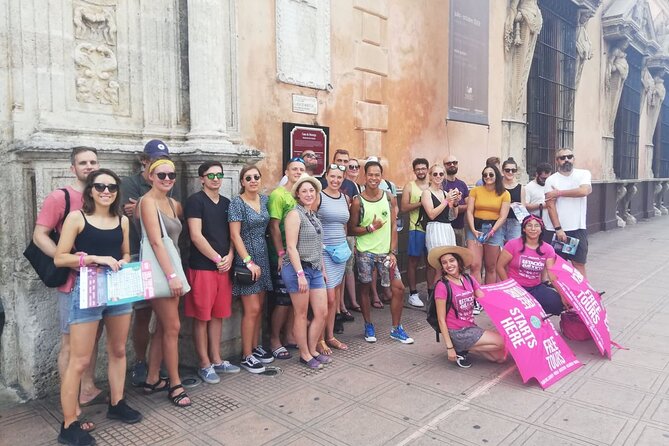
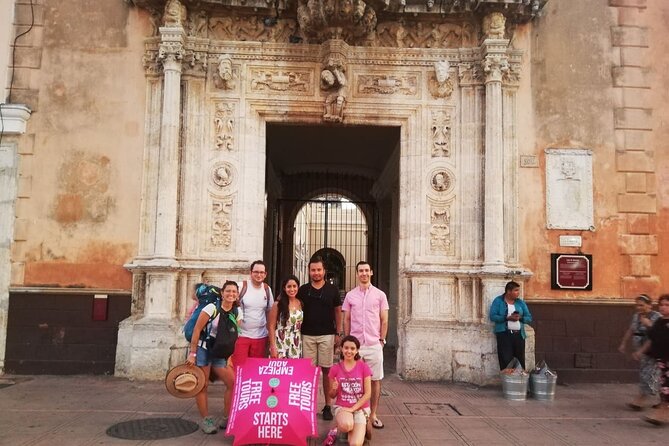
The tour starts in front of Museo Casa Montejo, one of Mérida’s most recognizable buildings. This is an effective meeting point because it places you immediately beside a major symbol of the colonial city.
The stop lasts about 20 minutes. Your guide explains the building and its place in Mérida’s story, but the admission ticket is not included. That distinction matters. You are not signing up for a guided museum visit inside Casa Montejo. If you want to see the interior, you will need to return independently and pay any applicable admission.
I consider this the clearest weakness in the route. One visitor who enjoyed the tour still wished the group had gone inside instead of requiring a separate visit. If Casa Montejo is high on your list, plan to come back at another time. The guide’s explanation should make that later visit more meaningful, but it does not replace entering the building.
As an opening stop, though, it sets up the themes that continue throughout the morning: wealth, colonial power, changing ownership, and the way Mérida’s past remains visible in the central streets.
Cathedral de Mérida and the colonial center
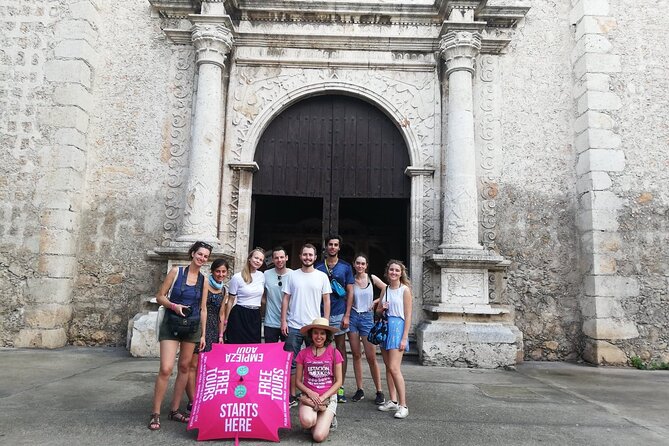
From Casa Montejo, the group moves to the Cathedral of San Ildefonso. You spend about 20 minutes learning about Mérida’s colonial past and the role of the cathedral in the central square.
Admission is free, which makes this a straightforward stop. The tour does not treat the cathedral as an isolated church. Instead, the guide connects it to the surrounding plaza, Spanish rule, and the broader layout of the city.
This is one of the points where a strong guide adds real value. On your own, you can admire the stonework and step inside, but you may miss why the cathedral occupies such a central place in Mérida’s civic and religious life. The walk also gives you room to ask questions. A family group found the pacing comfortable and appreciated the opportunities to stop and talk.
You should not expect a long architectural lecture or an extended religious tour. The visit is brief and part of a larger city route. That makes it suitable if you want useful context, but less satisfying if you prefer to spend half an hour studying one building in detail.
Palacio de Gobierno and the murals
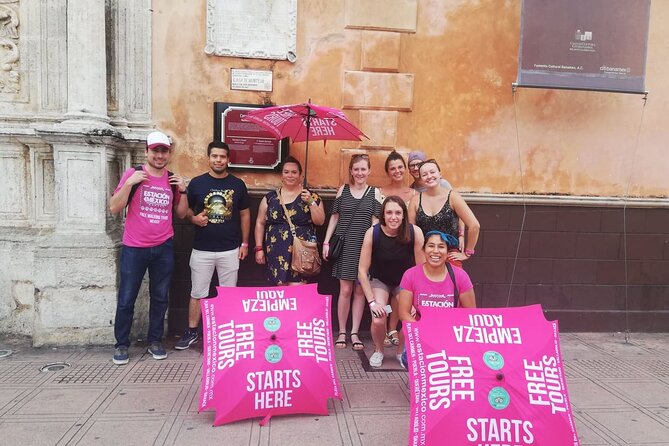
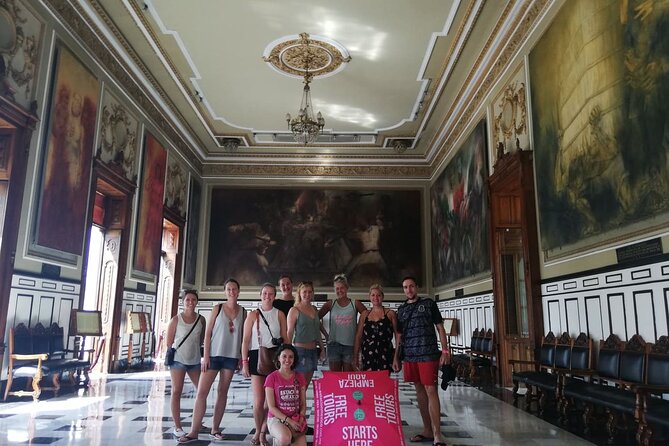
The next major stop is El Palacio de Gobierno, where the tour spends about 25 minutes. This is the longest scheduled stop, and for good reason. The building’s murals give the guide a visual way to discuss Mérida, Yucatán, Indigenous culture, conquest, government, and competing versions of the past.
The admission is free. The murals are especially helpful if you are not used to reading Mexican public art. Rather than simply pointing at pictures, your guide can explain what the scenes suggest and how they fit into local history and politics.
Louis has been praised for covering both historical and contemporary subjects, including religion and politics. That range is useful here. Mérida is not just a collection of old facades, and the government building offers a chance to connect the city’s past with its current identity.
This stop also shows why an English-speaking guide can be worth paying for. You can see the murals without assistance, but a clear explanation helps you understand symbols, people, and events that may not be obvious at first glance. The main limitation is time. Twenty-five minutes gives you a good introduction, not a detailed art lesson.
More Walking Tours in Mérida:
- Merida Walking Food Tour. Authentic & Local Cuisine
★ 5.0 · 451 reviews - Merida Street Food Walking Tour
★ 5.0 · 417 reviews - Mérida: 3-Hour Walking Food Tour
★ 4.9 · 287 reviews - Street Food Walking Tour in Merida
★ 4.8 · 48 reviews
Hotel Mérida and the city’s commercial past
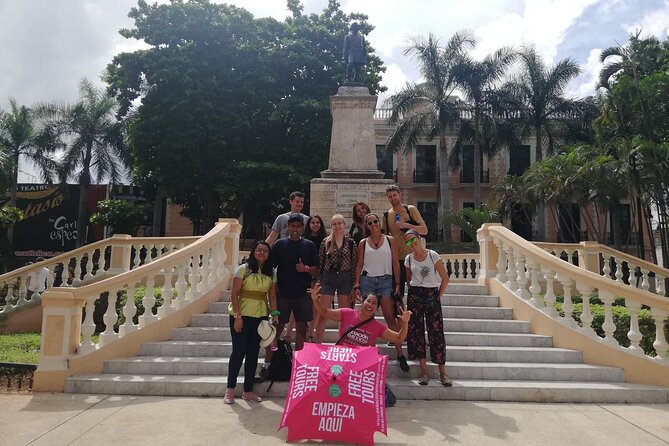
The route then moves to Hotel Mérida, Yucatán, for about 15 minutes. The stop focuses on the city’s industrial and prosperous past.
This is an interesting change of pace. The cathedral and government palace represent religious and civic authority. Hotel Mérida points toward commerce, wealth, and the period when the city’s fortunes were tied to regional trade and industry.
You may find this stop more revealing than its name suggests. A historic hotel is not simply somewhere to sleep. It can show how a city presented itself, who had money, and how Mérida’s central district changed over time.
There is no admission charge listed for this stop. The group remains on the walking route, so do not expect a formal hotel tour. Think of it as an architectural and historical pause, with the guide using the building to explain a broader chapter of Mérida’s development.
Palace of Music and Mérida’s cultural life
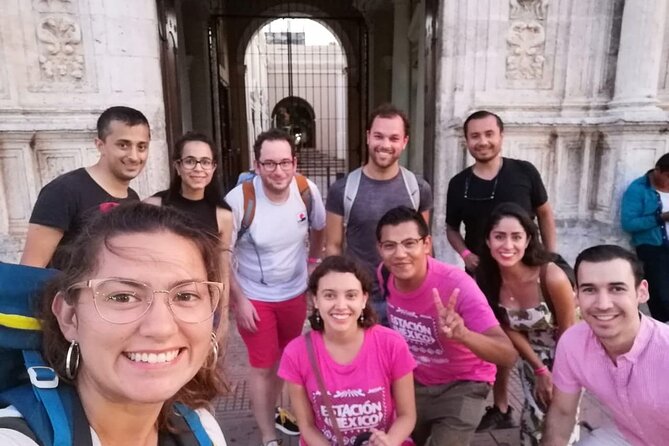
Museo Palacio de la Música is next, with about 15 minutes devoted to the site and the cultural institutions around it. The tour uses this stop to explain music in Yucatán and to point out the city’s wider museum and arts scene.
This section helps prevent the walk from becoming only a colonial architecture lesson. You get a look at how Mérida expresses local culture through performance, museums, and public spaces. The guide also discusses the theaters of the city and the Autonomous University of Yucatán as the group continues.
The Palace of Music is a useful anchor for that discussion. You may leave with a short list of places to visit later, rather than just a series of names you pass and forget. One guide shared a QR code with suggestions for museums, restaurants, and other points of interest. That sort of follow-up information is practical because it turns a morning walk into a plan for the rest of your stay.
Again, the stop is short. If you want to tour every cultural building inside, this experience will feel too quick. If you want to know which places deserve a return visit, the pace works well.
Theaters, UADY, and the city beyond its monuments
The route also includes a discussion of Mérida’s theaters and the Autonomous University of Yucatán. The schedule does not assign a separate stop number or exact duration to this section, so think of it as part of the walk between the named sites.
That detail is worth noting because it reflects the tour’s wider aim. You are not being led only from one photo stop to another. The guide brings in education, performance, and present-day city life, giving you a sense of how the center functions beyond its most famous monuments.
For a first visit, this broader approach is useful. You begin to recognize that Mérida is a living city, not just a preserved colonial district. It also gives you more choices for independent exploring after the tour.
The tradeoff is depth. A two-hour route can introduce theaters and the university, but it cannot give each one a full visit. If you want detailed information about a particular institution, note its name and return later.
Santa Lucía Park: a useful finish
The tour ends at Parque de Santa Lucía after about 15 minutes at the final stop. This is a pleasant place to finish because you remain in central Mérida, close to food and further sightseeing.
The park is described as a good spot for enjoying the city’s gastronomy. That makes the ending practical. You can ask your guide where to eat, compare recommendations, or simply use the park as a marker for planning the afternoon.
Several guides have offered food suggestions at the end. Tanya is noted for restaurant recommendations, and Max has helped visitors choose places to eat as well as find a gallery. These small exchanges may be among the most useful parts of the tour because they connect the historical walk to your actual visit.
The finish also gives you flexibility. You are not returned to the starting point, so arrange your day around Santa Lucía rather than assuming you will walk back to Casa Montejo with the group.
What $22 buys you
At $22 per person, the experience sits in an interesting middle ground. Public tourist offices may offer free walking tours, and some people on similar routes have paid or tipped at the end rather than booking in advance. That can make a fixed $22 charge feel expensive if you compare only the walking time.
The value is clearer if you want a reserved English-language place, a set 9:00 a.m. start, and a guide who can connect several sights in one route. You are paying for structure, interpretation, and the chance to ask questions. You are not paying for entrance tickets, food, transportation, or extended time inside museums.
The high overall rating of 4.8 from 177 ratings, with 98 percent recommending the experience, suggests that most people find the format worthwhile. I would still set expectations carefully. This is a broad introduction, and one person found it too short while another found the content could have been more concise.
If you are comparing it with a free walk, ask yourself what matters more: the lowest possible price or a prearranged English service with a capped group size. For an independent visitor who already knows Mérida well, the fee may not make sense. For a first-timer, the guidance can justify it.
Group size, timing, and practical details
The maximum group size is 20, which is small enough for a guide to take questions without creating a moving crowd. Some departures may be much smaller. One morning had only two people, allowing a more conversational pace and detailed questions about Mexican history.
The experience is offered in English and uses a mobile ticket. Confirmation is provided when you book. The meeting point is Museo Casa Montejo, at C. 63 506, Centro, Mérida, and the finish is Parque Santa Lucia in the same central area.
The route is near public transportation, and service animals are allowed. Most people can participate, but the activity is still a two-hour walk, so comfortable footwear and water are sensible choices.
Free cancellation is available up to 24 hours before the 9:00 a.m. start for a full refund. Cancellations or changes made less than 24 hours ahead are not accepted for a refund, and the cut-off uses local time.
Who should book this walk?
I would choose this tour for a first morning in Mérida, especially if you want the main square and nearby streets explained before you explore alone. It suits couples, solo visitors, families, and anyone who prefers a short introduction rather than a full-day program.
It is also a good fit if you enjoy asking questions. Guides such as Max, Louis, Gabriella, Mauricio, and Maria Fernanda have been praised for friendly conversation, clear English, humor, and local suggestions. The guide you receive is not guaranteed, but the experience is designed around live explanation rather than an audio recording.
I would hesitate if Casa Montejo’s interior is your main goal, since admission is not included. I would also compare the $22 price with free public tours if cost is your top concern.
Book it if you want a well-paced introduction to Mérida’s central landmarks, murals, culture, and civic life. Skip it if you already know the historic center or prefer spending an hour inside each museum. The best use of this walk is simple: take it early, listen for places you want to revisit, then use Santa Lucía as your starting point for the rest of the day.
FAQ
How long does the Mérida walking tour last?
The tour lasts approximately two hours, with the route ending at Parque de Santa Lucía.
What time does the tour start?
The scheduled start time is 9:00 a.m.
Where does the tour begin?
You meet in front of Museo Casa Montejo at C. 63 506, Centro, 97000 Mérida, Yucatán, Mexico.
Where does the tour end?
The walk ends at Parque Santa Lucia in central Mérida.
Is the tour offered in English?
Yes. The experience is offered in English.
Is admission to Casa Montejo included?
No. The Casa Montejo stop is listed with admission not included. Admission to the Cathedral of San Ildefonso, El Palacio de Gobierno, Hotel Mérida, the Palace of Music, and Parque de Santa Lucía is listed as free.
What is the cancellation policy?
You can cancel up to 24 hours before the local start time for a full refund. Cancellations or changes made less than 24 hours before the start are not refunded or accepted.
Just added around Mérida
- Street Food Walking Tour in Merida★ 4.8 · 48 reviews
- Motul, Hacienda, Xcambo, Pink Salt Mine & Progreso Day Trip★ 4.8 · 41 reviews
- Mérida: The E-bike tour with history and culture★ 4.9 · 36 reviews
- Mérida: Food tour of typical Yucatecan cuisine.★ 4.7 · 50 reviews
- Merida: Hacienda Sotuta de Peon w/ Cenote & Henequen Tour★ 4.8 · 62 reviews
- Mérida: Montejo Boulevard and Historic Center bike tour★ 4.7 · 43 reviews
- Mérida Cooking Class, taste of Yucatan★ 4.9 · 82 reviews
- Cook Yucatán Food with your Merida Mom! (PDF Included!)★ 4.7 · 62 reviews
Historical Tours, compared.

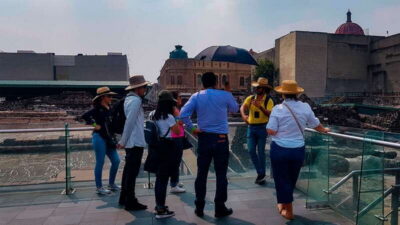
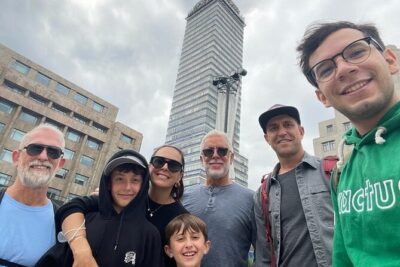

Mexico City Historical Centre Food Tour with 7 Authentic Tastings
Read our review →
Historical and Cultural Walking Tour of San Miguel de Allende
Read our review →
Historical and Cultural Walking Tour of San José del Cabo
Read our review →
Browse the lists this tour appears in