

Reviewed · ANCIENT RUINS TOURS
Essence Zapoteca Monte Albán, Barro Negro and Alebrijes for a day.
Monte Albán is the star here: a vast Zapotec ceremonial center high above Oaxaca, with broad stone plazas, steep steps, and big views across the valley. I like that this day pairs the ruins with living Oaxacan crafts, especially alebrijes in San Antonio Arrazola and black pottery in San Bartolo Coyotepec. I also like the practical format: transport, a bilingual guide, water, and the main archaeological admission are covered for $53.17.
The tradeoff is time. This is a useful sampler, not a slow study of each place. Driving through city traffic can eat into the day, and the craft stops include galleries where shopping is part of the rhythm. Lunch costs extra, and you should confirm current pickup and water arrangements before setting out.
Key points to know before booking
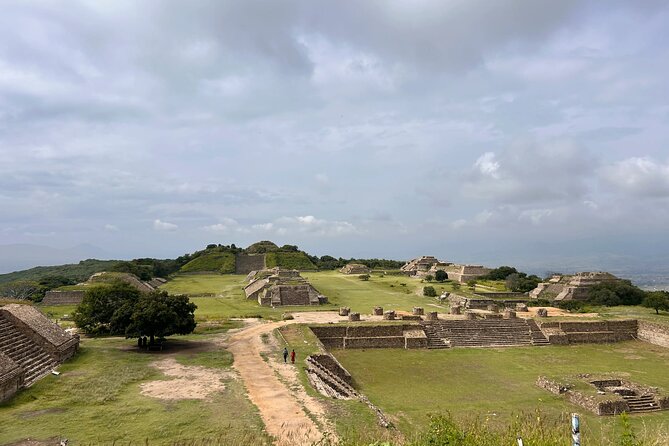
- Monte Albán gets about two and a half hours: Enough for a strong first visit, though some people will wish for more time.
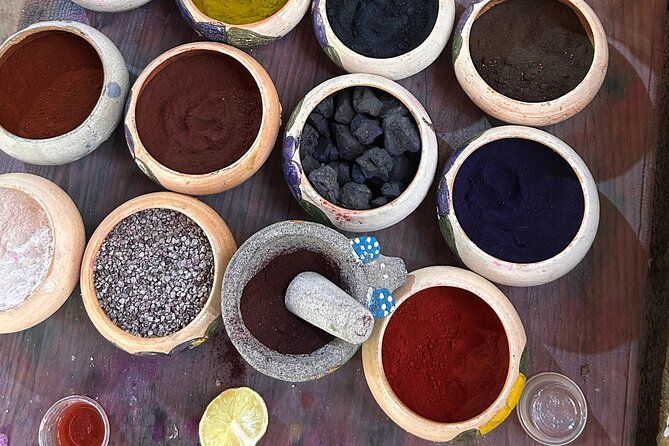
- You visit the birthplace of alebrijes: Ángelico Jiménez Carrillo’s family workshop explains woodcarving, natural pigments, tonas, and nahuales.
- Black pottery is shown at its source: The Doña Rosa Studio in San Bartolo Coyotepec presents a long-running local craft tradition.
- The group stays fairly small: A maximum of 15 people makes the van and guiding more manageable than a large coach tour.
- The $53.17 price covers the core outing: Transport, bilingual guiding, bottled water as advertised, travel insurance aboard the vehicle, and Monte Albán admission are included.
- Expect a sales element: You can support the workshops by buying art, but the day may feel less appealing if you want sightseeing with no gallery time.
Why Monte Albán makes this more than a craft-shopping day
Many Oaxaca excursions promise a little of everything. This one earns its place on your schedule because it begins at Monte Albán, one of the most important archaeological sites in the region. The site occupies an elevated ridge above the Oaxaca Valley, and its wide plazas and stone platforms make the scale easy to grasp even if you are new to Mesoamerican archaeology.
You will have roughly two hours and 30 minutes inside the archaeological zone. A certified bilingual guide explains the buildings, plazas, architecture, and cultural role of the ancient Zapotec center. That context matters. Without it, Monte Albán can look like a series of walls and stairways. With a good guide, the arrangement of the site begins to make sense.
The views are part of the reward. From the high ground, you can look across the surrounding valley and understand why this was such a commanding place. Bring a hat, sunscreen, and comfortable shoes. The site includes steep stone steps without railings, although a walking route around them is available. If you prefer a gentler pace, tell the guide early.
I would treat the allotted time as a well-paced introduction. It lets you see the major areas without turning the day into an archaeological marathon. If Monte Albán is your main reason for coming to Oaxaca, you may prefer a dedicated half-day visit, where you can linger longer. If you want one day that connects ruins, food, and craft villages, the two-and-a-half-hour visit is a sensible compromise.
Timing also matters. The tour begins at 9:00 a.m., and an early start helps you see the site before the day becomes more crowded. The exact flow can vary, especially when several groups arrive at once. A little patience at the entrance and during group assembly will help.
More Ancient Ruins Tours in Oaxaca
- Hierve el Agua, Tule Tree, Mitla and Mezcal Distillery Tour
★ 4.5 · 1,094 reviews - Explore Hierve el Agua, Mitla, Tule, Textile and Mezcal for a day
★ 5.0 · 1,043 reviews - Monte Alban Guided Half Day Tour
★ 5.0 · 880 reviews
San Antonio Arrazola and the family art of alebrijes

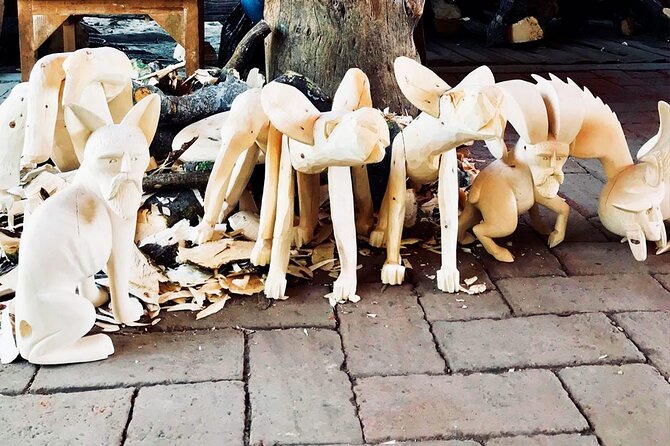
After Monte Albán, the tour continues to San Antonio Arrazola, the village associated with the development of alebrijes. The stop is at Taller Tonas y Nahuales Angelico Jimenez Carrillo, the workshop of Ángelico Jiménez, a descendant of Manuel Jiménez, who is identified with the creation of this art form.
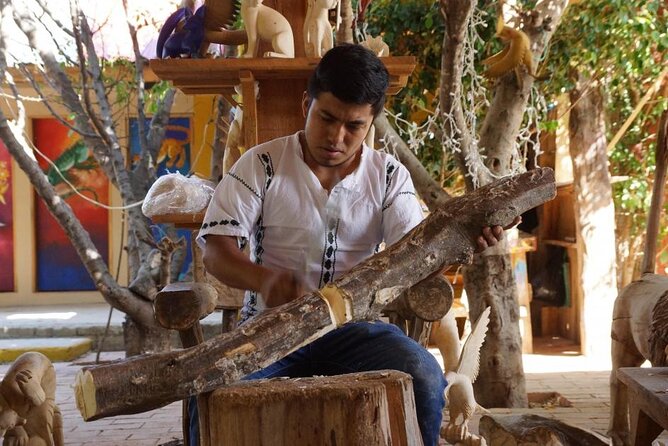
This is more useful than a generic souvenir stop because the workshop connects the finished figures with the process behind them. You learn how wooden forms are shaped, painted, and given their bold colors. The demonstration also covers natural pigments, which helps you look at the tiny patterns and layered colors with a more informed eye.
The language of the craft is important. Tonas and nahuales refer to animal forms and spiritual or symbolic associations that inspire the carvings. Your guide explains those ideas while the family’s gallery displays pieces in different sizes. You may see small figures that fit in a suitcase alongside larger, more elaborate works.
I like this stop because it shows how a local art form can carry family memory and village identity. You are not simply looking at painted animals. You are seeing a craft passed through generations, with design choices and techniques shaped by the makers.
There is also a practical point to keep in mind. The workshop has a gallery, and purchasing art is naturally part of the visit. You can support the artists by buying a piece, but you do not have to. If you are not shopping, focus on the carving and pigment process, then give yourself permission to browse without feeling rushed.
Some people find the craft visits too sales-focused, especially when the explanation is brief and the gallery takes longer than expected. The experience depends in part on how much time your guide gives to the artistic process rather than moving the group toward the display area. Guides such as Miguel, Leo, Pavel, and Miguel Angel have received praise for clear explanations and good pacing, but the style can vary from one departure to another.
Lunch at La Cabaña, with the cost still separate
Lunch takes place at La Cabaña, a buffet restaurant where you can choose from several Oaxacan dishes. The spread includes moles, tlayudas, soups, and local stews, with chicken, beef, or pork available with some dishes. Vegan choices include salads and steamed or fresh vegetables.
This arrangement suits a group because you can eat at your own pace and choose familiar or more adventurous food. It also gives you a chance to try several local flavors instead of committing to one large plate. If you are curious about Oaxacan food but have limited time in the city, sampling a little of several dishes is useful.
Lunch is not included in the tour price. The amount can be unclear until you arrive, so ask about the buffet cost and any drinks before filling your plate. You are a captive group at this point, and knowing the price first makes the stop more comfortable.
The one-hour lunch break is long enough to eat without turning into a drawn-out restaurant visit. Still, the day has several moving parts, so you should not expect a leisurely meal with time for a long conversation or an independent walk.
San Bartolo Coyotepec and the making of black pottery
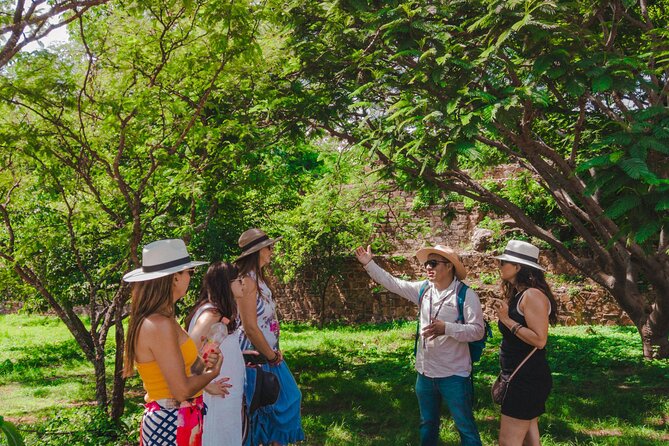
The final major stop is Doña Rosa Studio in San Bartolo Coyotepec, the Oaxaca-area community known for its black pottery. Here, you see how the distinctive dark finish is created and hear about the tradition passed down through local families.
The tour explains ancestral techniques, including use of a pre-Hispanic potter’s wheel. You also learn about the cultural meaning of black pottery and the rituals and beliefs connected with its production. That background gives the objects more weight than a quick stop at a shop selling finished pieces.
The pottery is often admired for its smooth surfaces and dark sheen, but the process is what makes the visit worthwhile. Watch how the clay is worked, shaped, and prepared. The demonstration helps you understand why handmade pieces vary and why a small bowl or vase can represent far more work than its size suggests.
This stop lasts about an hour. As with the alebrije workshop, you will probably have the chance to buy something. If you are carrying purchases for the rest of your trip, pack carefully or ask about safe wrapping. The tour information does not promise shipping services, so do not count on that unless the workshop confirms it.
The black pottery stop has a more direct cultural connection than a standard retail visit, but some people find the travel time and gallery time a little long compared with the amount of instruction. If your priority is archaeology, you may wish this hour had been added to Monte Albán. If you like handmade objects and want to see where they come from, it rounds out the day well.
More Craft Workshops in Oaxaca
- From Oaxaca: Monte Alban, Alebrijes & Black Clay Day Trip
★ 4.6 · 217 reviews - Oaxaca: Oaxacan Mole Workshop with a Traditional Cook
★ 4.7 · 158 reviews - Monte Alban, Alebrijes & Black Pottery: Oaxaca Essential Day Tour
★ 4.5 · 99 reviews - Oaxaca de Juarez: Art Printing Workshop with a Local Artist
★ 5.0 · 72 reviews
The vehicle, guide, and group size
The tour uses an air-conditioned vehicle and is limited to a maximum of 15 people. That is a useful middle ground. You get the convenience of organized transport without the scale of a full-size bus, though 15 people can still make entrances and departures feel busy.
The advertised package includes bottled water, a certified bilingual guide, and travel insurance aboard the vehicle. One guide, Miguel, is praised for carrying a cooler of water, while another report says water was not supplied. Because of that conflict, bring your own bottle even if water is meant to be included. It is a small precaution, especially at Monte Albán.
Guide quality matters a lot on this day. Miguel is described as clear and professional, while Leo is noted for using a theatrical style to keep the facts lively. Pavel is praised for pacing and enthusiasm, and Miguel Angel for professional service. The guide may need to explain things in both English and Spanish, which can lengthen some talks. A dedicated English-only departure would be more efficient, but this format makes the tour available to a mixed group.
Transportation is generally described as clean and comfortable, but one family found the van uncomfortable and not very cool. Another issue is pickup. The published meeting point is Melchor Ocampo 1017 in Barrio de la Noria, while one departure collected people at their hotel. Since the tour ends at Av. de la Independencia 709 near the historic center, confirm the exact pickup arrangement before the morning of the tour.
The return point works well if you want to continue exploring central Oaxaca. It is not the same as returning to your hotel, so plan for that if you have luggage, mobility concerns, or evening reservations.
What the $53.17 price really buys you
At $53.17 per person, this is good value if you want to combine several destinations without arranging taxis, admission, and a guide on your own. Monte Albán admission is included, as are transport, a bilingual guide, onboard travel insurance, and advertised bottled water. Those basics remove much of the day’s planning work.
The value is strongest for first-time visitors with only a few days in Oaxaca. You see a major archaeological site, two important craft areas, and a local meal stop in about eight hours. The tour gives you a useful map of the region and helps you decide which places deserve a second, slower visit.
The value is weaker if you dislike shopping stops or already know you want a full day at Monte Albán. You pay with time as well as money. Traffic between Oaxaca City and the surrounding villages can be slow, and the group must keep moving to finish all four stops.
Budget separately for lunch, drinks, pottery, and alebrijes. Tips are optional and left to your judgment. One unexpected issue to clarify is mezcal. A report from the tour describes a mezcal sampling that was not expected, while the stated program does not include it. If you have booked another mezcal-focused outing or simply do not want a tasting, confirm the day’s plan in advance.
Who will enjoy this Oaxaca day tour
I would recommend this experience to you if:
- You have one open day and want a broad introduction to Oaxaca’s nearby sights.
- You want Monte Albán with a guide rather than exploring the ruins without context.
- You enjoy handmade art and want to see alebrijes and black pottery at working studios.
- You prefer organized transport to arranging several village visits independently.
- You can accept a set schedule and some gallery time.
- You are comfortable with steep steps at Monte Albán or using the alternate walking route.
Families should think about the pace and the craft stops. The day can work well with older children who enjoy ruins, animals, and art, but the schedule is not built around children’s activities. One family found that little effort was made to entertain kids. If your children need frequent breaks or hands-on activities, a private outing may suit you better.
Solo visitors can benefit from the small group, especially since the day combines several stops without the awkwardness of eating and transferring alone. Couples and friends should be happy with the variety, but should not expect much unplanned free time.
Should you book it?
Book this tour if you want an efficient first look at Monte Albán and Oaxaca’s best-known craft villages for a moderate price. The archaeological site gives the day substance, while the alebrije and black pottery workshops show how local traditions continue beyond the ruins.
Skip it if you want a quiet, in-depth visit to Monte Albán, dislike gallery stops, or need guaranteed hotel pickup and a clearly priced lunch. Before booking, confirm pickup, water, and whether mezcal sampling is part of the current schedule. For most first-time visitors with only one free day, this is a well-rounded choice, as long as you treat it as a sampler rather than a private cultural study.
FAQ
How long is the tour?
The experience lasts approximately 8 hours and begins at 9:00 a.m.
Where does the tour start?
The stated meeting point is Melchor Ocampo 1017, Barrio de la Noria, 68083 Oaxaca de Juárez, Oaxaca, Mexico.
Where does the tour end?
The tour ends at Av. de la Independencia 709 in the historic center of Oaxaca.
Is Monte Albán admission included?
Yes. Admission to the Monte Albán archaeological site is included in the tour price.
Is lunch included?
No. Food and drinks are paid for separately at La Cabaña.
What food is available at lunch?
The buffet includes moles, tlayudas, soups, and local stews, with chicken, beef, or pork options. Salads, steamed vegetables, and fresh vegetables are available for people seeking vegan choices.
Is the tour offered in English?
Yes. The tour is offered in English with a certified bilingual guide.
How many people can join the tour?
The maximum group size is 15 people.
Can I cancel for a full refund?
Yes, if you cancel at least 24 hours before the local start time. Cancellations or changes made within 24 hours are not refunded. If poor weather or an insufficient minimum group causes cancellation, you will be offered another date or experience, or a full refund.
Just added around Oaxaca
- Canyoning in the Oaxacan Coast Canyons★ 5.0 · 76 reviews
- The Mezcal Journey★ 4.9 · 78 reviews
- Street Art with an artist★ 4.9 · 32 reviews
- Oaxaca: Vegetarian Cooking Class★ 4.8 · 139 reviews
- Oaxaca: Mount Albán & Cuilapam de Guerrero Full-Day Tour★ 4.7 · 110 reviews
- Oaxaca: San Martín Tilcajete, Jalieza & Ocotlán Crafts Route★ 4.6 · 48 reviews
- Oaxaca: Traditional Oaxacan Cooking Class with Market Visit★ 4.9 · 80 reviews
- Oaxaca: Mezcal Adventure★ 4.5 · 44 reviews
Ancient Ruins Tours, compared.


Chichen Itza, Cenote & Valladolid Tour with Tequila and Lunch
Read our review →
Teotihuacan, Guadalupe Shrine & Tlatelolco Day Tour with Lunch
Read our review →
Chichen Itza, Cenote & Valladolid Tour with Lunch
Read our review →
Early morning Chichen Itza Tour: Cenote and Tequila Tasting
Read our review →
Balloon flight + Breakfast in cave + Pyramids + Pick up CDMX.
Read our review →
Teotihuacan pyramids morning or afternoon without tourist traps
Read our review →
Balloon flight + pick up in CDMX + Breakfast in Cave + Pyramids
Read our review →Browse the lists this tour appears in