
Reviewed · HISTORICAL TOURS
Guadalajara: Mexican Charro and Charreada Cultural Tour
Mexican charrería is more than a rodeo with fancy hats. At Guadalajara’s Campo Charro Jalisco, you learn how this national tradition works from the people who practice it, then try parts of it yourself. The day can include roping, horseback riding, a parade, and even a well-trained bull exercise.
I like the close look at charro costumes and gear, each piece showing care, skill, and pride. I also like the guides’ personal touch. Jorge, Marcos, Mateo, and Jesús have helped make this a warm, hands-on cultural experience rather than a simple arena visit.
The main consideration is timing. A four-hour visit may include a full Charreada, but competitions and Sunday events are not guaranteed. Food is not included, and anyone sensitive to dust or horses should bring the proper medication.
Key points to know before you book

- See the charro tradition from inside the arena: Visit a museum at the lienzo and learn how charrería developed in Jalisco.
- Practice the lasso: You get an introduction to Mexican roping methods and a chance to try them yourself.
- Ride and prepare the horses: Brushing and saddling help you understand the work behind the parade.
- Watch the opening horse parade: If the schedule allows, you may ride alongside the charros.
- Finish with tequila and mariachi: Two alcoholic drinks, either beer or tequila, are included.
- Expect a personal guide: Jorge is often praised for his storytelling, music, patience, and friendly manner.
Why charrería matters in Guadalajara
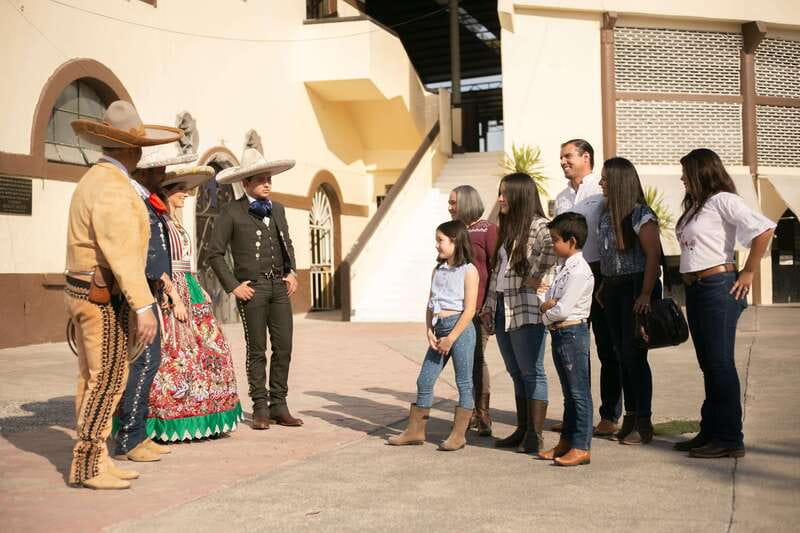
If you know only the Hollywood version of a Mexican cowboy, this tour gives you a useful correction. A charro is not simply a rider in a large hat. Charrería combines horsemanship, clothing, rope work, ceremony, competition, and a strong sense of Mexican identity.
The tradition is especially important in Jalisco, where Guadalajara’s surrounding communities played a major role in its development. During the drive from your pickup point, your guide explains the city’s early neighborhoods and their connection to charrería.
That short history lesson matters. You are not being dropped at an isolated riding stable with no context. You are seeing the sport as part of local culture, then entering a lienzo, the arena built for charreadas.
Charrería is recognized as an important Mexican cultural identity by UNESCO. The tour helps explain why. The costumes, horses, rituals, and competitive tasks all fit together. You see a tradition that is performed, taught, and passed from one generation to the next.
More Historical Tours in Guadalajara:
- History and Murals: Walking Tour Guadalajara
★ 5.0 · 237 reviews - Charreria heritage tour be a charro for a day
★ 5.0 · 188 reviews - Tequila/Guachimontones Tour-cultural heritage route
★ 5.0 · 136 reviews
Pickup from Guadalajara, Chapultepec Country, or Tlaquepaque
Pickup is available from three listed areas: Guadalajara, Chapultepec Country, and Tlaquepaque. This is useful if you are staying in one of the main visitor zones and prefer not to arrange your own transport to the arena.
The ride also serves as part of the introduction. Rather than treating the transfer as dead time, the guide talks about neighborhoods tied to the beginnings of charrería. That makes the trip feel connected to Guadalajara instead of being a random excursion outside the city.
Drop-off is not included, so plan for the end of the tour. Pickup service, entrance, a bottle of water, and two alcoholic drinks are included in the price. Food is not included, so eat beforehand or plan another meal afterward.
The tour lasts about four hours. Starting times vary, so check availability carefully. A four-hour block is long enough for a real lesson and arena visit, but not so long that it takes over your entire day.
Inside the lienzo museum

Your first stop at Campo Charro Jalisco is the lienzo museum. A charro guide introduces the arena and explains where the tradition comes from.
This is one of the strongest parts of the experience for anyone interested in culture rather than just action. The museum collection includes traditional costumes and accessories used during Sunday charreadas. You get to look closely at the clothing instead of seeing it flash past during a parade.
The outfits are highly crafted. Hats, jackets, belts, boots, and other pieces help define the charro’s appearance. Your guide also explains how the clothing fits the ceremony and competition.
I would pay close attention here, since the museum gives meaning to everything that follows. Once you handle a lasso or watch the riders prepare their horses, you understand that the equipment is not costume decoration. It is part of a working tradition.
Learning the Mexican lasso

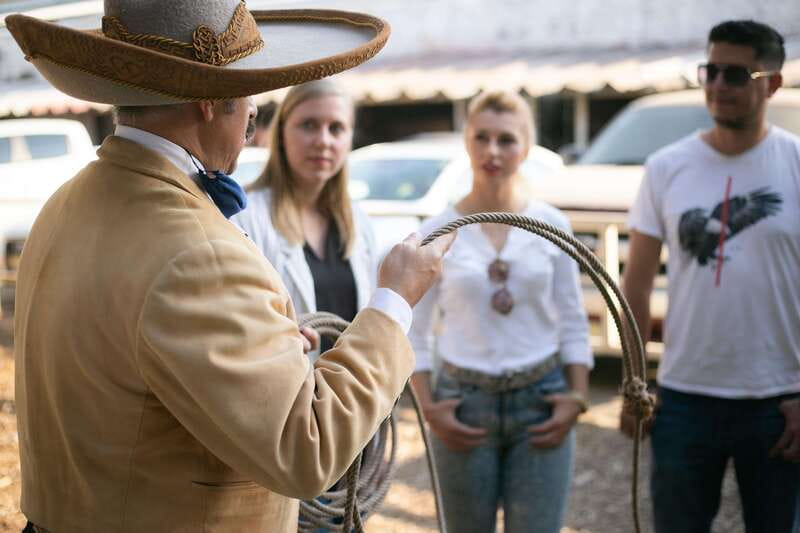
The rope lesson is one of the most practical parts of the tour. You learn how charros use their lassos and how the Mexican style differs from ropes used in other cultures.
Do not expect to become an expert in one session. The value is in trying the technique and seeing how much control it takes. Your guide explains how to hold and throw the rope, then gives you a chance to practice.
Some sessions begin with a wooden bull. You may also try a carefully trained real bull as part of a team exercise, depending on the activities taking place that day. This is an important distinction: the experience is hands-on, but the exact activities can change.
The exercise gives you a better respect for the charros’ skill. From a distance, roping can look easy. It is not. Timing, teamwork, and calm handling all matter.
More Shows in Guadalajara:
- Xcaret Park Entry Tickets with Cultural Night Show Included
★ 4.5 · 2,382 reviews - Xcaret Park Day Trip, transportation and Cultural Night Show
★ 4.5 · 1,899 reviews - Rhythms of the night, Sunset Cruise, Candlelit Dinner & Alma Show
★ 4.5 · 1,667 reviews - Jolly Roger Pirate Show and Dinner in Cancun
★ 4.5 · 1,602 reviews
Brushing, saddling, and choosing parade horses

The horse segment brings the tradition down to earth. You help brush and saddle the horses, then see how the animals are chosen for the opening parade.
This is not only about getting on a horse for a quick photo. Preparing the animal shows you the work that happens before the public display. The horse must be ready, the tack must be in place, and the rider must handle the animal with care.
You may be able to ride with the charros during the parade. That depends on the day and the conditions, so I would treat it as a welcome possibility rather than a promise.
For families, this part can be especially appealing. One family with an elementary-aged child found the pace attentive and engaging. For solo visitors, the ride and horse work also add a social element, since you take part beside the guides and other participants.
If you have a horse allergy, dust sensitivity, or discomfort around large animals, take the warning seriously. Bring medication if needed. The arena setting can expose you to both dust and horses for much of the visit.
The opening parade and Charreada action

A Charreada begins with an opening horse parade. Seeing the riders enter together helps explain the ceremonial side of the sport before the competitive work begins.
If a Sunday Charreada or competition is taking place, you may stay to watch the action. One participant described being treated as a special guest when competitions happened during the visit. That sort of day can add a great deal to the experience.
Still, scheduled competitions are not guaranteed. The core tour is the museum, instruction, horse preparation, and cultural explanation. The full public event is a bonus tied to the calendar.
The Charreada itself includes traditional tasks that your guide explains as they happen. The format has similarities to a rodeo, but the setting, clothing, teamwork, and customs are distinctly Mexican.
The bull work can look intense, but the provided experience uses a trained animal for the practical lesson. Follow your guide’s instructions closely and do not assume that every activity is suitable for every participant.
A social finish with tequila and mariachi

The tour ends in a relaxed way, with tequila and mariachi music. Two alcoholic drinks are included, either beer or tequila.
This closing gathering helps the tour feel personal. You are not simply leaving an arena after a demonstration. You have spent time with the charros, tried their tools, and learned why the tradition matters. Sharing a drink gives everyone a chance to talk.
The guides also bring their own character to the finale. Jorge is praised for singing and playing music, as well as for his welcoming manner. Other guides, including Marcos and Mateo, are noted for explaining the customs and letting participants try them rather than keeping the activity at a distance.
Food is not provided. The description of the experience includes drinks, but not tacos or a meal. Make a plan for lunch or dinner, especially if you book a starting time close to mealtime.
What makes the guides important

The guide can shape this tour more than any single stop. The most praised quality is not a particular horse or museum display. It is the way the charros explain their own culture.
Jorge is repeatedly described as warm, patient, engaging, and proud of the tradition. He has also been praised for careful pacing, which helps families and people with no horse experience feel comfortable.
Marcos and Mateo have been noted for combining history with practice. They explain the customs, then let you test your skills with a wooden bull and possibly a trained real one.
Jesús has led a somewhat different version of the tour, including a private practice session during the pandemic period. That setting included charros roping horses and bulls, music, tequila, beer, and a friendly family atmosphere.
These details show that the day may not look exactly the same for every group. The common thread is a personal introduction led by people involved in the tradition.
Is $47 a good value?
At $47 per person, the tour offers a fair amount for a four-hour cultural activity. You get pickup service, entry to the arena, a guide in English or Spanish, the museum visit, hands-on instruction, horse activities, a bottle of water, and two drinks.
The value is strongest if you want more than a sightseeing stop. A standard arena visit might let you watch. This experience lets you ask questions, handle the equipment, practice roping, and possibly ride.
The price is less attractive if you mainly want a guaranteed full Charreada with extended competition viewing. That part depends on the schedule. Food also costs extra, and you need to arrange your own return after the tour.
Free cancellation up to 24 hours before the activity and the option to reserve now and pay later make planning easier. The transport rating is also strong, with 90 percent of ratings giving it a perfect score.
Who should book this experience?
I would recommend it to you if you want a distinctly Mexican activity in Guadalajara and enjoy learning by doing. It suits first-time visitors, returning visitors who have already seen the main city sights, solo participants, couples, and families with older children.
It is particularly good for anyone interested in horses, folk traditions, regional identity, music, or handmade clothing. You do not need prior riding or roping experience. The tour is designed as an introduction.
You may want to skip it if you dislike animals, dust, alcohol-centered social time, or uncertain event schedules. You should also avoid assuming that a full competition will take place during your visit.
Book with the right expectations. You are signing up for an introduction to charrería, not a guaranteed professional rodeo performance. The best days combine the museum and lessons with a parade or Sunday competition.
FAQ
Where does the tour take place?
The experience takes place at Campo Charro Jalisco, a lienzo, or Mexican cowboy arena, in Jalisco.
Where can pickup be arranged?
Pickup options are listed in Chapultepec Country, Guadalajara, and Tlaquepaque.
How long does the experience last?
The tour lasts four hours.
Is horseback riding included?
Horse riding is part of the activity, and you may be able to ride with the charros during the opening parade if conditions allow.
Will I get to watch a Charreada competition?
You may see a parade or competition if one is scheduled during your visit, but a full competition is not guaranteed.
Are drinks included?
Yes. The tour includes two alcoholic drinks, either beer or tequila, plus a bottle of water.
Is the tour available in English?
Yes. Live guiding is available in English and Spanish.
Should you book the Guadalajara Charro and Charreada tour?
Book it if you want personal contact with a living Mexican tradition. The museum, costume display, lasso lesson, horse preparation, and possible ride give you a fuller picture than watching a performance from the stands.
I would especially choose this tour on a Sunday or on a day when a competition is scheduled, while remembering that event timing can change. Ask about the day’s Charreada plans when booking if watching the arena action is your main goal.
At $47, the experience offers solid value for a four-hour outing with transport, instruction, entrance, riding opportunities, and drinks. Just bring practical clothes, prepare for dust and horses, arrange your return trip, and leave room for the day to unfold. That is part of the charm of meeting the charros on their own ground.
Just added around Guadalajara
- Transfer by car to or from Guadalajara Airport★ 4.5 · 49 reviews
- Tlaquepaque and Tonala Private Full-Day Tour★ 5.0 · 31 reviews
- José Cuervo Tequila Day Experience from Guadalajara★ 5.0 · 126 reviews
- Tequila distillery experience, Jose Cuervo & Tequila Magic Town★ 4.5 · 61 reviews
- Guachimontones Archaeological Tour★ 5.0 · 60 reviews
- Tequila Route Experience from Guadalajara★ 5.0 · 102 reviews
- Tequila Express★ 4.5 · 110 reviews
- Private Tequila Tour with Local Expert★ 5.0 · 45 reviews
Historical Tours, compared.
Mexico City Historical Centre Food Tour with 7 Authentic Tastings
Read our review →
Historical and Cultural Walking Tour of San Miguel de Allende
Read our review →
Historical and Cultural Walking Tour of San José del Cabo
Read our review →
Browse the lists this tour appears in