
Reviewed · CYCLING TOURS
Mérida: Montejo Boulevard and Historic Center bike tour
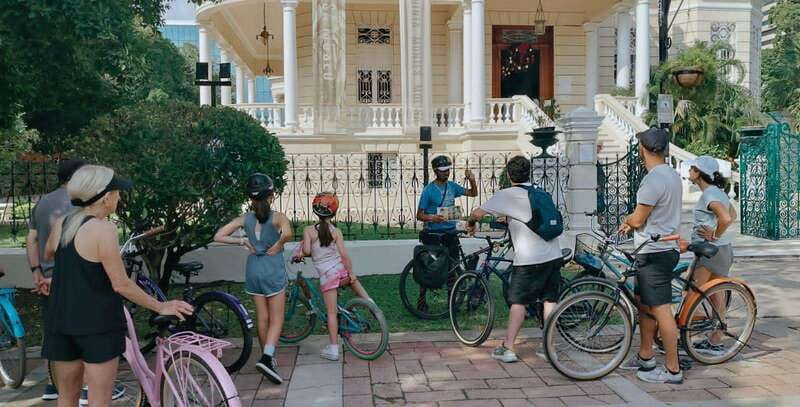
Mérida is spread out enough that walking can turn sightseeing into a sweaty chore. This small-group bike tour solves that neatly, carrying you from the grand mansions of Paseo de Montejo to the Plaza Grande and nearby neighborhoods in about 7 kilometers. Ivan, the usual guide, uses a speaker while riding and pauses in the shade to explain the city.
I like the easy pace and flat route, which lets you notice more without arriving worn out. I also like the practical side: bikes come in different sizes, and options include child seats, tandems, adult tricycles, and children’s bikes. The main drawback is that some bikes have been reported as shabby, and summer heat or rain can change the route.
Key points to know
- Paseo Montejo by bike: Ride under trees and palms along Mérida’s bike lanes, with stops at grand Yucatecan mansions.
- Ivan’s clear guiding: He explains history in English or Spanish through a speaker and uses a handheld laser pointer at some stops.
- A gentle 4-mile route: The entire ride is flat, with a relaxed pace suited to casual cyclists.
- Historic-center highlights: See the Plaza Grande, Casa Montejo, Mérida Cathedral, La Plancha, parks, and other colonial-era landmarks.
- Family-friendly equipment: Child bikes, seats for small children, tandems, and adult tricycles are available.
- Cool drink included: Finish or pause at a local market for fruit juice, coconut, or another non-alcoholic refreshment.
Why cycling works so well in Mérida
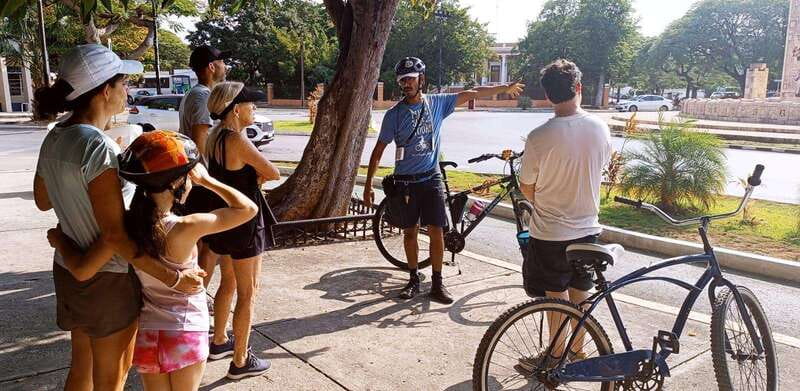
The best part of this outing is the range. In one morning or afternoon, you see the polished side of Paseo de Montejo, the old core around Plaza Grande, and parts of the city you could easily miss on foot.
Mérida’s streets are largely flat, so you are not grinding up hills. The pace is gentle, too. You are not signing up for a fitness challenge. The ride covers roughly 4 miles, or 7 kilometers, over two and a half hours, with regular pauses for explanations and photos.
That timing matters in Yucatán. The heat can be intense, and a walking tour covering the same ground could feel harder than expected. Much of the first half uses bicycle lanes on Paseo de Montejo, where trees and palms provide some protection from the sun. In the historic center, you ride on streets with traffic, but the guide keeps the pace controlled and puts safety first.
I would still bring water, a hat, and light, comfortable clothing. Shade helps, but it does not make Mérida cool. If rain or high temperatures make the planned route less suitable, the guide may adjust where you ride while keeping the same overall duration.
More Bike Tours in Mérida:
- Mérida: The E-bike tour with history and culture
★ 4.9 · 36 reviews - Electric Bike Beach Adventure with Tequila Tasting and Lunch
★ 5.0 · 1,162 reviews - Frida Kahlo VIP [Museum Tickets Included] Bike, Markets & Churros
★ 5.0 · 1,072 reviews
Meeting at Palacio Cantón on Paseo Montejo

The meeting point is the corner of Calle 43 and Paseo de Montejo, outside the Museo Regional de Antropología, also called Palacio Cantón. This is a useful landmark, but do not expect the bicycles to be lined up directly outside the museum.
You meet the guide at the museum corner, then walk with him to the bicycle pickup spot on a side street. That small detail can prevent a needless hunt for a row of bikes.
Ivan usually begins by learning your name and where you are from, then matches you with a suitable bicycle. Taller riders have reported that getting the right frame was straightforward. Helmets are provided, and the bikes can be adjusted to your height.
The choice of equipment is unusually broad for a city ride. You can request a standard adult bike, a children’s bike, a tandem, or a tricycle with two passengers riding in back while one person pedals and steers from the front. There are also seats for small children, including seats designed for children around two and five years old.
Ask about the equipment before setting off. Two riders found their bikes less well maintained than expected. That does not appear to ruin the tour, but it is worth checking the brakes, seat height, and tires before you leave the starting point.
Paseo Montejo and the Monument to the Homeland
The ride begins along Paseo de Montejo, Mérida’s grand avenue. Palms and mature trees soften the road, and the bike lanes make this opening section easier than cycling directly in busy traffic.
Your first substantial stop is the Monument to the Homeland. The guide gives about 15 minutes of explanation, followed by time for pictures. The monument is unusual in Mexico because its carved scenes trace major parts of the country’s story, including figures and events tied to Yucatán.
This stop works well early in the ride. You are still fresh, the monument has plenty to look at, and the guide can give you a framework for understanding the region. The point is not just to snap a photo. It is to see how local identity fits into the larger story of Mexico.
The guide may use a handheld laser pointer to direct your attention to details that are hard to spot from ground level. That is helpful at large monuments and facades, especially when he is speaking to a group rather than standing beside every person.
Four mansions and Yucatán’s golden age
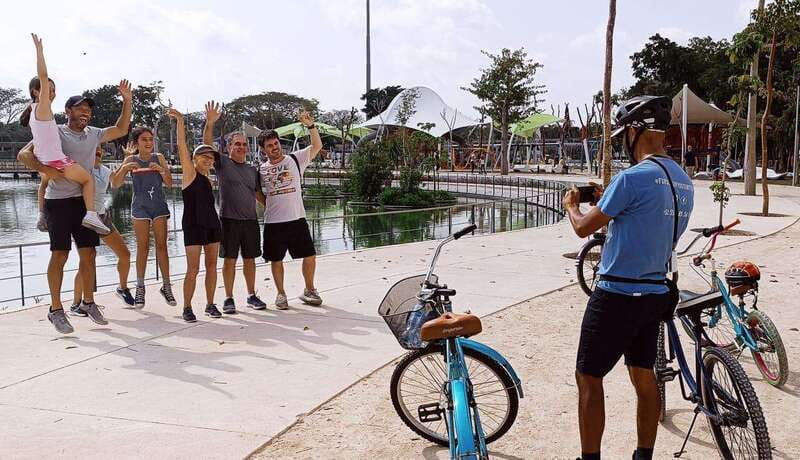
After the monument, you ride back along Paseo Montejo and stop at four impressive mansions. The guide explains who lived in them and connects their stories to Yucatán’s prosperous period, when wealth from henequen, often called green gold, reshaped Mérida’s upper-class neighborhoods.
You will not be touring every interior. The value is in seeing the buildings in context, with enough time to study their scale, details, and position along the avenue. The stops also break up the cycling, so you are never pedaling for two and a half hours without rest.
This is one of the tour’s strongest sections for anyone curious about architecture and social history. A guide can point out how these homes reflect the ambitions of a wealthy era, while also explaining the people connected to them. Without that context, you might simply see a line of ornate facades and move on.
The stops are arranged with shade in mind. At some, you can walk a short distance to look more closely at the attraction. That makes the experience feel less like a fast parade of sights and more like a guided introduction to the city.
More Historical Tours in Mérida:
- Walking Tour Across the Historic Center in Merida
★ 5.0 · 177 reviews - Historic Downtown Walking Tour
★ 5.0 · 1,289 reviews - Historic Center Food Tour in Mexico City
★ 5.0 · 1,263 reviews - Mexico City: Historic Downtown Walking Tour
★ 4.8 · 1,039 reviews
Entering the historic center and Plaza Grande

The second half moves onto a safer street toward central Mérida. Here, the scenery changes. Paseo Montejo’s long avenue and mansions give way to plazas, colonial buildings, churches, and streets that carry the daily rhythm of the city.
At Plaza Grande, the guide spends about 15 minutes explaining the main buildings and the role of the square. This is Mérida’s central public space, and it is a useful place to understand how the city’s colonial core is organized.
You see the cathedral, the former home of the conquistador Montejo, and parks created in the 19th century. The main theater is viewed from the outside, along with other nearby landmarks. The tour does not function as an interior museum visit, so plan to return later if you want to explore the cathedral or Casa Montejo in greater depth.
That limitation is also part of the tour’s strength. You get a broad orientation without spending the whole outing inside one building. If this is your first time in Mérida, the guide helps you decide which places deserve a longer visit on your own.
Casa Montejo and Mérida Cathedral
Casa Montejo receives a short guided explanation of about 10 minutes. The building is tied to the colonial founders of Mérida, and its facade offers a direct look at the power and symbolism of that period.
The cathedral stop is briefer, about five minutes, but it gives you a chance to place the church within the wider story of the Plaza Grande. Because you are seeing both sites in quick succession, I would treat these stops as an introduction rather than a full architectural study.
That is an important expectation to set. You will hear useful background, see the main exteriors, and learn how the buildings connect to the city’s past. You will not have extended time at every site, and the schedule is designed to keep the ride moving.
La Plancha, neighborhood views, and a cold drink
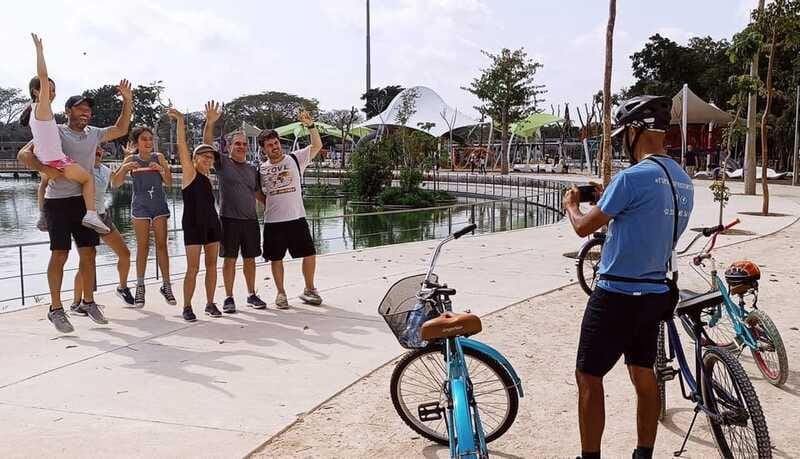
Later, the tour reaches La Plancha for a longer stop of about 25 minutes. This is listed as a photo stop, visit, and guided explanation, giving you a little more time to get off the bike and look around.
The route also includes a refreshment stop at a historic local market, described as Santa Anna Market in the tour details. Your included drink is non-alcoholic. Depending on the choice available, you may have fruit juice, a cold fruit drink, or fresh coconut.
This is more than a minor freebie. In Mérida’s heat, a cold drink at the midpoint or end can make the final stretch much more pleasant. It also gives you a brief look at a local market and neighborhood setting rather than limiting the tour to grand monuments.
The exact timing of the drink can vary. It may come halfway through or near the end. Either way, it is a useful pause and a chance to ask Ivan about restaurants, bars, cultural sites, and other places to visit. Several people found his recommendations especially useful after the cycling ended.
How good is the guiding?
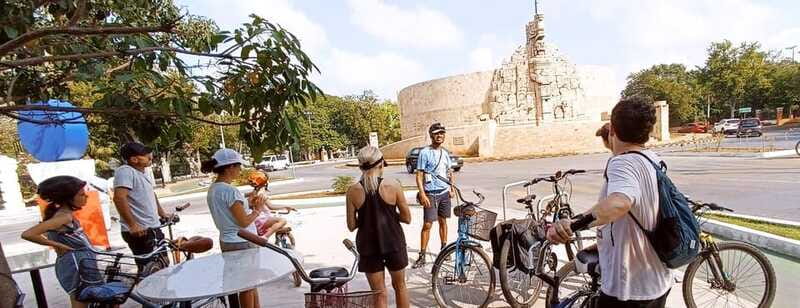
Ivan is the tour’s main strength. He speaks English and Spanish, answers questions in detail, and clearly enjoys explaining Mérida, Maya culture, Mexican history, and the city’s colonial past.
His speaker system is practical. He can ride at the front while giving directions and commentary, so you do not need to crowd around him at every moment. The handheld laser pointer also helps when he is discussing a detail on a distant building or monument.
The style is conversational rather than rushed. The group size is kept small enough for questions and easier interaction, and the guide takes breaks when needed. One useful point to remember is that groups can spread out slightly on the road. Stay close enough to hear the speaker and regroup at each stop.
Safety receives steady attention. The route uses bike lanes for much of the first section, then moves through central streets at a relaxed pace. Drivers were described as patient around cyclists, but you should still follow the guide’s instructions and avoid drifting behind the group.
Who will get the most from this ride?
I would choose this tour if you want a first look at Mérida that mixes history, architecture, local advice, and light exercise. It suits casual cyclists who prefer a slow pace and families who need adaptable equipment.
It is also useful early in your stay. You can mark the places you want to revisit, ask about restaurants, and get a sense of how Paseo Montejo relates to the central plazas.
This is not the right choice if you cannot ride a bicycle, dislike riding near city traffic, or have a low level of fitness. The route is flat and relaxed, but you still need to pedal for part of the two and a half hours.
The published restrictions also exclude wheelchair users, people with epilepsy, and people above the stated weight limits. The information gives several different limits, from 309 to 350 pounds, so anyone near that range should confirm the applicable limit before booking.
Is $40 a fair price?
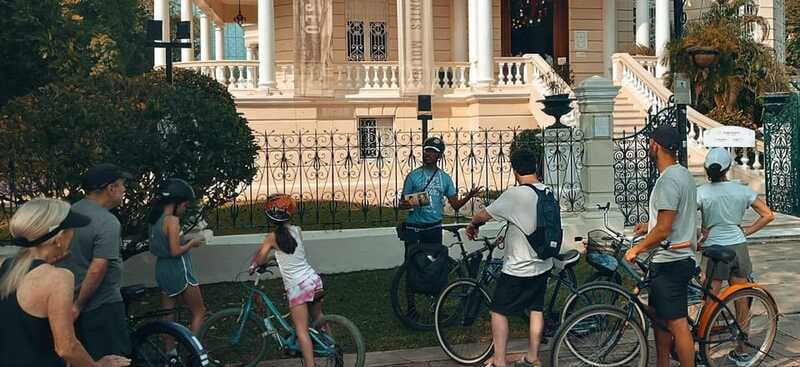
At $40 per person, the tour offers reasonable value if you would otherwise pay for bicycle rental, a city orientation, and a separate drink. You also get equipment, a guide in English or Spanish, and access to child-friendly bicycle options.
The real value is the distance covered without the effort of walking between each area. Paseo Montejo and the historic center feel connected on a map, but heat can make the journey tiring on foot. Cycling lets you see both in one outing while preserving energy for evening food and sightseeing.
The price is less attractive if you want long interior visits or a detailed museum tour. This is an overview by bicycle, with exterior explanations and short stops. You are paying for a well-paced city introduction, not entry tickets or extended time inside each attraction.
Free cancellation up to 24 hours before the start and the option to reserve now and pay later make it easier to fit into a changing itinerary. Starting times vary, so check availability and choose a time that works with Mérida’s heat.
My call: book it if you want context without a hard workout
I would book this tour for a first day in Mérida, especially if you want to understand the city before exploring it on foot. The flat route, shade breaks, child equipment, and included drink make it approachable, while Ivan’s clear explanations add substance to the ride.
Go with realistic expectations about the bicycles and the sightseeing format. Check your bike before departure, stay near the speaker, and remember that most landmarks are seen from outside.
Book it if you want Paseo Montejo, colonial Mérida, local neighborhoods, and useful food advice in one relaxed outing. Skip it if you cannot cycle or if your priority is entering museums and spending long periods inside individual monuments.
FAQ
Where does the Mérida bike tour start?
It starts at the corner of Calle 43 and Paseo Montejo, outside the Museo Regional de Antropología, Palacio Cantón. The bicycles are collected from a nearby side street with the guide.
How long is the tour?
The tour lasts two and a half hours and covers about 4 miles, or 7 kilometers. The route is completely flat.
Which languages are available?
The tour is offered in English and Spanish.
Are bicycles and helmets included?
Bicycles are included and can be adjusted to your height. The available equipment includes adult and children’s bikes, child seats, tandem bicycles, and adult tricycles. A helmet is also provided.
Is a drink included?
Yes. The tour includes one non-alcoholic drink, such as a fruit drink or fresh coconut, at a local market either during or near the end of the tour.
Can the route change?
Yes. High temperatures or rain may lead the guide to change the route for safety, but the tour remains the same length.
Just added around Mérida
- Street Food Walking Tour in Merida★ 4.8 · 48 reviews
- Motul, Hacienda, Xcambo, Pink Salt Mine & Progreso Day Trip★ 4.8 · 41 reviews
- Mérida: The E-bike tour with history and culture★ 4.9 · 36 reviews
- Mérida: Food tour of typical Yucatecan cuisine.★ 4.7 · 50 reviews
- Merida: Hacienda Sotuta de Peon w/ Cenote & Henequen Tour★ 4.8 · 62 reviews
- Mérida Cooking Class, taste of Yucatan★ 4.9 · 82 reviews
- Cook Yucatán Food with your Merida Mom! (PDF Included!)★ 4.7 · 62 reviews
- 4 Cenotes Tour in Homún all inclusive from Merida★ 5.0 · 96 reviews
Cycling Tours, compared.
Electric Bike Beach Adventure with Tequila Tasting and Lunch
Read our review →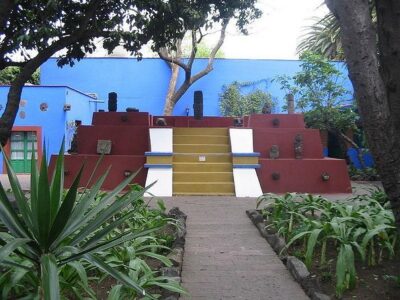
Frida Kahlo VIP [Museum Tickets Included] Bike, Markets & Churros
Read our review →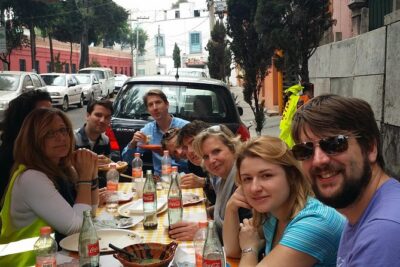

UTV, Free Horseback Ride, and Sky Bike Adventure Combo
Read our review →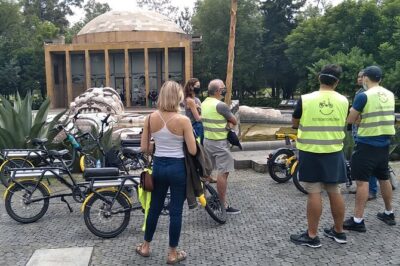
Mexico City E-Bike Tour with a taco and churros stop
Read our review →
Mexico City; ART NACO : Murals & Street Art Bike Tour
Read our review →
Beach ATV Adventure, Free Horseback Ride, and Sky Bike Experience
Read our review →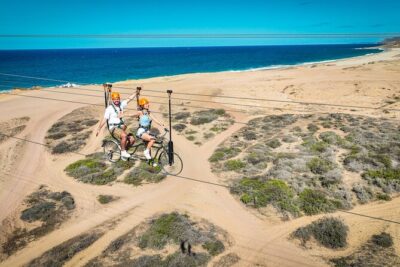
Browse the lists this tour appears in