
Reviewed · COOKING CLASSES
Mexico City: Authentic Mexican Cooking Class & Market Tour
Mercado de Medellín is the heart of this experience. You taste native-corn quesadillas, raw cacao, Oaxaca chocolate, seasonal fruit, hand-made ice cream, and even insects before returning to a polished Roma Norte studio to cook lunch. I especially like the nixtamalization lesson at the organic tortillería and the chance to taste ingredients many visitors never meet. I also like the small group, where everyone gets a real task instead of watching from the sidelines.
The main consideration is the price: $204 per person is a serious spend for a half-day activity. Nut allergies are a firm concern because nuts appear in the white mole and other tastings, and the experience is not suitable for children under 12 or people with mobility impairments.
Key points at a glance

- Mercado de Medellín tastings: Try native-corn quesadillas, cacao, Oaxaca chocolate, seasonal fruit, ice cream, and traditional edible insects.
- Four-course cooking class: Prepare sopes with two salsas, vegetable mextlapiques, white mole, and pastel de elote.
- Small group setting: A maximum of seven participants gives you hands-on time at the stove and worktables.
- Thoughtful drink pairing: Agua fresca, Mexican craft beer, Oaxacan mezcal, and wine from Valle de Parras accompany lunch.
- Roma Norte location: The studio and market are within walking distance, with no hotel transfer included.
- Strong teaching team: Pame, Mariana, Lorena, Kristel, and their assistants have led classes praised for clear teaching, humor, and warm attention.
A market first, then a meal you make yourself

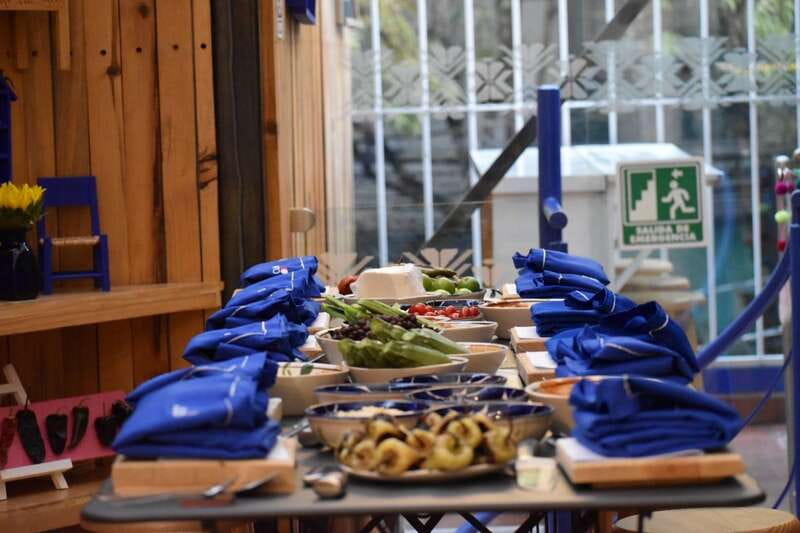
This is not a class that drops you straight into a kitchen with a pile of ingredients. It begins at Aura Cocina Mexicana, a contemporary studio in Roma Norte, with agua fresca, Mexican coffee, or a special infusion.
That quiet opening matters. You get a chance to meet the chef, settle into the room, and hear how Mexican cooking developed before the walking portion begins. The guide may be Pame, Mariana, Lorena, Kristel, or another member of the team. The names vary, but the teaching style described across the experience is consistent: friendly, energetic, and focused on participation.
The group is limited to seven people. That is a useful size for a cooking class. You can ask questions, handle ingredients, and take on a clear part of each dish without waiting behind a large crowd. One participant described being given something different to do for each of the four courses, which is exactly what you want from a hands-on class.
The market is only a walk away, so you do not lose time to a bus ride or a long transfer. The meeting point is at Medellín 191a, between Chiapas and Tapachula streets. Medellín street numbers are not in sequence, so use the cross streets rather than relying on the number alone.
More Cooking Classes in Mexico City
- Mexican Cooking Class with Food Market Visit in Mexico City
★ 5.0 · 506 reviews - Essence of Mexico: Authentic Mexican Cooking Class & Market Tour
★ 5.0 · 289 reviews - Mexican Cooking Class & Cocktails in Mexico City
★ 5.0 · 134 reviews
Mercado de Medellín: a useful lesson in Mexican ingredients
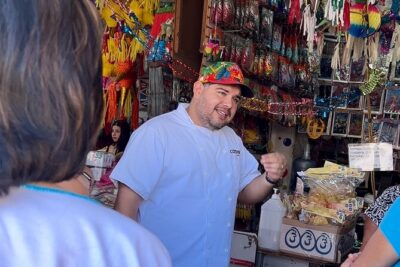
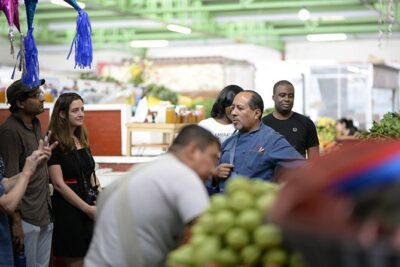
Mercado de Medellín is one of Roma Norte’s main food markets. The visit is not just a quick look around. You learn how the market is organized, what its different halls offer, and how ingredients move from everyday shopping baskets into Mexican cooking.
The most memorable stop is the organic tortillería. You taste a quesadilla made with native corn while seeing the traditional nixtamalization process. This is valuable because it gives context to a food many people know only as a packaged tortilla. Nixtamalization changes the texture, aroma, and nutritional qualities of corn, and seeing the process helps explain why fresh tortillas taste so different.
The chili stand adds another useful lesson. Mexican cooking does not treat chiles as one general category of heat. You learn about different varieties and how they change a sauce, from earthy and smoky notes to sharper heat. One particularly useful detail is the practice of using separate parts of the same chile to create different spice levels. That is a technique you can carry into your own kitchen.
Next comes cacao. You taste raw cacao and hand-made chocolate from Oaxaca. This makes a nice contrast with the processed chocolate many visitors know at home. The focus is on the ingredient itself and on regional Mexican production, rather than on a generic sweet treat.
The insect tasting is optional in spirit, but it is part of the experience you should expect. The selection can include crickets, chicatana flying ants, and chinicuil worms. The point is not shock value alone. These foods connect to older Mexican food traditions and show how broad the country’s idea of an ingredient can be. If insects are outside your comfort zone, you can still gain plenty from the market tour, but you should know they are presented as part of the tasting.
Seasonal fruit may include mamey, chicozapote, and tuna, the fruit of the prickly pear cactus. You also try hand-crafted ice cream. These stops keep the market visit from becoming a lecture. You are learning through small bites, and each one gives you a flavor to remember.
Back at the studio: four courses with real kitchen work

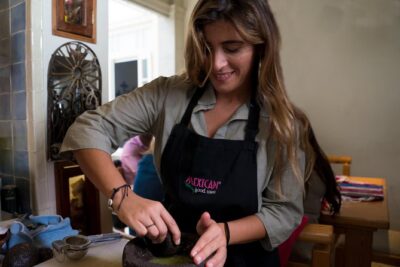
After the market, you return to the cooking studio for the main class. The apron is provided, and all ingredients are included. Printed recipes give you something practical to take home, which helps justify the cost more than a meal alone would.
The first course focuses on antojitos mexicanos, or small Mexican street foods. You prepare sopes and pair them with two salsas: a red molcajete sauce and a green sauce. The contrast is useful because it shows how roasting, grinding, chile selection, and fresh herbs can create very different results from a similar group of ingredients.
This is also the point where the class feels most social. You may be chopping, grinding, assembling, or tasting while another person works on a different part of the dish. Since the group is small, the chef can correct technique and explain why a preparation is done in a certain order.
The second course is mextlapiques. These have pre-Hispanic origins and are similar to a tamal without masa. The version described here is vegetable-only and covered with a hierbabuena sauce. That makes it a good counterpoint to the heavier dishes you may associate with Mexican food. It is simple in structure but not plain, and the mint-based sauce gives it a clean, herbal character.
Several participants singled out the tamal-style course as a favorite. I can see why. It is unfamiliar to many home cooks, yet its preparation is approachable enough to make the dish feel achievable rather than museum-like.
White mole and pastel de elote bring the meal together

The third course is white mole, a traditional dish from central Mexico often served at celebrations. Instead of the dark color people commonly associate with mole, this version uses light ingredients such as white pine nuts, almonds, peanuts, blonde raisins, and chile guero.
The sauce can be served with chicken, mushrooms, or panela cheese. The choice matters for different diets, though you should confirm the available option when booking if you need a specific one. More important, the recipe gives you a clear look at how a mole is built from nuts, dried fruit, chile, and seasoning. It is a good lesson in balance rather than simple heat.
The nut content deserves serious attention. The tour is specifically listed as unsuitable for people with nut allergies, and white mole is one reason. Do not assume an ingredient can simply be left out without changing the dish or creating a safety concern.
Dessert is pastel de elote, a Mexican sweet corn cake or cornbread, served with water-based chocolate. This was a memorable part of the class for several people, including one person who normally does not like cake. The appeal is easy to understand: corn gives the dessert a gentle savory edge, while the chocolate keeps it familiar.
The finished lunch is served with agua fresca, Mexican craft beer, mezcal from Oaxaca, and premium white or red wine from Valle de Parras. This is a generous pairing for a half-day class, but it also means the experience is not designed as a quick, alcohol-free activity. If you do not drink, the food and teaching still form the core of the class, but the advertised meal includes alcoholic beverages.
More Food Tours in Mexico City
- Historic Center Food Tour in Mexico City
★ 5.0 · 1,263 reviews - Lucha Libre Tickets & Tacos & Beer & Mezcal – BEST NIGHT EVER!
★ 5.0 · 1,077 reviews - Polanco Food Tour: The Bestselling Food Adventure in Mexico City
★ 5.0 · 881 reviews - Colonia Roma Food Tour
★ 5.0 · 838 reviews
Why the small group makes a difference

A cooking class can be disappointing when the instructor does all the work and hands out samples at the end. This format aims for the opposite. With up to seven participants, you are expected to take part in the preparation of each course.
That does not mean every person will perform every step. Cooking is shared, and the exact division of tasks can change with the group. Still, the small size gives the chef room to include people rather than letting one confident cook take over.
The teaching team also seems to be a major part of the experience. Pame is described as funny, engaging, and generous about explaining the food, the neighborhood, and the wider Valley of Mexico. Mariana is noted for her pleasant manner and strong command of the subject. Lorena is praised as a clear teacher, while Kristel’s class included discussion of regional differences, cooking methods, family food traditions, and ongoing culinary projects.
Those details suggest a class with personality, not a fixed demonstration repeated without much contact. The best guide for you will depend on the day, but you can expect English or Spanish instruction and an emphasis on Mexican food and culture.
Is $204 a fair price?

At $204 per person, this costs far more than a market walk or a basic cooking lesson. The value comes from the combination of both, plus a four-course lunch and a full drink pairing.
You are paying for a professional chef guide, a private-style studio, all ingredients, market tastings, recipes, an apron, and several alcoholic drinks. You are also paying for a group capped at seven. If you compare it with a simple food tour, the cooking component adds much more time and personal attention. If you compare it with a restaurant meal, the class gives you skills and recipes to take home.
Still, the price will not suit every budget. You should book it if food is one of the main reasons you came to Mexico City and you want a guided, polished experience. If you mainly want inexpensive street food, a self-guided market visit will cost much less.
The 4.7 rating from 39 reviews supports the idea that the experience delivers its main promise. The most consistent strengths are the guides’ warmth, the market education, the quality of the food, and the sense that each person gets involved.
Who should book this class?

I would recommend it to curious eaters who want more than a tasting menu. It suits couples, solo visitors, and small groups who like meeting other people while working toward a shared meal.
It is especially good for anyone who wants to understand ingredients rather than simply photograph them. The market explains native corn, chiles, cacao, seasonal fruit, and insects. The kitchen then shows how those ingredients fit into sauces, antojitos, mextlapiques, mole, and dessert.
It is less suitable for children under 12, people with nut allergies, and people with mobility impairments. The market involves walking, and the experience does not include hotel pickup or drop-off. Allow at least the stated 4.5 hours, with some flexibility since the activity may run longer when the group is enjoying the meal and conversation.
Free cancellation is available up to 24 hours before the start time, and you can reserve now and pay later. Those policies make planning easier, but the key practical step is still confirming the meeting point between Chiapas and Tapachula streets.
Should you book it?
Book this experience if you want a serious introduction to Mexican food that combines shopping, tasting, cooking, and conversation in one morning or afternoon. The standout elements are the native-corn tortillería, the unusual market tastings, the white mole lesson, and the chance to make every course with a small group.
Skip it if you dislike shared kitchen work, cannot safely eat nuts, or want a low-cost food outing. For everyone else, the price is high but defensible because you receive a market tour, hands-on instruction, a four-course lunch, drinks, and recipes in a single Roma Norte experience.
FAQ

Where does the experience begin?
It begins at Aura Cocina Mexicana at Medellín 191a, Roma Nte., Cuauhtémoc, 06700 Ciudad de México. Medellín street numbers are not in sequence, so the meeting point is between Chiapas and Tapachula streets.
How long does the activity last?
The listed duration is 4.5 hours.
How many people can join the class?
The group is limited to seven participants.
Which languages are available?
Instruction is available in English and Spanish.
Is the market tour included?
Yes. The experience includes a guided visit to Mercado de Medellín, which is within walking distance of the cooking studio.
What food will I prepare?
You prepare sopes with red and green Mexican salsas, vegetable mextlapiques with hierbabuena sauce, white mole, and pastel de elote with water-based chocolate.
Are drinks included?
Yes. The meal includes agua fresca, Mexican craft beer, mezcal from Oaxaca, and premium white or red wine from Valle de Parras.
Are ingredients and recipes provided?
Yes. All ingredients and printed recipes are included, and an apron is provided for the class.
Is the class suitable for children?
No. The experience is not suitable for children under 12.
Can people with nut allergies join?
No. The activity is not suitable for people with nut allergies, and nuts are used in the white mole and other tastings.
Is hotel transportation included?
No. Hotel pickup and drop-off are not included.
Can I cancel for a refund?
Yes. You can cancel up to 24 hours in advance for a full refund. You can also reserve now and pay later.
More Market Tours in Mexico City
- Cabo San Lucas Mexican Cooking Class Experience and Local Markets
★ 5.0 · 915 reviews - Cancun Taco Tour, Local Beer and Night Market with Transportation
★ 5.0 · 816 reviews - Cancun Street Food Tour with Food Stalls, Local Market and Murals
★ 5.0 · 723 reviews - Puerto Vallarta Cooking Class Experience with Market Tour
★ 5.0 · 698 reviews
More Shopping Tours in Mexico City
- Frida Kahlo VIP [Museum Tickets Included] Bike, Markets & Churros
★ 5.0 · 1,072 reviews - Frida Kahlo VIP [Museum Tickets Included] Walk, Markets & Churros
★ 5.0 · 982 reviews - Mexico City: Mystic Markets La Merced & Sonora Culinary Tour
★ 4.9 · 301 reviews - Lucha Libre, Tacos, Margaritas,Tequila and Night Market Tour
★ 5.0 · 64 reviews
Just added around Mexico City
- Kayaking on the Island of Sacrifices★ 5.0 · 49 reviews
- Paragliding in Valle de Bravo★ 5.0 · 188 reviews
- Hot Air Balloon Flight and Tour of the Majestic Pyramids★ 4.5 · 38 reviews
- Balloon flight / Breakfast in the cave / CDMX pick-up + Pyramids★ 5.0 · 54 reviews
- Hot air balloon ride with breakfast in Cueva from CDMX★ 5.0 · 47 reviews
- Africam safari (private tour)★ 5.0 · 33 reviews
- Lucha Libre, Tacos, Margaritas,Tequila and Night Market Tour★ 5.0 · 64 reviews
- Riviera Maya: Frida Kahlo Museum Guided Tour 2025★ 4.1 · 54 reviews
Cooking Classes, compared.
Cabo San Lucas Mexican Cooking Class Experience and Local Markets
Read our review →
Puerto Vallarta Cooking Class Experience with Market Tour
Read our review →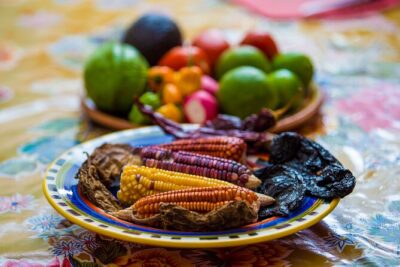
Mexican Cooking from Scratch in a Local Home in Tulum
Read our review →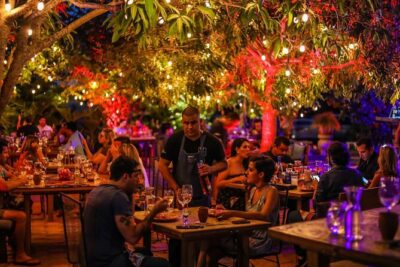
Mexican Cooking Class with Food Market Visit in Mexico City
Read our review →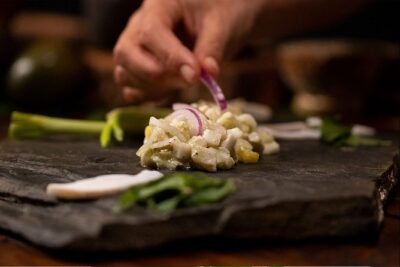
Flavors of Oaxaca: Cooking Class with No Set Menu and Local Market Tour
Read our review →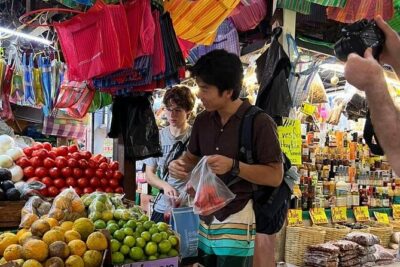
Taste of the Yucatan: Merida Cooking Class and Market Visit
Read our review →Browse the lists this tour appears in