
Reviewed · WALKING TOURS
Walking Tour: Temples and Convents (Western Zone)
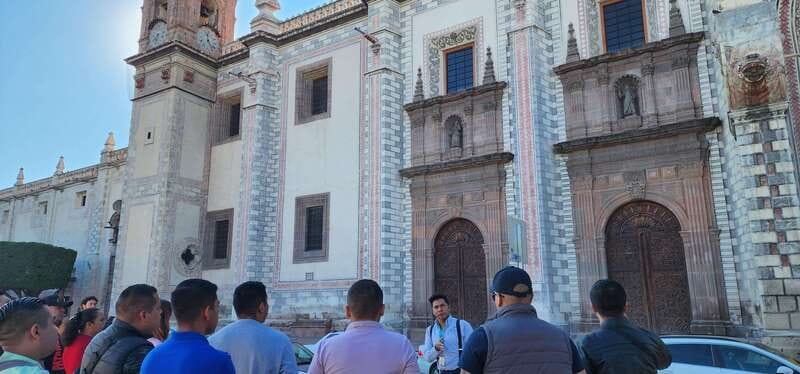
Querétaro’s Western Zone puts the city’s religious and artistic past right in front of you: ornate facades, former convents, and churches that helped shape colonial life. I like that this is not just a photo walk. Guides such as Jesús, Jorge, Carlos, and Julio explain the people, customs, legends, and political events behind the buildings.
I especially like the small-group feel, which has allowed guides to adjust the discussion to interests in architecture, art, or Mexican history. I also like the value: $23 buys two hours with a bilingual local guide, a useful introduction before exploring Centro on your own. The main drawback is time. Querétaro has plenty to see, so the route can feel brisk, and you should not expect a long interior visit at every church.
Key points at a glance
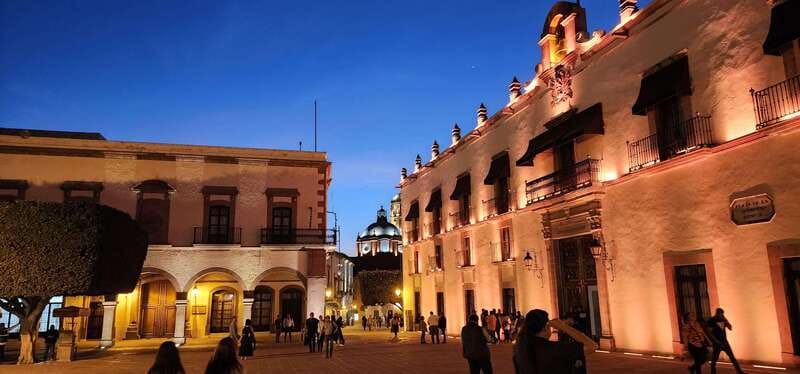
- Western Zone focus: Explore the former San Francisco convent and several major religious monuments.
- Baroque highlights: Santa Rosa de Viterbo is the architectural showpiece, with Capuchinas, San Agustín, and Santa Clara adding variety.
- Strong guide service: Carlos, Jesús, Jorge, and Julio have been praised for clear English, local knowledge, patience, and storytelling.
- Useful first-day activity: The tour gives you a framework for exploring Querétaro’s center and planning museums or cultural events afterward.
- Good practical value: The price is $23 per person for two hours, with Spanish and English available.
- Easy booking terms: You can cancel up to 24 hours ahead for a full refund, reserve without paying immediately, and use the wheelchair-accessible service.
Why the Western Zone makes a good introduction

Querétaro can be hard to read at first. Its historic center is packed with churches, plazas, old mansions, and civic buildings, but a handsome facade does not explain itself. A guide gives you the basic map: which religious orders arrived first, how convents worked, and why the city became an important center during the colonial period.
The Western route is especially useful if you care about architecture. The churches are not treated as isolated monuments. You hear how faith, art, education, and daily life met inside the city’s religious institutions.
This route is also a good choice for anyone who prefers history told through places. Instead of sitting through a long lecture, you move from one building to the next and see how the city’s character changes. One church may be restrained and formal; another may show the elaborate curves and decoration associated with Mexican Baroque design.
The tour is guided in Spanish or English, so you can ask questions in the language that works best for you. English-speaking guides have included Carlos, Jesús, Jorge, Julio, and others. Several guides are also comfortable adapting the conversation when you want more detail about art, architecture, Mexican history, or modern Querétaro.
More Walking Tours in Mexico:
- Historic Downtown Walking Tour
★ 5.0 · 1,289 reviews - Playa del Carmen Walking Food Tour
★ 5.0 · 1,274 reviews - Mexico City: Historic Downtown Walking Tour
★ 4.8 · 1,039 reviews
Starting with the former San Francisco convent
The former Convent of San Francisco is an important opening point because it represents the first religious order to arrive in Querétaro. That fact gives the building more weight than its appearance alone might suggest. It marks an early stage in the city’s Spanish religious presence and the spread of Catholic institutions during the colonial era.
Here, I would pay attention to the difference between a church as a place of worship and a convent as a wider community. Religious complexes could include living quarters, work areas, teaching spaces, and places for public religious life. Your guide helps connect the surviving architecture to that larger purpose.
This stop also sets up the central question of the Western route: how did religious orders influence Querétaro beyond worship? The answer touches education, artistic commissions, social organization, and the shape of the city itself.
The exact amount of time at each monument can vary. Two hours is enough for a clear overview, but not for a slow architectural study of every wall, altar, and doorway. If you want detailed photography, mention that early and keep an eye on the clock.
Reading Querétaro’s Baroque details at Santa Rosa de Viterbo

The Temple of Santa Rosa de Viterbo is the route’s grand architectural highlight. Its Baroque design gives you the clearest chance to see the decorative style celebrated on this walk. Your guide can help you look beyond the first impression and notice how ornament, structure, and religious meaning work together.
Baroque architecture often aims to stir emotion. Curving forms, elaborate decoration, and dramatic visual details were not added at random. They helped make religious spaces memorable and powerful. In Santa Rosa de Viterbo, the effect is particularly important because the building is tied to the city’s artistic development as well as its religious life.
I would give this stop your full attention, even if you are not an architecture specialist. Ask your guide to point out the details most people miss. Jesús, Jorge, and Carlos have been praised for answering specific questions rather than rushing through a memorized speech, and that approach matters here.
The church is also a good test of your expectations. This is a walking tour of monuments, not a private art-history seminar. You will gain a strong visual and historical framework, but a specialist interested in every architectural term may want extra time afterward.
Capuchinas, San Agustín, and Santa Clara
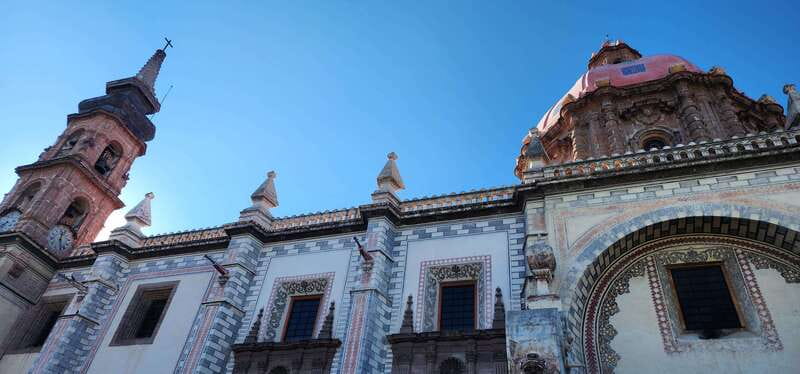
The route continues through other important religious buildings, including Capuchinas, San Agustín, and Santa Clara. Seeing several churches in one outing helps you compare them rather than treating each one as a separate stop.
Capuchinas adds another chapter to the story of women’s religious communities. San Agustín contributes to the city’s artistic and architectural range, while Santa Clara shows how different orders helped shape the urban center. The guide’s role is to explain those differences in plain language and connect them to the city around you.
Do not worry if you cannot remember every name or date. The useful result is a mental map. You begin to recognize which buildings belong to the religious history of Querétaro and why they matter.
The walk can also help you decide where to return. If Santa Rosa catches your eye, you may want more time there. If the history of convent life interests you, ask your guide for related places or museums. The tour is strongest when you treat it as a starting point rather than the final word on Querétaro’s religious heritage.
A few more Mexico days worth comparing
- Querétaro: City Tour in a Classic Ford T Vehicle
★ 4.7 · 229 reviews - Santiago de Querétaro: Pueblos Mágicos Cheese and Wine Route
★ 4.8 · 96 reviews - Queretaro: colonial architecture and history
★ 5.0 · 62 reviews - Tacos Tequila y Más – The Centro of Centro (Vegetarian Friendly)
★ 5.0 · 56 reviews
What the guides add to the buildings
The most praised part of this experience is the guide service. Jorge has been singled out for excellent English, a warm manner, and an ability to answer questions at length. Jesús has earned praise for broad knowledge of Mexican history, art, culture, and Querétaro itself. Carlos is valued for interesting facts and anecdotes, while Julio is known for a friendly, informative approach.
That consistency matters because old churches can blur together without a good narrator. A guide turns names and dates into a story about how Querétaro developed.
Several guides have also adapted the route when the group was small. In one case, a solo participant received a more flexible discussion centered on history, architecture, and art. Small groups can make it easier to stop for questions, ask for comparisons, or spend a little extra time at a favorite monument.
You should still keep your expectations sensible. The guide’s exact style can vary, and one participant found it harder to hear when a guide was ill and wearing a mask. Another experienced a delay of about 20 minutes. Those were exceptions within a very strong overall record, but they are useful reminders to arrive ready for a live experience rather than a perfectly timed audio program.
Two hours, and why the pace matters

Two hours is a smart length for a first look at Querétaro. You get enough time to cover several important monuments without committing half a day to a single activity.
The tradeoff is pace. One guide may move quickly between stops, while another may spend longer answering questions. People who want a broad orientation will likely appreciate the energy. If you prefer long periods inside each church, detailed sketches, or extensive photography, you may feel that the tour ends too soon.
One participant suggested three hours because there was so much to see and discuss. That is a fair observation, but the shorter format has its own advantage. You can take the tour in the morning or afternoon and still have time for museums, meals, shopping, or independent wandering.
The timing of your walk also affects comfort. A March afternoon was described as pleasant, while a May outing took place in intense heat. One guide made a point of finding shade, checking on the group, encouraging drink breaks, and lending an umbrella. I would still carry water, wear comfortable walking shoes, and bring sun protection.
The Eastern Zone is a different tour

The information for this activity also describes an Eastern Zone route, but that is a separate focus from the Western Zone temple-and-convent walk. If you want the city’s foundation, government, and viceroyalty story, confirm that you are selecting the correct route.
The Eastern itinerary begins at Plaza Fundadores, where evangelization in Querétaro began. It includes the Acueducto de Querétaro, an impressive work of colonial engineering, and Casa de la Corregidora, linked to important events in Mexico’s independence.
That route is about origins, civic history, and the meeting of Spanish and Indigenous cultures. The Western route is about religious institutions, artistic expression, and spiritual life. Both help explain Querétaro, but they answer different questions.
If you have more than one day, taking both would give you a fuller picture. If you have only two hours, choose based on your interests. Pick the Western route for churches, convents, and Baroque architecture. Pick the Eastern route for the city’s foundation, independence, and colonial government.
Is $23 a fair price?
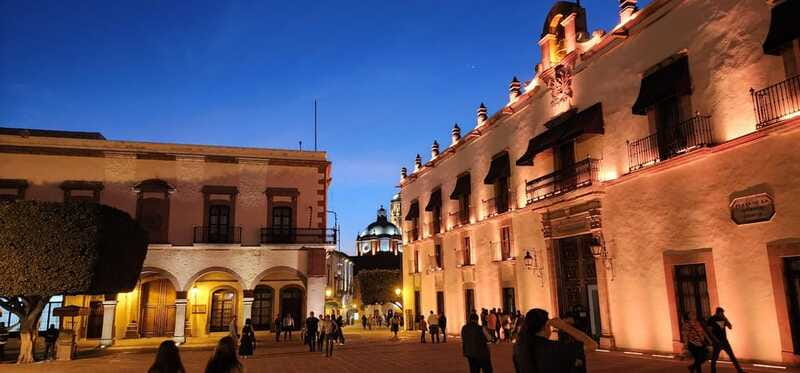
At $23 per person, the value is good if you want context rather than simply a list of landmarks. You receive two hours with a live guide, in Spanish or English, and the route brings together several major monuments that would be easy to pass without understanding.
The strongest value comes from the questions you ask. If you want to know why a convent mattered, how Baroque decoration worked, or how a religious order influenced the city, speak up. Guides such as Jesús and Jorge have been praised for taking questions seriously and offering more than a fixed script.
Food and drinks are not included, but that is not a serious drawback for a two-hour city walk. Plan a drink stop before or after, especially during hot weather.
You can reserve now and pay later, and cancellation is free up to 24 hours before the activity for a full refund. The service is listed as wheelchair accessible, which makes it easier for more people to consider, though you should still confirm any personal mobility needs when booking.
The best way to use this tour

I would schedule this on your first day in Querétaro. The walk gives you a sense of direction and helps you recognize the buildings you encounter later. It can also help with planning cultural stops, since some museums and arts venues operate on limited days.
One participant used the tour as a springboard for visiting CEART and attending a chamber music performance. That is exactly the sort of follow-up that makes the walk more useful. You receive the historical setting first, then see how Querétaro’s cultural life continues today.
Keep your phone or camera ready, but do not spend the whole route looking through a screen. The best moments come when the guide points out a detail and explains why it matters.
If you are traveling alone, the tour may become especially flexible when the group is small. If you are with family or friends, agree beforehand that everyone can ask questions. The guides have shown patience with different interests, and the experience works best when the conversation is active.
Who should book it?
I recommend this tour for first-time visitors, architecture fans, history students, and anyone who wants a clear introduction to central Querétaro without spending a full day indoors. It also suits English-speaking visitors who want access to local history without relying on a guidebook.
You may want something else if you prefer silent sightseeing, a strictly timed route, or a detailed interior visit at every church. The two-hour format gives you breadth, not exhaustive study.
For most people, the decision is simple. Book the Western Zone if temples, convents, Baroque design, and the religious development of Querétaro interest you. Book the Eastern Zone instead if your priority is the aqueduct, independence history, city origins, and civic landmarks. At $23, either route is a sensible way to get your bearings before exploring the historic center on your own.
FAQ
How long does the Walking Tour: Temples and Convents last?
The tour lasts two hours.
How much does the tour cost?
The price is $23 per person.
Is the tour offered in English?
Yes. The tour is available with a live guide in English or Spanish.
Which monuments are part of the Western Zone route?
The Western Zone focuses on the former Convent of San Francisco, the Temple of Santa Rosa de Viterbo, Capuchinas, San Agustín, and Santa Clara.
Is the tour wheelchair accessible?
Yes, the activity is listed as wheelchair accessible.
Are food and drinks included?
No. Food and drinks are not included in the tour price.
Can I cancel for a refund?
Yes. You can cancel up to 24 hours in advance for a full refund.
Is there also an Eastern Zone tour?
Yes. The Eastern Zone has a different focus, including Plaza Fundadores, the Acueducto de Querétaro, and Casa de la Corregidora.
Just added around Mexico
- Snorkel with Whale Sharks in La Paz★ 5.0 · 42 reviews
- La Paz Whale Shark & Sea Lion Snorkeling + Balandra Tour★ 5.0 · 78 reviews
- Private Trip Espiritu Santo Island★ 5.0 · 59 reviews
- All-Inclusive Catamaran Tour | Beaches & Sea Lions from Los Cabos★ 4.5 · 37 reviews
- La Paz Beaches Half Day Tour★ 4.5 · 54 reviews
- Gray Whale Watching Tour with Marine Biologist and Small Group★ 5.0 · 37 reviews
- Espiritu Santo Island and sea lions★ 5.0 · 50 reviews
- Full Day Gray Whale Watching Experience★ 5.0 · 53 reviews
Walking Tours, compared.


Frida Kahlo VIP [Museum Tickets Included] Walk, Markets & Churros
Read our review →
Puerto Vallarta’s Best Canopy Zipline + Jorullo Bridge walk
Read our review →
Historical and Cultural Walking Tour of San Miguel de Allende
Read our review →
Tacos and Tequila Walking Tour with Taste of Miguel
Read our review →Browse the lists this tour appears in