
Reviewed · MEZCAL TASTINGS
Mezcal Tour Oaxaca
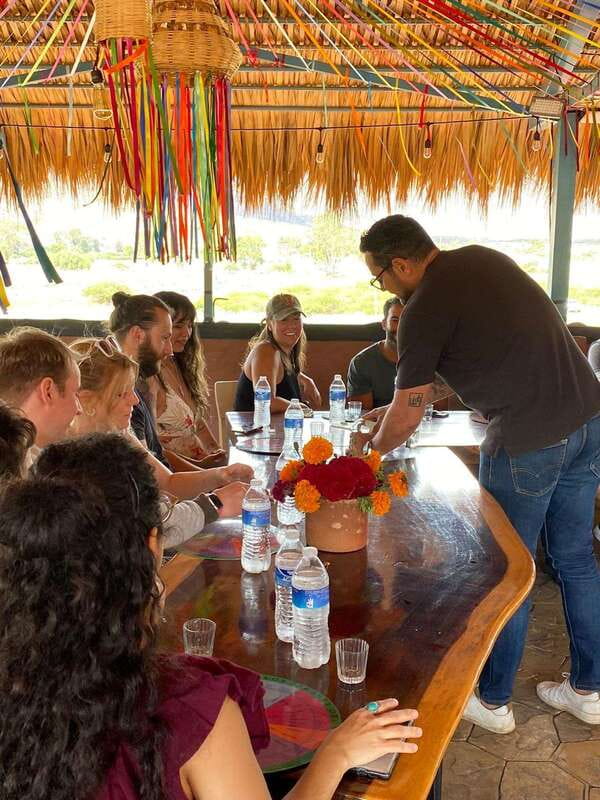
The best part of this Oaxaca mezcal tour is that it takes you past the tasting glass and into the working world behind it. You’ll see agave fields, production equipment, fermentation, distillation, and the people who keep old methods alive in Santiago Matatlán and Tlacolula de Matamoros. Antonio is often the main guide, while Remy and Ricardo may also lead parts of the visit.
I like the agave plantation walk, which gives you a clear sense of how long this spirit takes to make, and I like the generous tasting, with as many as 13 mezcals, including pechuga and unusual blends. The main drawback is simple: food is not included, and five hours of tasting can feel like a lot if you arrive without breakfast or do not usually drink spirits.
Key points to know before booking
- A working mezcal visit: See production from agave plant to finished spirit at artisanal distilleries.
- Up to 13 tastings: Try several agave varieties, pechuga mezcal, pulque, and unusual creations such as cannabis-infused mezcal.
- Guides with real expertise: Antonio is praised for explaining agave, distillation, fermentation, flavor, and local culture in clear English.
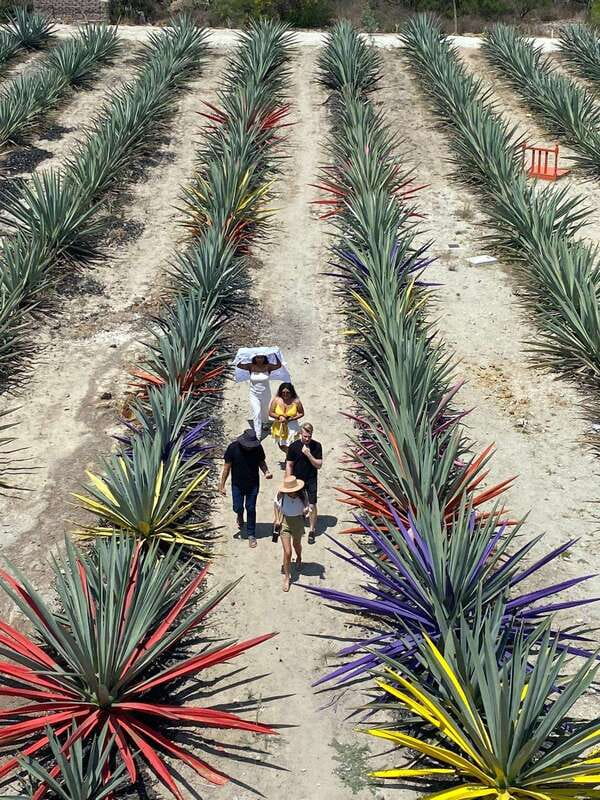
- A useful field lesson: Walk through an agave plantation and learn about the plant’s life cycle and reproduction.
- Five hours from central Oaxaca: Meet at Reforma 403 at 9:30am, with round-trip transportation included.
- Adults only: The activity is not suitable for children under 18, and you should wear closed shoes.
Why this tour is more than a mezcal tasting
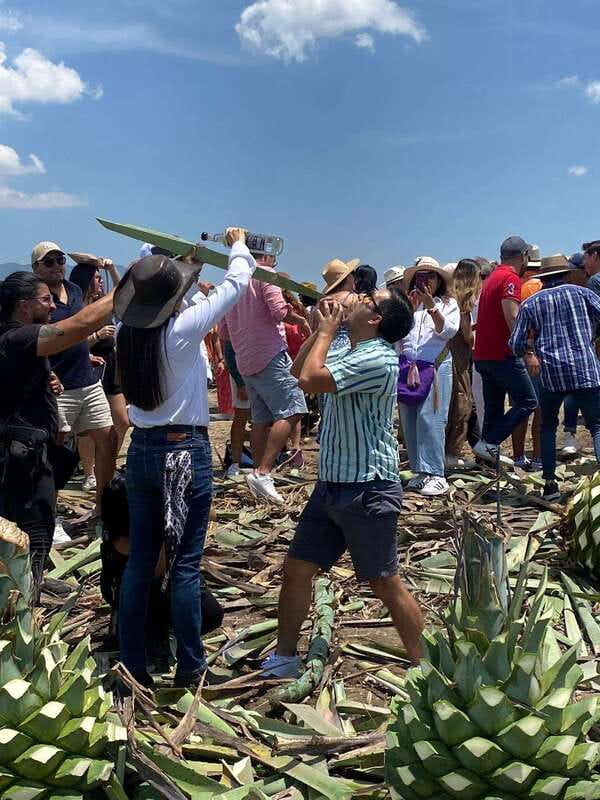
Oaxaca is the center of Mexico’s mezcal culture, but a bar tasting in Oaxaca City can only show you the last step. This outing gives you the larger picture. You see where the agave grows, how the plant is handled, how juice becomes alcohol, and how local families turn a long process into a spirit with a strong sense of place.
That matters because mezcal is not made from a single standard recipe. The agave type, roasting method, fermentation, distillation, and the choices of the mezcalero all affect the final drink. The guide explains these differences as you move through the palenque, the local word often used for a mezcal production site.
I especially like that the day combines explanation with actual production. You are not simply taken into a shop and offered bottles. You get to see old methods still in use and hear how mezcal making has been passed down through five generations of mezcaleros.
The setting also takes you outside the city. Santiago Matatlán and Tlacolula de Matamoros are well-known mezcal areas, and the drive gives the visit a useful regional context. The tour is still short enough to fit comfortably into a day in Oaxaca, but long enough to make the spirit feel less mysterious.
More Mezcal Tastings in Oaxaca
- Hierve el Agua, Tule Tree, Mitla and Mezcal Distillery Tour
★ 4.5 · 1,094 reviews - Explore Hierve el Agua, Mitla, Tule, Textile and Mezcal for a day
★ 5.0 · 1,043 reviews - From Oaxaca de Juarez: Hierve el Agua and Mezcal Distillery
★ 4.9 · 615 reviews
Starting at Reforma 403 at 9:30am
The meeting point is Reforma 403, with departure scheduled for 9:30am. It is only a pickup point, so you do not need to knock on the door. The guide is expected to arrive on time, which makes it important for you to be ready before the stated departure.
Round-trip transportation is included. The exact vehicle and group size are not specified, so I would treat this as a shared excursion unless your booking details say otherwise. The transport is useful here because the important sites are outside central Oaxaca, and arranging several stops on your own would take more effort.
Eat a good-sized breakfast first. This is not just a polite suggestion. Food is not included, while the tasting portion may include up to 13 mezcals, plus pulque. You may have the chance to buy food directly from a distillery, but you should not count on that as your main meal.
Wear closed shoes. You will walk through an agave plantation and visit working production areas, so sturdy footwear makes more sense than sandals. The activity specifically rules out bikes, climbing, diving, and bare feet, though those restrictions are not likely to affect most people on this type of outing.
Walking through the agave plantation
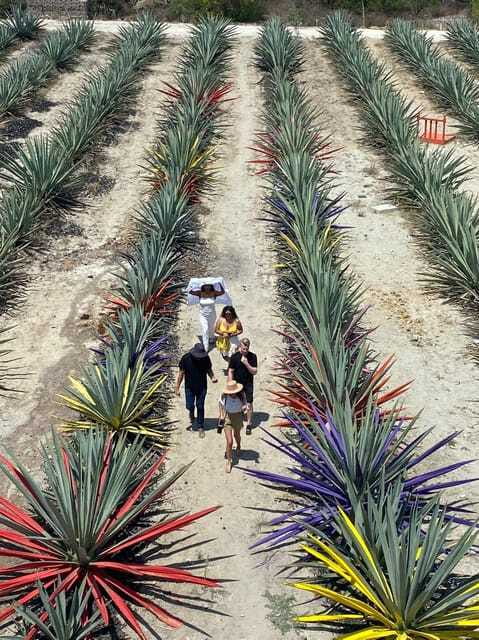
The agave field is one of the most useful parts of the day because it slows the process down. In a tasting room, it is easy to forget that mezcal begins with a plant that must grow before anyone can roast, ferment, or distill it.
Your guide explains the agave life cycle and how the plant reproduces. You also learn that different kinds of agave can be used for mezcal, each contributing its own character to the spirit. The point is not to memorize every variety. It is to understand why two mezcals can taste very different even when they are made in the same region.
This walk also helps explain the value of mezcal. Agave is not an instant crop, and traditional production requires patience at several stages. The plantation gives you a physical sense of that time before you begin tasting.
The field visit may be especially enjoyable later in the day. One account describes walking through the plants at sunset with Ricardo, who brought a lively personality to the visit. Since timing can vary, do not assume sunset is guaranteed, but bring a light jacket if you tend to feel cold after the day warms up. One person forgot a jacket and was lent one, but I would not rely on that kind of luck.
Seeing the palenque from start to finish
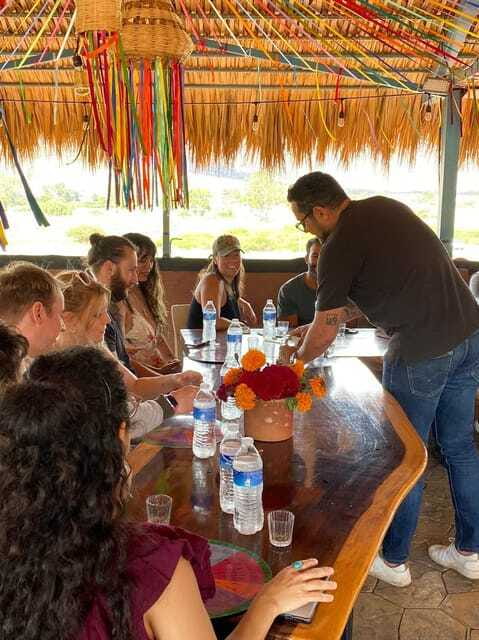
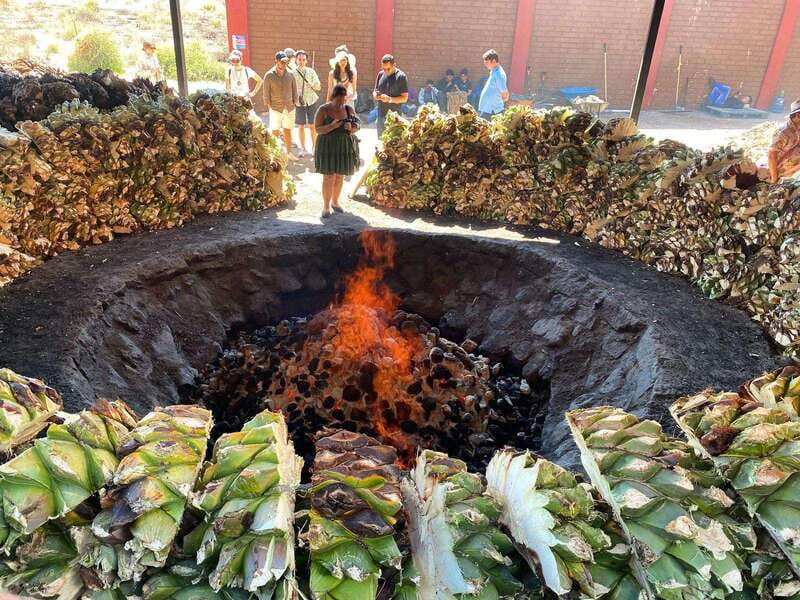
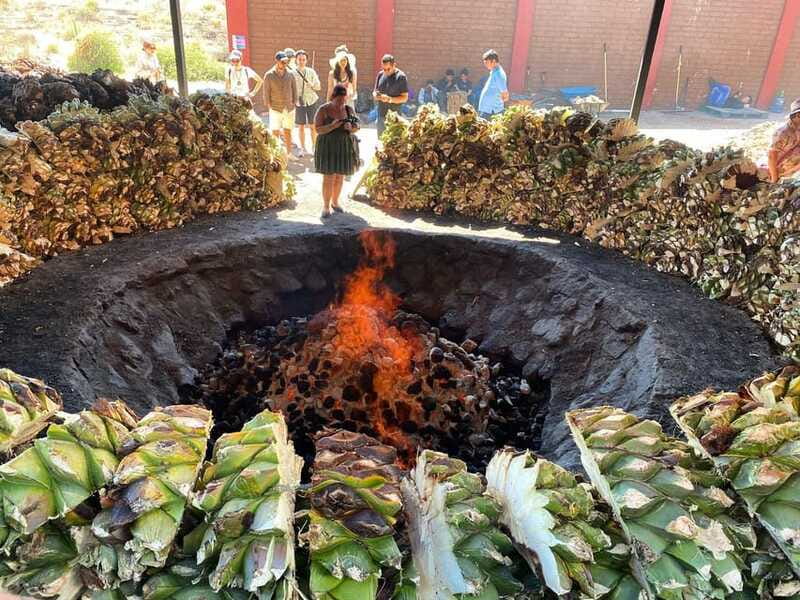
At the distillery, the guide walks you through the production process in order. You learn about the treatment of the agave, fermentation, and the methods used to distill the liquid into mezcal.
The value here is the explanation. The equipment itself may look rough and practical, but the work behind it is precise. You hear how traditional methods have been kept alive through generations and how the mezcal maestro makes decisions at each stage.
Antonio receives particular praise for handling several roles at once: driver, guide, and mezcal maker. He explains the types of agave, production techniques, and tasting methods, while answering questions about the wider role of mezcal in Oaxaca. His connection to the subject makes the tour feel more like a lesson from someone involved in the trade than a standard sales presentation.
You may visit two distilleries, as some itineraries include more than one production site. The available details also describe a visit to an artisanal distillery, so the exact number of stops may depend on the day. Either way, you should expect an operating place where mezcal is made, not a museum built only for tourists.
The distillery is also where you can buy bottles directly. That can be useful if you find a mezcal you like, but remember that buying is optional and separate from the tour price.
A completely different kind of day out, same trip:
- Monte Alban Guided Half Day Tour
★ 5.0 · 880 reviews - Oaxaca de Juarez: Monte Alban Half-Day Tour
★ 4.7 · 492 reviews - AUTHENTIC OAXACA CULTURAL FOOD TOUR, eat like a local.
★ 5.0 · 462 reviews - Oaxaca: Tule, Mitla & Hierve el Agua, & Mezcal Tour
★ 4.7 · 456 reviews
A master class with a five-generation mezcal family
The production explanation is presented as a mezcal master class. You learn how fermentation and distillation shape the drink, and how techniques have been carried through five generations.
This is where the tour moves beyond a simple list of facts. You begin to understand why mezcal can show smoke, fruit, earth, herbs, sweetness, or other flavors. The guide helps connect those flavors to the production choices rather than asking you to treat tasting as a guessing game.
A good guide also gives you permission not to like every sample. Mezcal can be intense, and the point of the tasting is comparison. Take your time, ask questions, and pay attention to how the drinks differ. The emphasis on flavor makes this a particularly good choice if you enjoy identifying aromas and tastes in wine, beer, coffee, or spirits.
The English instruction is a strong practical feature. Antonio is described as explaining the subject clearly in English, and Remy is noted for speaking both English and Spanish. The named guides may vary, but the activity is offered in English.
Tasting up to 13 mezcals, including pechuga
The tasting is the largest part of the experience. You may sample up to 13 different mezcals, giving you a broad look at styles and production choices within Oaxaca.
Pechuga mezcal is included among the possible samples. This style is known for an additional distillation involving regional ingredients, and it is often treated as a special bottling. The exact recipe and ingredients can vary, so the guide’s explanation is important here.
The tasting may also include experimental blends, including activated cannabis mezcal. This is a distinctive feature, but it is worth keeping your expectations sensible. Unusual ingredients do not automatically make a mezcal better. The useful part is comparing the flavor and learning why the maker created it.
The word up to matters. You should not assume every guest will receive the full 13 samples in every circumstance. The range depends on the day and the tasting plan. Even a smaller selection would still give you more comparison than a single pour at a bar.
Since the tasting is substantial, pace yourself. Eat beforehand, drink water when available, and do not feel obliged to finish every pour. The tour is for learning as well as drinking.
Trying pulque at a local pulqueria
The pulqueria stop adds another layer to the day. Pulque is an older Mexican drink made from agave sap, and it is different from mezcal because it is fermented rather than distilled.
You get to try different pulque drinks and learn about their place in local life. One account describes the drinks as being used by locals as medicine, which gives the stop a cultural angle beyond alcohol. The visit helps show that agave has long been important in Mexico in more ways than one.
Pulque is not as polished or familiar to many international drinkers as mezcal. That is part of its appeal. You are trying a drink connected to everyday tradition, not just a premium bottle presented for export.
The pulqueria also breaks up the distillery visits. Instead of repeating the same tasting-room format, the day moves between fields, production, and a place associated with local drinking culture.
What the $102 price includes
At $102 per person, this is not the cheapest way to taste mezcal in Oaxaca. You can spend far less on a few pours in the city. The price makes more sense when you count the transportation, five-hour duration, plantation visit, production instruction, pulque stop, and extensive tasting.
The strongest value is for someone who would otherwise need to arrange transport to the mezcal towns, find a distillery, hire a guide, and organize tastings separately. The included English explanation also matters, since the production process is the heart of the visit.
Food is not included, and bottles purchased at the distillery are extra. Add those costs if you want a full meal or plan to take mezcal home. You should also consider that the value depends on your interest in the subject. If you only want one or two drinks, this is probably more than you need. If you want to understand how mezcal is made, the price is easier to justify.
The tour allows free cancellation up to 24 hours before departure, and you can reserve now and pay later. Those terms give you some flexibility while planning, but check the booking conditions shown when you reserve.
Who will enjoy this Oaxaca mezcal day
I would choose this tour if you want production explained in detail rather than a quick tasting with a sales pitch. It suits adults who enjoy spirits, local food and drink traditions, agricultural visits, and conversations with people who make things by hand.
It is also a good choice for a first mezcal experience. You do not need to know the difference between agave varieties before you arrive. The plantation and production walk give you the basic framework, and the tasting lets you apply it immediately.
Experienced mezcal drinkers may enjoy it for a different reason. The pechuga samples and unusual blends offer flavors that may not appear in a standard Oaxaca bar tasting. The chance to buy directly from a distillery may also appeal if you are looking for a bottle with a closer connection to its producer.
This is not a good fit for children under 18. It may also be a poor choice if you dislike strong spirits, prefer a relaxed meal-based day, or want an excursion with no alcohol. The morning start and five-hour schedule are manageable, but you should plan the rest of your day with some flexibility rather than booking another demanding activity immediately afterward.
Practical tips for a better visit
- Eat breakfast before meeting the guide at 9:30am.
- Wear closed shoes for the plantation and working production areas.
- Bring a light layer, especially if your visit includes the field walk later in the day.
- Ask about the agave variety in each mezcal, not only the flavor.
- Taste slowly. Thirteen samples is a lot of information as well as a lot of alcohol.
- Take advantage of the guide’s English explanations and ask about fermentation, distillation, and reproduction.
- Bring room in your luggage if you may buy a bottle directly from the distillery.
- Remember that food is not included.
Should you book this mezcal tour?
Book it if you want the full chain: agave field, working distillery, production lesson, pulque, and a broad mezcal tasting. The strongest parts are the clear instruction from guides such as Antonio and Remy, the field visit with Ricardo or another local guide, and the chance to compare many styles in one day.
Skip it if you only want a short tasting, do not drink alcohol, or need lunch included. For most adults who want to understand Oaxaca’s mezcal culture rather than simply sample it, $102 is a fair price for five hours of transport, access, teaching, and tasting.
FAQ
Where does the mezcal tour begin?
The meeting point is Reforma 403 in Oaxaca, with a scheduled start time of 9:30am. You do not need to knock on the door because it is only the meeting point.
How long does the tour last?
The activity lasts five hours.
Is transportation included?
Yes. Round-trip transportation is included in the activity.
Is the tour offered in English?
Yes. The activity is offered in English. Guides named in the information include Antonio and Remy, with Ricardo also leading the agave plantation portion on some visits.
How many mezcals will I taste?
You may taste up to 13 different mezcals. The selection can include pechuga varieties and unusual blends such as activated cannabis mezcal.
Is food included?
No. Food is not included, so you should eat a good-sized breakfast before the tour. You may have the option to buy directly from the distillery.
Is the tour suitable for children?
No. The activity is not suitable for children under 18.
What should I wear and bring?
Wear closed shoes and consider bringing a light jacket for the plantation walk. A good breakfast is strongly advised, and you should be prepared for a substantial alcohol tasting.
Just added around Oaxaca
- Canyoning in the Oaxacan Coast Canyons★ 5.0 · 76 reviews
- The Mezcal Journey★ 4.9 · 78 reviews
- Street Art with an artist★ 4.9 · 32 reviews
- Oaxaca: Vegetarian Cooking Class★ 4.8 · 139 reviews
- Oaxaca: Mount Albán & Cuilapam de Guerrero Full-Day Tour★ 4.7 · 110 reviews
- Oaxaca: San Martín Tilcajete, Jalieza & Ocotlán Crafts Route★ 4.6 · 48 reviews
- Oaxaca: Traditional Oaxacan Cooking Class with Market Visit★ 4.9 · 80 reviews
- Oaxaca: Mezcal Adventure★ 4.5 · 44 reviews
Mezcal Tastings, compared.
Food & Mixology Tour:Tequila,Tacos, Mezcal and Agave Cocktails
Read our review →
Hierve el Agua, Tule Tree, Mitla and Mezcal Distillery Tour
Read our review →
Lucha Libre Tickets & Tacos & Beer & Mezcal – Best Night Ever
Read our review →
Explore Hierve el Agua, Mitla, Tule, Textile and Mezcal for a day
Read our review →

Lucha Libre Tour and Mezcal Tasting in Mexico City
Read our review →

Browse the lists this tour appears in