

Reviewed · TURTLE SWIM TOURS
Puerto Vallarta: Baby Turtle Release in Conservation Area
A tiny turtle crawling toward the Pacific while the sun drops over Puerto Vallarta is the heart of this experience. Before that gentle scramble, you learn how conservation workers find nests, move eggs, and protect hatchlings from the many dangers between the nest and the sea.
I like the hands-on conservation lesson and the chance to release a baby turtle yourself. I also like the timing: the educational work happens before sunset, so the final release comes with bay views and softer light. The main consideration is simple but important: turtles do not hatch on command, so you may need to reschedule.
Key points to know before booking
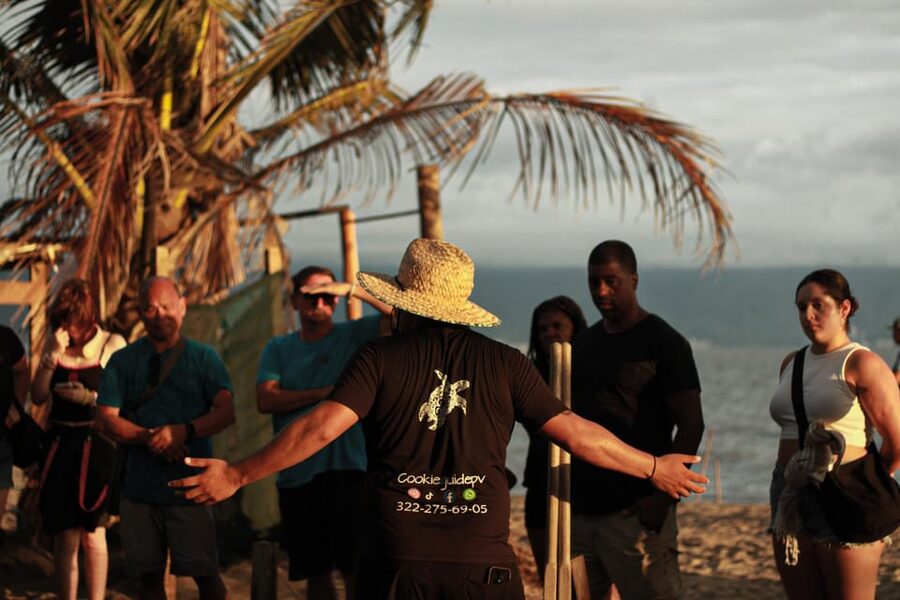
- Baby turtles are not guaranteed on your scheduled day: You can reschedule or cancel if no turtles hatch.
- The conservation camp requires a 15-minute walk: Expect beach access and uneven natural ground rather than a polished attraction.
- Eduardo and the bilingual guides make the lesson accessible: Tours are offered in English and Spanish, with guides such as Eduardo, Eddie, Carlos, and Tony leading recent departures.
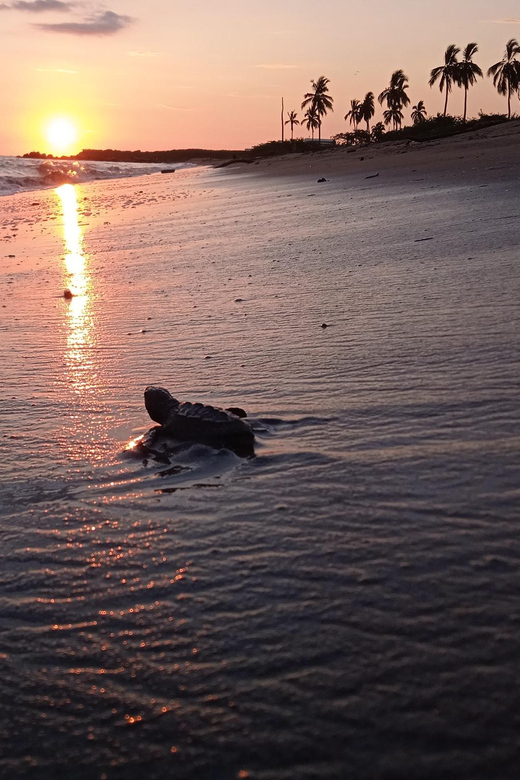
- The sunset is part of the experience: You watch the hatchlings head for the sea with Puerto Vallarta Bay as a backdrop.
- The $40 price covers more than a quick photo: It includes the guide, turtle release, conservation demonstration, water, and photos.
- Arrive independently and wait at the meeting point: Do not walk to the camp alone if you arrive early.
Why this Puerto Vallarta turtle release feels different

Many wildlife activities keep you at a distance. This one asks you to take part in a small but meaningful moment: holding a newly hatched turtle briefly and helping set it on its way to the ocean.
The release is emotional without needing much staging. You may name your turtle, make a wish, or say a short prayer before placing it on the sand. Then you watch it use its flippers to crawl toward the water. The animal is tiny, the beach is broad, and the survival odds are not presented as a fairy tale. That contrast gives the experience its weight.
The conservation lesson matters just as much as the release. You learn about the olive ridley turtle’s life cycle and why eggs are collected from vulnerable nests. You also see how workers search for nests, gather the eggs, and place them in an incubation area until they hatch.
I like that the activity connects the sweet moment at the shoreline with the less glamorous work behind it. Protecting sea turtles involves careful nest checks, egg handling, incubation, timing, and public education. The release is the visible part of a much longer effort.
More Turtle Swim Tours in Puerto Vallarta:
- Half-Day Sea Turtle and Cenote Snorkeling Tour from Cancun & Riviera Maya
★ 5.0 · 2,039 reviews - Tulum Ruins, Turtles in Akumal and Cenote tour
★ 5.0 · 1,706 reviews - 5-in-1 Cancun Snorkeling: Turtles, Reef, Musa, Shipwreck, Cenote
★ 4.5 · 1,678 reviews
Meeting near Marina Vallarta and walking to camp
The meeting point is at the end of Paseo Bocanegra, reached through the Marina Vallarta area. You enter via Albatros Street, continue across Paseo Bocanegra, and follow the road until you see a golf course, a wall with drawings, and the beach at the end.
This is not a large tour office with a bright sign and a waiting room. Pay close attention to the directions and arrive with enough time to find the spot. If you arrive early, wait at the meeting point. Do not walk to the campground alone.
From there, you walk about 15 minutes to the conservation area. The walk is part of the setting, but it also explains the accessibility warning. This is not a suitable outing for wheelchair users or people with mobility impairments, and it may be tiring if you have a low level of fitness.
Transportation is not included, so you arrange your own way to the meeting point and back. Some people use a taxi or rideshare service. Plan the return before the activity ends, especially if you are staying outside Marina Vallarta.
The 45-minute lesson at the conservation camp
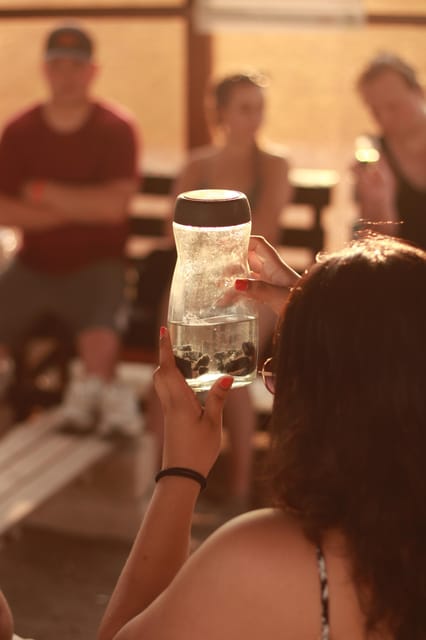
The main educational session lasts about 45 minutes. It covers the olive ridley turtle, from nesting and egg collection to incubation and hatching.
The most useful part is the nest demonstration. Conservation workers show how they search for nests and collect eggs for protection. You learn why the eggs are placed in a controlled conservation area instead of being left entirely exposed on the beach.
The lesson also gives you a better sense of the work involved before any hatchling reaches your hand. The camp is not simply storing eggs and waiting. It is a working site where workers prepare for hatching and protect a vulnerable stage of the turtles’ life cycle.
Guides are a major part of the experience. Eduardo is frequently named as the lead guide, and Eddie is another guide praised for making the lesson lively and clear. Carlos and Tony have also led departures. The guide team speaks English and Spanish, and Eduardo has handled a mixed group by explaining the subject in both languages.
That bilingual approach is useful if your party includes people with different language needs. It also means the talk may take a little time, but the subject benefits from patience. You are not only waiting for the cute part. You are learning why the release exists.
Searching, incubating, and waiting for the hatch
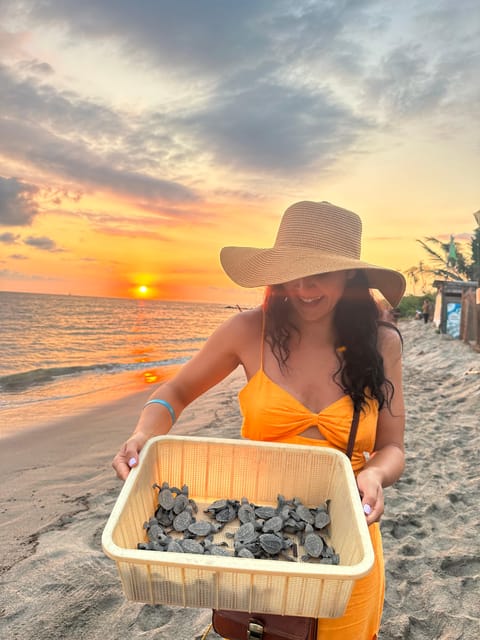
The turtle release depends on nature’s schedule. Some days have hatchlings ready to go, and some do not.
That uncertainty is the biggest practical drawback. You could arrive ready for the final moment and find that no turtles hatched that day. The operator allows you to reschedule or cancel in that situation, which makes booking earlier in your Puerto Vallarta stay a smart move. If your schedule has room the following day, you have a better chance of fitting in a new departure.
This is also why I would not book it on your final evening in town. Leave yourself at least one possible backup day. You are paying for access to a real conservation process, not a guaranteed stage performance.
The waiting element gives the activity some honesty. You are seeing nature on its own timetable. That may be inconvenient, but it is also part of what makes the experience feel connected to actual conservation work.
A few more Puerto Vallarta days worth comparing
- Puerto Vallarta Best Zipline Canopy + Tequila and Speed Boat Ride
★ 5.0 · 3,786 reviews - Winner 2025 Downtown Vallarta Food Tour with Vallarta Food Tours
★ 5.0 · 3,738 reviews - Extreme Adventure, Wildest Bridge, ATV & Ziplines
★ 5.0 · 3,179 reviews - Mega Yacht ALL INCLUSIVE Yelapa Waterfall & Snorkeling Adventure
★ 5.0 · 2,515 reviews
Sunset and the 20-minute wildlife viewing period
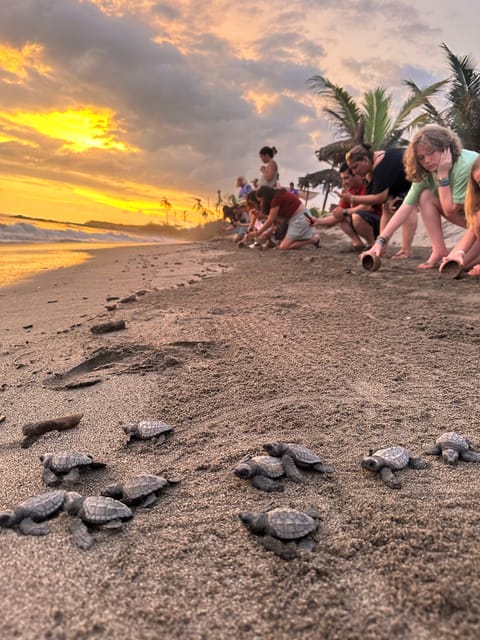
After the camp visit and wildlife viewing, you walk back toward the beach area. The viewing portion lasts about 20 minutes, often timed around sunset.
Puerto Vallarta’s bay provides the visual setting. You may see the sky change while the guides prepare the release, with the beach and ocean forming a simple backdrop. The sunset is not a side note. It gives the activity a calm rhythm after the more technical explanation at camp.
The beach conditions can vary. One person noted litter on the beach, so do not expect a perfectly maintained resort shoreline. Portable toilets were also described as a weak point, with broken doors and missing toilet paper on one occasion. This is a conservation camp in a natural area, not a fully serviced park.
Bring insect repellent even if the evening looks pleasant. One visitor ignored that advice and regretted it. Biodegradable sunscreen, comfortable clothes, and water are sensible choices. Rain can also appear, and rain gear has been provided during wet departures, but you should still dress for changing conditions.
Releasing the hatchlings into the Pacific
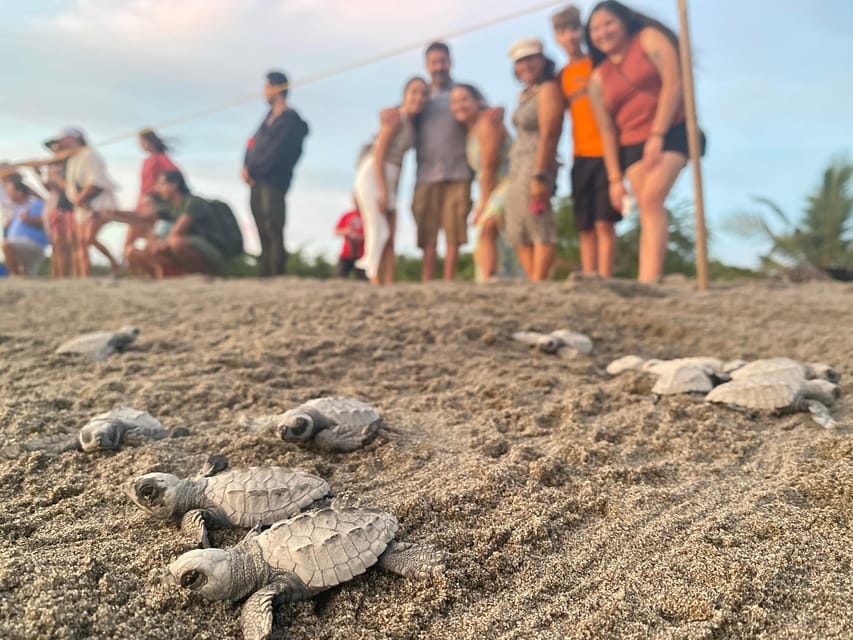
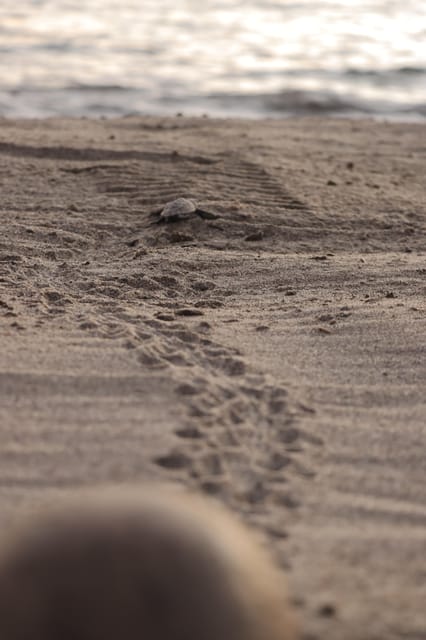
The release is the emotional center of the outing. Each participant who is old enough to take part receives a baby turtle and places it on the beach. You then watch the hatchling crawl down toward the ocean.
Children under five do not pay, but they can only observe the release rather than participate. The experience is best suited to older children, families, couples, and adults who want a quiet wildlife activity rather than a fast adventure.
The guides explain how to handle the moment, so you do not need special training. You should follow their instructions closely and avoid turning the release into a photo session that distracts from the turtle’s path.
Photos are included in the activity description, and a photographer may document the release while you keep your phone away. There is some mixed information about the cost of keeping those images: some departures have sent a link with photos included, while another participant said the photographer charged extra to retain them. Ask the guide what is included on your date if the photographs matter to you.
One useful benefit of having a photographer nearby is that you can stay present. You can watch your turtle move instead of trying to balance a phone, a hatchling, and the sunset all at once.
Is $40 a fair price?
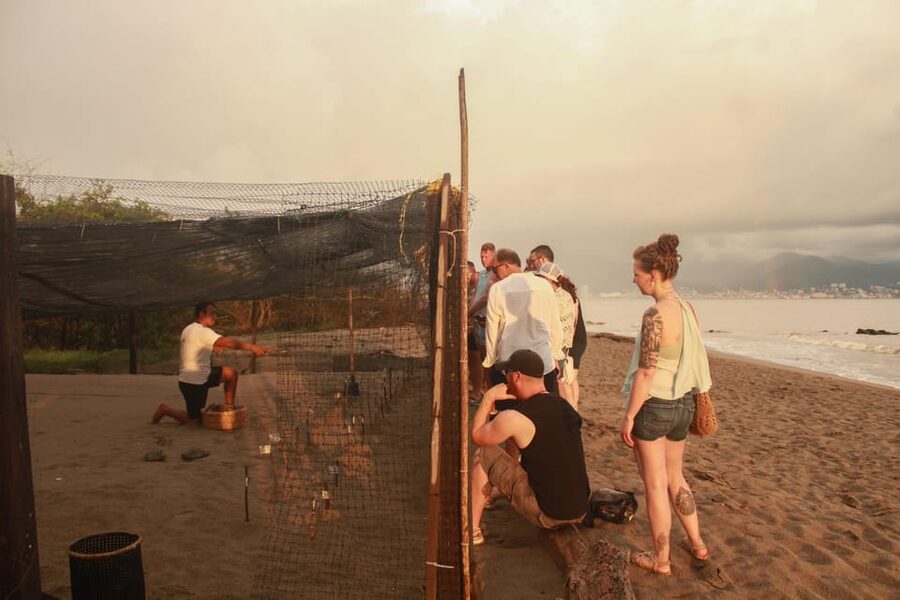
At $40 per person, this is a strong value if you want an activity with an educational and conservation purpose. The cost includes a live guide, the nest and egg collection demonstration, the turtle release, water, and photos as described.
The price also supports a local conservation effort, though the exact donation structure is not provided. If you feel moved by the work, an additional donation may be welcomed, but it is not listed as required.
Compared with a simple beach visit, $40 buys a structured two-and-a-half-hour experience and access to a place you would not reasonably visit on your own. Compared with a major wildlife attraction, it is modestly priced. The tradeoff is comfort: you arrange your own transportation, walk to the camp, use basic facilities, and accept the possibility of no hatchlings on the first date.
For me, the value depends on your priorities. If you want polished facilities and a fixed schedule, this may feel rough around the edges. If you want to understand local conservation and take part in a real release, the price is reasonable.
Who should book this experience
I would recommend it to families with children old enough to follow instructions, couples looking for a meaningful sunset activity, and anyone interested in marine wildlife. A 10-year-old can enjoy both the lesson and the release, and the experience can work well for a wide age range, from children to seniors, as long as everyone can manage the walk.
It is not suitable for wheelchair users or people with mobility impairments. The activity also lists respiratory issues, animal allergies, and high blood pressure among the conditions that may make it unsuitable. If you have concerns about heat, insects, beach walking, or outdoor conditions, ask before booking.
Bring comfortable clothing and biodegradable sunscreen. Insect repellent is especially important. Drones, alcohol, and drugs are not allowed.
How to plan around the turtle schedule
Book this activity early in your stay, not at the very end. If the eggs do not hatch on your first scheduled day, you can reschedule or cancel, but you need spare time to use that option.
The total duration is about 2.5 hours. The basic flow is a meeting near Marina Vallarta, a 15-minute walk to the camp, about 45 minutes of instruction and demonstration, roughly 20 minutes of wildlife viewing, and a 15-minute walk back.
Starting times depend on availability. The evening timing is important because you want enough light for the camp visit and enough sunset color for the final release. Check the departure time when you book rather than assuming every date follows the same schedule.
You can cancel up to 24 hours ahead for a full refund. Reserve now and pay later is also available, which helps if your Puerto Vallarta plans are still shifting.
Should you book the baby turtle release?
Book it if you want a personal conservation experience, not simply a wildlife photo opportunity. The combination of egg collection, incubation, bilingual instruction, sunset views, and the final release gives the outing real substance.
Go in with realistic expectations. The camp is basic, the beach may have litter, the walk is not suitable for everyone, and no hatchlings may be ready on your first date. But if you allow room in your schedule and follow the meeting instructions, this is a warm, memorable way to support turtle protection in Puerto Vallarta.
The best practical choice is to schedule it early in your trip, bring insect repellent, and keep one backup evening open. If the turtles hatch, you get one of those rare holiday moments that is small in scale but hard to forget. If they do not, you still receive a clear lesson in the work required to give them a chance.
FAQ
Where does the turtle release begin?
The meeting point is at the end of Paseo Bocanegra near Marina Vallarta. Use Albatros Street, continue across Paseo Bocanegra, and go straight until you see the golf course, a wall with drawings, and the beach.
How long does the activity last?
The full experience lasts about 2.5 hours.
How long is the walk to the conservation camp?
You walk about 15 minutes from the meeting point to the camp and about 15 minutes back.
Is transportation included?
No. You arrange your own transportation to and from the meeting point.
What happens if no turtles hatch that day?
You can choose to reschedule or cancel if no turtles hatch on the date of your reservation.
Can children participate?
Children under five do not need a ticket, but they can only watch the release. The activity is not suitable for children under five as active participants.
Which languages are available?
The guides offer the experience in English and Spanish.
What should I bring?
Bring biodegradable sunscreen, comfortable clothing, and insect repellent. Water is included.
Are photos included?
Photos are listed as included, but ask your guide how the photo arrangement works on your departure. Some departures have provided a link, while other information indicates that keeping the images may cost extra.
Can I cancel my reservation?
You can cancel up to 24 hours in advance for a full refund. Reserve now and pay later is also available.
Just added around Puerto Vallarta
- Puerto Vallarta: Mega Yacht Whale Watching Sunset Cruise★ 4.7 · 94 reviews
- Puerto Vallarta: Yelapa Mega Yacht Cruise★ 4.7 · 180 reviews
- Puerto Vallarta Rhythms of the night, Show & Buffet dinner★ 4.7 · 219 reviews
- Puerto Vallarta: Horse Riding Tour w/ Optional ATV & Zipline★ 4.7 · 73 reviews
- Puerto Vallarta: Guided San Sebastian Tour★ 4.5 · 38 reviews
- Puerto Vallarta: Botanical Gardens, Distillery & Coffee Tour★ 4.4 · 39 reviews
- Puerto Vallarta: Bean to Bar Chocolate Workshop★ 4.9 · 41 reviews
- Puerto Vallarta: Evening Taco Adventure Tour★ 4.9 · 106 reviews
Turtle Swim Tours, compared.
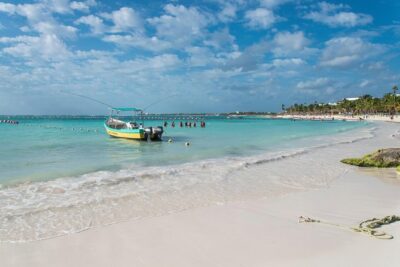
Half-Day Sea Turtle and Cenote Snorkeling Tour from Cancun & Riviera Maya
Read our review →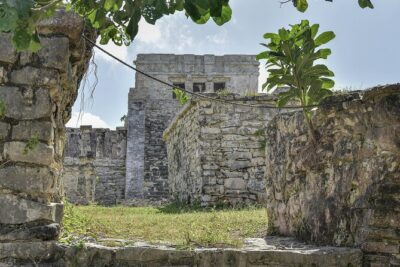
Tulum Ruins, Turtles in Akumal and Cenote tour
Read our review →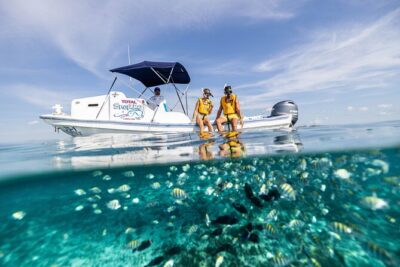
5-in-1 Cancun Snorkeling: Turtles, Reef, Musa, Shipwreck, Cenote
Read our review →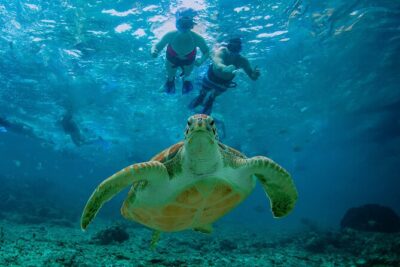
Hidden Cenote Swim: Snorkeling, Sea Turtles and Beachside Lunch
Read our review →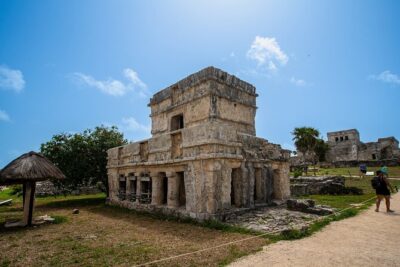
Full Day Tulum Ruins Tour Cenote and Swimming with Sea Turtles
Read our review →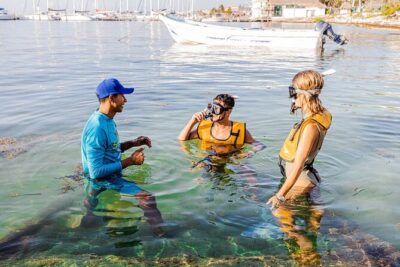
With Turtles, Shipwreck, Cenote, and Reef and Transport Included
Read our review →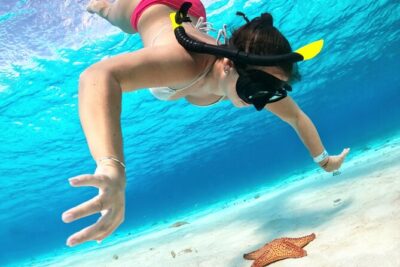
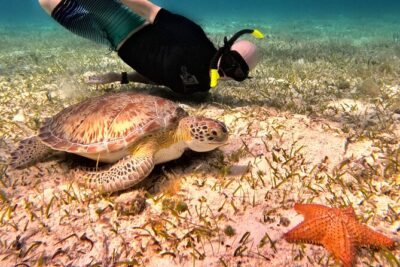
4 Hour Cozumel Turtle Sanctuary Experience on a Luxury Catamarán
Read our review →Browse the lists this tour appears in