
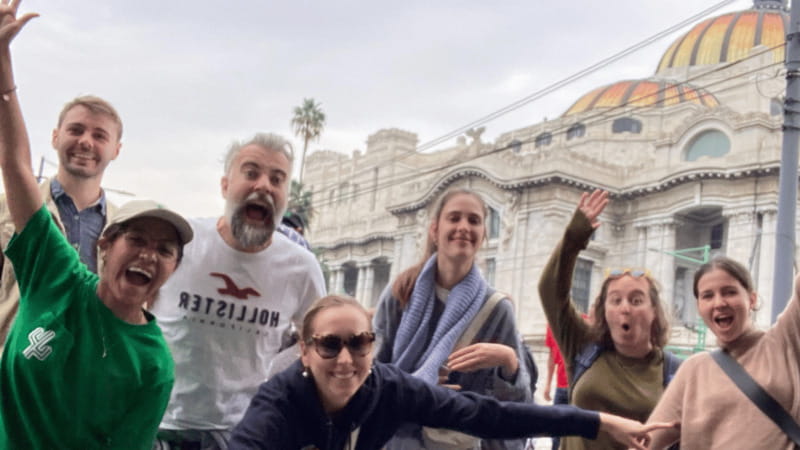
Reviewed · HISTORICAL TOURS
Mexico City: Guided walking tour through the most historic parts of the city.
Mexico City’s historic center makes the most sense when someone connects its layers for you. This three-hour walk moves from the Aztec capital to Spanish rule and modern Mexico, with the Zócalo, Metropolitan Cathedral, Templo Mayor, Santo Domingo, and Bellas Artes providing the landmarks.
I like the strong historical structure and the practical local advice, especially tips on choosing street food and getting around by public transport. I also like that guides such as Areli, Oscar, Laura, Alexia, and Luis bring their own stories and answer questions rather than simply reciting dates. The main drawback is that the tour takes place in all weather, and much of it is outdoors on busy city streets.
Key points to know before you book
- Three eras in three hours: The walk explains pre-Hispanic Mexico, the Viceroyalty, and the Republic in one clear route.
- A useful first-day introduction: You finish near Bellas Artes with practical ideas for food, transport, photographs, and further sightseeing.
- Several major landmarks: The route includes the Zócalo, Metropolitan Cathedral, Templo Mayor, Santo Domingo, Palacio de Correos, Casa de los Azulejos, and Bellas Artes.
- Guides shape the experience: Areli, Oscar, Laura, Alexia, Luis, Gabriela, and others have been praised for energy, storytelling, and thoughtful answers.
- Bring cash and sun protection: Food is not included, entrance fees are extra, and weather protection matters.
- Expect a real walking tour: Comfortable shoes are essential, and the route is not suitable for wheelchair users.
Why this walk is a smart introduction to Mexico City
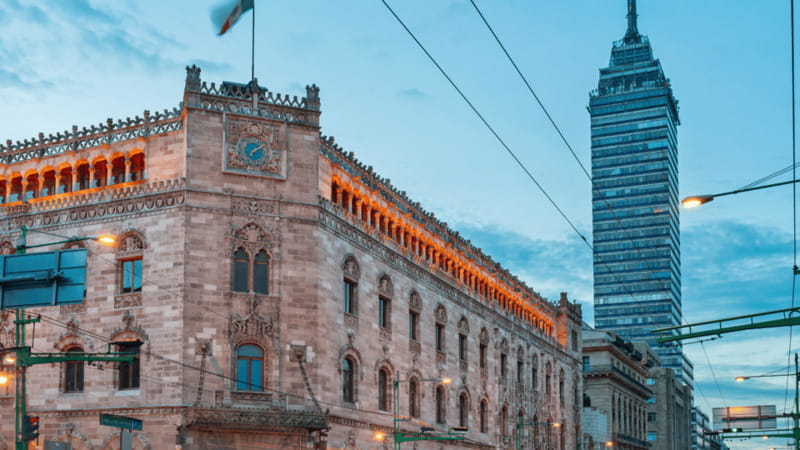
Mexico City’s Centro Histórico can feel like several cities stacked on top of one another. Aztec foundations sit below Spanish colonial buildings, republican monuments, government offices, churches, shops, food stalls, and modern city life.
That is why a guided walk is useful here. You can look at the Metropolitan Cathedral and admire its scale, but a guide can also explain what came before it and why the surrounding streets matter. At Templo Mayor, the past becomes physical. At Palacio de Bellas Artes, the story reaches Mexico’s artistic and modern national identity.
The tour gives you a broad framework rather than treating each sight as an isolated photo stop. You will hear about Moctezuma, Hernán Cortés, Porfirio Díaz, Pancho Villa, Emiliano Zapata, Diego Rivera, and women who shaped the country’s story. The strongest guides also connect politics and architecture with ordinary life, food, religion, and local habits.
You should not expect a museum-level lecture on every period. Three hours is enough for a clear introduction, not a full study of Mexican history. The pace also depends on the guide and the group. One account praised the information but felt the opening explanation went on too long before the walking began. That is useful to keep in mind if you prefer a fast start.
More Historical Tours in Mexico City
- Historic Downtown Walking Tour
★ 5.0 · 1,289 reviews - Historic Center Food Tour in Mexico City
★ 5.0 · 1,263 reviews - Mexico City: Historic Downtown Walking Tour
★ 4.8 · 1,039 reviews
Meeting the guide at the Metropolitan Cathedral
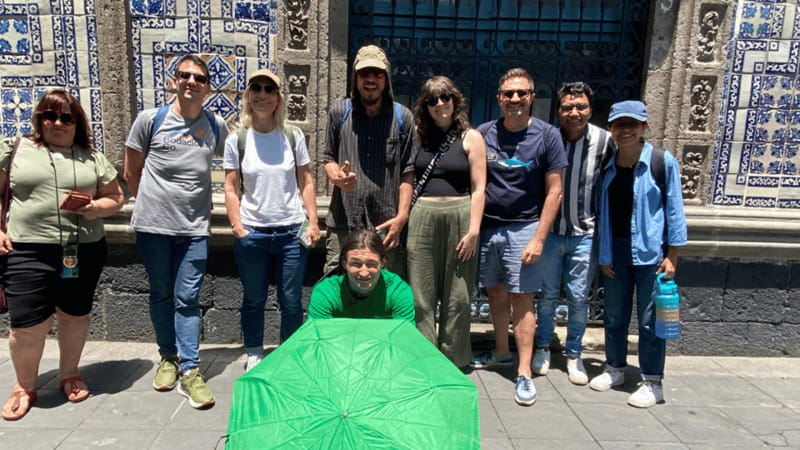
The meeting point is outside the main entrance of the Metropolitan Cathedral, facing the Zócalo and its large flag. Look for a guide wearing a green uniform and standing with a green umbrella.
This detail matters because the Zócalo can be crowded, and several tour groups may gather nearby. Arrive with enough time to find the correct meeting point. The operator advises allowing at least an hour for transportation to the cathedral, which is sensible if you are coming from another part of the city.
The tour is offered in English and Spanish. Some material may be presented in its original language, so ask questions if a name or term is unclear. Guides have been praised for adapting to questions about history, culture, food, and social life. The exact guide is not fixed, but names associated with especially strong outings include Areli, Oscar, Laura, Alexia, Luis, Gabriela, Netza, Benjamin, and Thomas.
Small groups are possible, though group size can vary. A group of five or six allows more conversation and makes it easier to ask about food or later sightseeing. Larger groups may feel less personal, particularly during the first explanations in the Zócalo.
The Zócalo and Mexico-Tenochtitlan
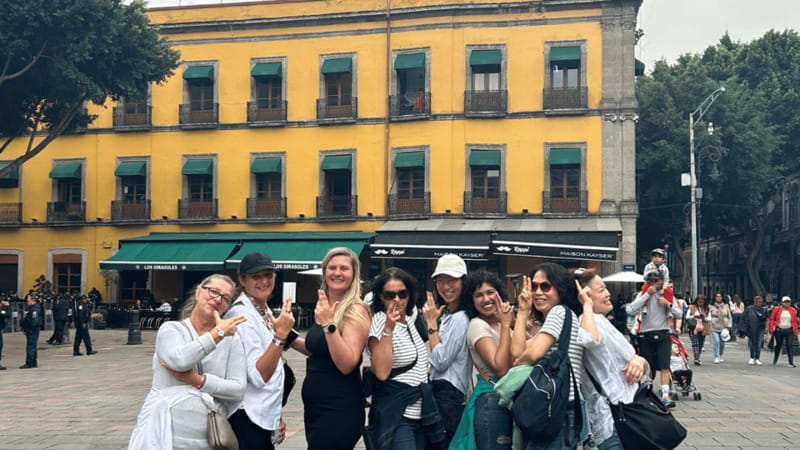
The walk begins in the Zócalo, Mexico City’s huge central square. This is the right place to begin because the modern city’s political, religious, and historical layers meet here.
From the square, your guide explains Mexico-Tenochtitlan, the Aztec capital that occupied this area before the Spanish conquest. You will learn how the country changed from an Aztec empire to a Spanish colony and later to the Mexican republic.
The Zócalo is also a good lesson in how Mexico City uses public space. The square has hosted ceremonies, protests, celebrations, and national events. A strong guide will help you read the buildings around it rather than simply point them out.
Allow yourself time to look up and around. The scale can be startling, but the square can also be noisy and crowded. You may spend about 25 minutes here, so stay close enough to hear the guide and keep an eye on bags and phones in the busy central area.
Inside the Metropolitan Cathedral
The Metropolitan Cathedral gives the tour its clearest colonial landmark. You are scheduled to visit inside, where the architecture helps explain the power of the church during the Viceroyalty.
The cathedral is not simply an ornate building to photograph. Its size and decoration show how religion, government, and Spanish authority were linked. The visit also helps you compare colonial design with the older remains nearby.
Do not expect a long private visit or a quiet museum setting. It is an active place of worship, and conditions can change because of services or events. The cathedral is included as a planned stop, but entrance fees are not included in the tour price, so check the current arrangements when booking.
More Walking Tours in Mexico City
- Frida Kahlo VIP [Museum Tickets Included] Walk, Markets & Churros
★ 5.0 · 982 reviews - Walking Tour of the Historic Center of Mexico City
★ 5.0 · 870 reviews - Anthropology Museum Private Experience Walking Tour
★ 5.0 · 355 reviews - Mexico City: Lucha Libre Show, Walking Tour & Tequila
★ 4.6 · 156 reviews
Templo Mayor and the city beneath the city
The Templo Mayor area is one of the most valuable stops on the route. The ruins recall the ceremonial center of Tenochtitlan and show what existed before the colonial city was built over it.
This is where the tour’s central idea becomes easy to grasp. You can look from ancient remains toward the cathedral and colonial streets and see how different eras occupy the same space. The city’s past is not sealed away in one distant archaeological site. It is underfoot in the center of daily life.
The planned stop lasts about 30 minutes and includes a guided explanation of the ruins and the Templo Mayor Museum area. Admission is not included, so budget separately if you want to enter any paid section. Since the tour description also refers to seeing the ruins from outside, confirm what your selected departure includes on the day.
The stop is especially useful if you have limited time in Mexico City. It gives you an introduction to Aztec history before you decide if you want to return for a longer museum visit.
Santo Domingo and the colonial street plan
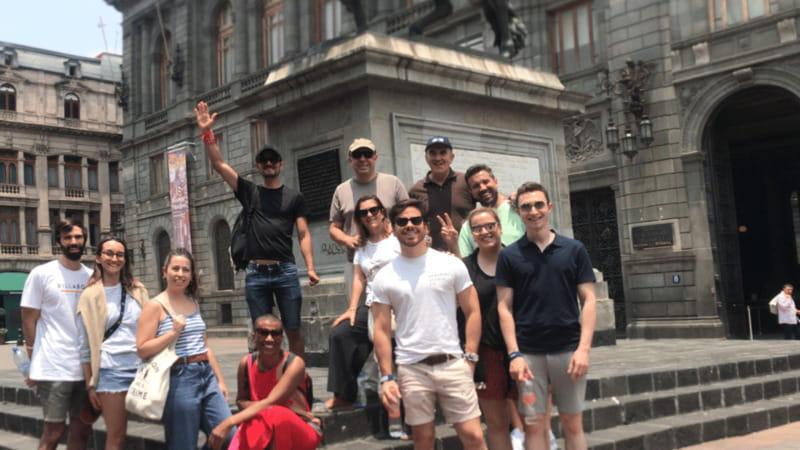
At Plaza de Santo Domingo, the guide explains the influence of the Dominican order. The square offers a change of mood from the enormous Zócalo and gives you a closer look at the colonial center’s streets and institutions.
This is one of the places where a guide adds real value. Without context, you might see a handsome square and move on. With context, you begin to understand how religious orders helped shape education, public life, and urban development during the Viceroyalty.
The stop is listed mainly as a photo stop and explanation, with about 25 minutes here. It is not presented as a full interior visit. Use the time to listen, take photographs, and notice how ordinary city activity continues around historic buildings.
Palacio de Correos and Plaza Manuel Tolsá
The route then reaches the Palacio de Correos de México and Plaza Manuel Tolsá. The itinerary allows about 25 minutes for photographs, a visit, and free time.
Palacio de Correos is one of the most striking buildings on the walk, especially for its decorative interior and polished architectural details. The nearby Plaza Manuel Tolsá adds a different period, with 19th-century design and the monumental equestrian statue of Carlos IV.
This section helps explain the republican era and Mexico’s effort to present itself as a modern nation. It also breaks up the older colonial material with a grander, more formal architectural style.
The free time is useful, but do not count on a long independent exploration. Three hours covers a lot of ground, and the guide must keep the group moving. If you want detailed time inside the buildings, plan to return on your own.
Casa de los Azulejos and the walk toward Bellas Artes
Casa de los Azulejos, or the House of Tiles, is one of the route’s most recognizable photo stops. Its tiled exterior gives the walk a strong visual change after the stone, stucco, and monumental spaces of the earlier buildings.
You will have about 20 minutes for a visit and photographs. This is a short stop, so your guide’s explanation is more important than a long architectural study. Look for the contrast between the decorative surface and the busy commercial streets around it.
From there, the route continues toward the Palacio de Bellas Artes. The walk itself is part of the experience. Guides use the streets to point out local habits, places to eat, and details that may not appear in standard guidebooks.
Some guides also adapt the route when city events are taking place. One outing included extra Day of the Dead material, turning a normal introduction into something more connected to the season. Adaptability is helpful, but it can also mean that the exact emphasis changes from one departure to another.
Finishing at Palacio de Bellas Artes
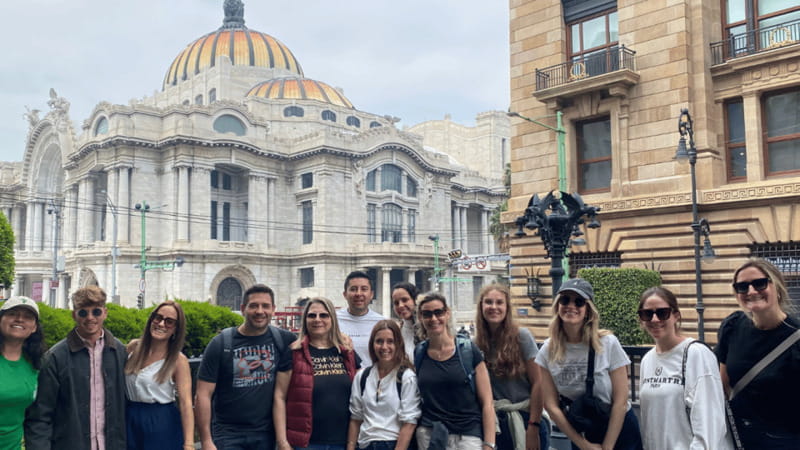
The tour ends at the Palacio de Bellas Artes, where you have another major photo stop of about 20 minutes. Its presence gives the route a fitting final chapter, moving from ancient ceremonial architecture and colonial religion to Mexico’s republican and artistic identity.
You will hear about figures such as Diego Rivera and other people who shaped Mexico’s public culture. The building also puts you in a useful location for continuing your day, although the tour does not include onward transportation or admission to attractions.
Ending here is practical. You can ask your guide for suggestions on what to see next, and several guides have offered recommendations for food and further sightseeing. I would save your most specific questions for the final part, when you know which areas interest you most.
Food advice and everyday city life
Food is not included, but the guides can help you make better choices during or after the walk. This is one of the most useful parts of the experience because the tour connects famous buildings with ordinary city life.
You may receive advice on where to find tacos, how locals judge a good place to eat, and how to spot a safer street-food choice. One guide helped a group choose street food carefully, while others suggested lunch places suited to the group’s interests.
Bring cash if you plan to buy food. Do not assume that stopping for a meal is part of the schedule. You can ask the guide for suggestions, but any food or drink you purchase is your own expense.
You will also get practical information about public transportation and daily habits in Mexico City. The explanation about why some streets are kept clean and how residents choose food stalls adds useful detail that a standard monument tour often misses.
Price, pace, and what you get for $30
At $30 per person, this is a fair price for a three-hour guided walk through the center, especially if your guide gives the historical context and local recommendations promised by the route.
The value comes from the connections between stops. You are not paying only to be led from one building to another. You are paying for an organized route, an English- or Spanish-speaking guide, historical explanation, and a chance to ask about food and city life.
The price does not cover transportation to the meeting point, entry fees, or food and drinks. Those extra costs are easy to manage, but you should include them in your budget. The tour works best as an orientation on your first or second day, when practical suggestions can shape the rest of your stay.
You can cancel up to 24 hours in advance for a full refund, and reserve now while paying later. That flexibility is useful if your Mexico City plans are still shifting.
Who should book this walking tour
I would choose this tour if you are visiting Mexico City for the first time and want a clear introduction before exploring the center alone. It suits curious adults, families with older children, and anyone who wants more than quick photographs.
The guides have kept younger children involved with visual material and engaging subjects, including quinceañera dresses. Still, parents should bring water, snacks, and something to keep children occupied so the whole group can enjoy the walk.
It is less suitable if you dislike walking, hot sun, rain, or busy streets. The tour operates in all weather, so bring comfortable shoes, sunglasses, a hat, sunscreen, cash, and clothing suited to the forecast. Wheelchair users cannot join, and the experience is not suitable for people over 95.
Should you book it?
Book this walk if you want the historic center explained in a logical order, with food advice and local context mixed into the major sights. The strongest guides, including Areli, Oscar, Laura, Alexia, and Luis, have made the experience lively, clear, and personal.
Skip it if you already know the center well, need a fully accessible route, or want long unhurried visits inside each building. For most first-time visitors, $30 is a sensible way to get your bearings, understand the city’s three major historical periods, and finish with better ideas for what to eat and see next.
FAQ
How long does the Mexico City walking tour last?
The tour lasts three hours.
Where does the tour begin?
It begins outside the main entrance of the Metropolitan Cathedral, facing the Zócalo and its large central flag.
How do I identify the guide?
Look for a guide wearing a green uniform and standing with a green umbrella.
Where does the tour finish?
The tour finishes at the Palacio de Bellas Artes.
Which languages are available?
The tour is available in English and Spanish. Some content may be presented in its original language.
Are entrance fees included?
No. Entrance fees are not included in the $30 price.
Is food included?
No. Food and drinks are not included. Bring cash if you want to buy something during or after the walk.
What should I bring?
Bring comfortable shoes, sunglasses, a hat, sunscreen, cash, and clothing suitable for the weather. The tour runs even when the weather changes.
Just added around Mexico City
- Kayaking on the Island of Sacrifices★ 5.0 · 49 reviews
- Paragliding in Valle de Bravo★ 5.0 · 188 reviews
- Hot Air Balloon Flight and Tour of the Majestic Pyramids★ 4.5 · 38 reviews
- Balloon flight / Breakfast in the cave / CDMX pick-up + Pyramids★ 5.0 · 54 reviews
- Hot air balloon ride with breakfast in Cueva from CDMX★ 5.0 · 47 reviews
- Africam safari (private tour)★ 5.0 · 33 reviews
- Lucha Libre, Tacos, Margaritas,Tequila and Night Market Tour★ 5.0 · 64 reviews
- Riviera Maya: Frida Kahlo Museum Guided Tour 2025★ 4.1 · 54 reviews
Historical Tours, compared.



Mexico City Historical Centre Food Tour with 7 Authentic Tastings
Read our review →
Historical and Cultural Walking Tour of San Miguel de Allende
Read our review →
Historical and Cultural Walking Tour of San José del Cabo
Read our review →
Browse the lists this tour appears in