
Reviewed · COOKING CLASSES
Private Mexican Cooking Class with Licensed Chef
Mexican food makes more sense when you understand the ingredients behind it. In Chef David Jahnke’s private class, you may work with dried chiles, tomatillos, banana leaves, piloncillo, and fresh herbs while learning how Mexico’s food developed through indigenous and international influences. I especially like the four-dish format and the chance to choose from a broad menu. You also get recipes and techniques you can use at home.
I like that this is held in a home kitchen rather than a large culinary studio, and that David can adjust the menu for vegetarian, vegan, gluten-free, or pescetarian diets. The main thing to consider is the pace: the opening food lesson can take about an hour, so this is as much a culinary history class as it is a cooking session. You may leave very full, but you will not automatically take the prepared food home.
Key points to know
- Four dishes in about three hours: A sample menu may include tortilla soup, enchiladas verdes, Veracruz-style snapper, and buñuelos.
- Chef David Jahnke teaches the class: He holds culinary qualifications from Mexico, Germany, France, and the World Association of Chefs.
- You choose the cooking style: Take an active, hands-on role or watch a demonstration while David leads the preparation.
- The menu can change: After booking, you receive a longer list of dishes and can build your own four-course menu.
- Food history is part of the lesson: Expect explanations about ingredients, techniques, nutrition, and Mexico’s place in world food culture.
- Plan for a substantial meal: Everything prepared is eaten during the class, and the portions can be generous.
A home kitchen class with a food professor’s point of view
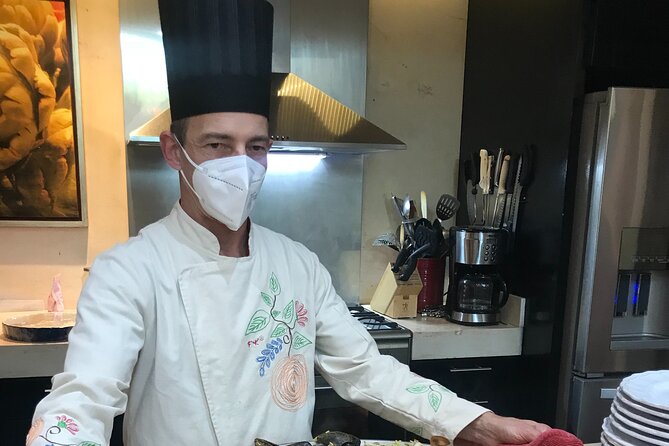
Chef David Jahnke’s cooking class is not a quick recipe demonstration followed by a rushed lunch. It is a private, educational meal in San Miguel de Allende, with David acting as chef, instructor, food historian, and host.
David has worked internationally as a chef for 34 years. His qualifications include a gastronomy degree certified by Mexico’s Secretary of Education, professional cook certification from the German government, Chef Educator certification from the World Association of Chefs, and the title of Maitre Cuisinier from a French culinary association.
Those credentials matter less than his teaching style, but they explain the class’s broad scope. You are not only shown how to chop an onion or make a sauce. You learn why certain ingredients belong together, how dishes changed over time, and how to adapt techniques to other meals.
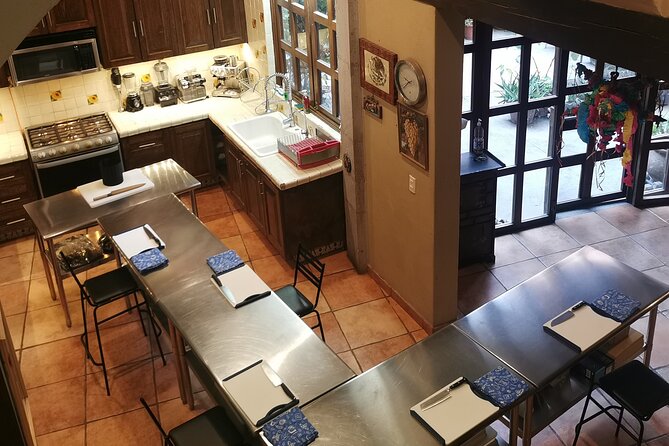
The class takes place at Chef David Jahnke Cooking Classes School on Calle del Tesoro 23 in the San Antonio area of San Miguel de Allende. It begins and ends at the same location, from 11 a.m. to 2 p.m., Monday through Saturday. The activity is private, so only your own party participates.
More Cooking Classes in San Miguel de Allende:
- Cabo San Lucas Mexican Cooking Class Experience and Local Markets
★ 5.0 · 915 reviews - Puerto Vallarta Cooking Class Experience with Market Tour
★ 5.0 · 698 reviews - Mexican Cooking from Scratch in a Local Home in Tulum
★ 5.0 · 585 reviews
The opening lesson: food history before the first bite
The first part of the class may surprise you. David often begins with an extended lesson on Mexican agriculture, ingredients, and the movement of foods across the world.
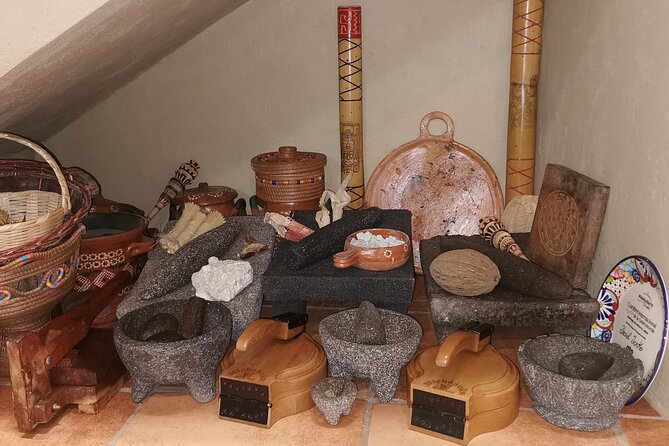
This can include the role of native Mexican products and the arrival of ingredients from other regions. You might discuss chiles, corn, tomatoes, avocados, beans, chocolate, and other foods associated with Mexico, along with the outside influences that helped shape the cuisine you eat today.
For some people, this is the best part of the class. It gives context to familiar dishes and helps explain why Mexican cooking uses such a wide range of textures, sauces, dried peppers, fresh produce, herbs, and spices.
For others, an hour of talking before cooking may feel long. If you signed up mainly to chop, stir, and eat, you should know the class is not built around immediate hands-on work. The benefit is that you get the why behind the recipe, not just a set of instructions.
David also brings in lessons about nutrition and healthy cooking. He explains the role of ingredients and discusses ways to use traditional food in a balanced meal. That makes this a good pick for anyone who wants more than a vacation activity that ends when lunch is over.
Choosing your four-course menu
The sample menu gives you a clear idea of the class’s range. It includes a starter, two main dishes, and dessert:
- Sopa de tortilla, or Mexican tortilla soup
- Enchiladas verdes with chicken
- Pescado a la Veracruzana, or Veracruz-style snapper
- Buñuelos, Mexican fritters with syrup
This is not a fixed menu. After you reserve, David sends a list of additional dishes, and you can choose a different four-course combination. That flexibility is a major advantage for repeat visitors, families with mixed tastes, or anyone who has already eaten the standard Mexican classics.
Dietary adjustments are also part of the planning. Vegan, vegetarian, gluten-free, pescetarian, and other options are available. You should communicate your needs before the class so David can plan the ingredients and recipes.
The ability to choose four dishes is useful, but it also creates a small decision to make. You may be tempted to select four elaborate recipes, only to discover that the meal is more than you can comfortably eat. A simpler menu can leave more time for technique and conversation.
Sopa de tortilla: building flavor from broth and chiles
The sample starter is sopa de tortilla, a classic soup made from chicken and tomato broth. It is served with fried pasilla chile, crisp corn chips, avocado, cream, and fresh ranchero cheese.
This is a smart first dish for a cooking lesson because it introduces several parts of Mexican cooking at once. You work with broth, tomato, dried chile, fried corn, dairy, and fresh toppings. David can explain how each element changes the bowl, from the smoky heat of the pasilla chile to the cool cream and avocado.
You also learn that soup is not simply a liquid with ingredients dropped into it. The quality of the broth, the handling of the chile, and the timing of the toppings all affect the result.
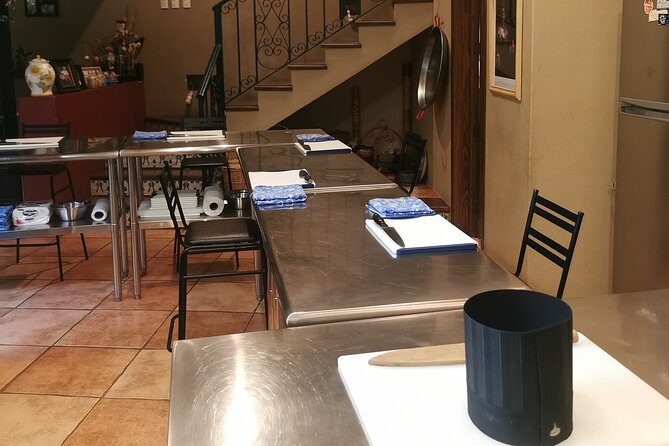
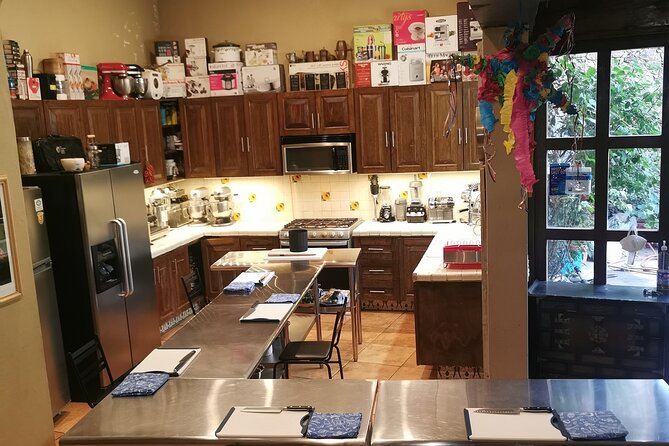
If you choose the hands-on format, you can expect to take part in preparation rather than only watching David work. The kitchen is organized with work stations, ingredients are prepared in advance, and each person can have a role in the process.
A few more San Miguel de Allende days worth comparing
- Immersive Cañada de La Virgen Pyramid Tour
★ 5.0 · 789 reviews - Historical and Cultural Walking Tour of San Miguel de Allende
★ 5.0 · 641 reviews - Original Downtown Food Tour with Taste of San Miguel
★ 5.0 · 598 reviews - Tacos and Tequila Walking Tour with Taste of Miguel
★ 5.0 · 583 reviews
Enchiladas verdes and the logic of a good sauce
The sample main course includes enchiladas verdes. Corn tortillas are filled with chicken, covered in a green tomatillo and chile sauce, and finished with lettuce, avocado, Mexican cream, and fresh ranchero cheese.
This dish teaches a useful home-cooking lesson: the sauce does much of the work. The tomatillo and chile mixture must have the right balance of acidity, heat, and seasoning. The tortillas must be handled so they are flexible but still hold their filling.
David’s instruction focuses on practical techniques that transfer well to other dishes. You can use the same ideas when making enchiladas with a different filling, building a sauce for roasted vegetables, or turning leftovers into a new meal.
The toppings also show how Mexican food often combines soft, crisp, cool, creamy, and spicy elements in one plate. That contrast is easy to appreciate when you prepare each part yourself.
Pescado a la Veracruzana: a lighter main course
The second main course is pescado a la Veracruzana, a snapper fillet steamed inside a banana leaf and served with a tomato sauce containing olives, capers, bell peppers, onions, and other ingredients.
This is one of the more distinctive choices in the sample menu. The banana leaf helps protect the fish while it cooks, and the Veracruz-style sauce brings a different profile from the green chile sauce used for the enchiladas. Olives and capers add a briny note, while tomatoes, peppers, and onions create the base.
The dish also broadens the class beyond the food many people first associate with Mexico. If your group includes someone who prefers seafood, this gives the menu a lighter option alongside the chicken enchiladas.
Pescatarian guests can ask for a menu built around seafood and plant-based dishes. The exact available choices depend on the menu David provides after booking, so make your request early.
Buñuelos and the sweet finish
Dessert is buñuelos, Mexican fritters served with a syrup made from piloncillo, guava, citrus, anise, cinnamon, vanilla, and more.
Piloncillo gives the syrup a deeper flavor than ordinary white sugar, while guava and citrus add fruit and brightness. Anise, cinnamon, and vanilla bring the warm spice notes that make this dessert feel distinctly Mexican.
Dessert is not treated as an afterthought. You get to see how a few pantry ingredients can create a syrup with layers of flavor, and you can adapt the same approach to other fried or baked desserts at home.
Because the class includes four dishes, the dessert may arrive after a long stretch of cooking and tasting. Plan to eat lightly beforehand, especially if you select a menu with several substantial mains.
Hands-on cooking or a demonstration?
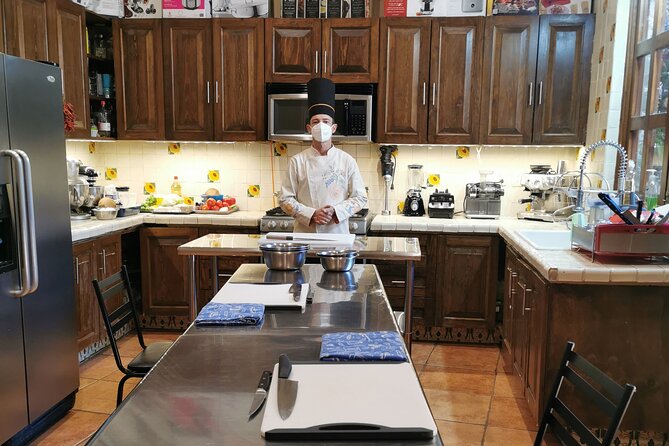
You can choose between a hands-on class and a demonstration class. The hands-on option suits you if you want to practice knife skills, handle ingredients, and take an active role in each recipe.
Several useful lessons can come from that format. You may learn how to work with dried chiles, prepare a broth, handle corn tortillas, build sauces, and organize several dishes so they reach the table in the right order.
The demonstration format makes more sense if you prefer to watch a professional handle the difficult steps. It can also work well for a mixed group where some people love cooking and others mainly want to learn, eat, and ask questions.
The class is private, which gives David room to adjust his explanations to your group. A family with young cooks, a couple with strong kitchen skills, and a group of friends who rarely cook will not need exactly the same lesson.
What the home setting adds
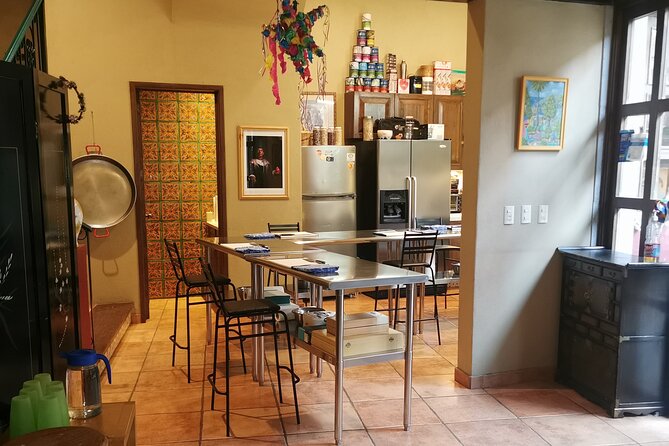
Cooking in David’s home gives the experience a personal feel. His family may make brief appearances, and the setting feels closer to being welcomed into someone’s kitchen than attending a formal restaurant event.
That setting also means you should expect a personal teaching environment rather than a polished commercial cooking school with a large production line. The benefit is direct access to the chef and a relaxed pace. The trade-off is that the class is tied to the layout and rhythm of a private home.
A garden is also part of the experience. Ingredients may be picked from the garden for use in the dishes, which helps connect the cooking to fresh produce instead of treating every ingredient as something that arrives anonymously in a packet.
You should also remember the practical distinction between eating during the class and taking food away. The dishes are prepared for the group to eat at the end, but the food is not provided as takeaway. If you hoped to bring dinner back to your hotel, this may disappoint you.
The value of $147 per person
At $147 per person, this is not the least expensive way to eat lunch in San Miguel de Allende. You are paying for much more than the food, though. The price covers a private three-hour session, a professional chef’s instruction, a flexible four-dish menu, ingredient preparation, cultural context, and the meal you cook.
The value is strongest for people who will use what they learn. David sends the recipes afterward, so you have a practical record of the dishes rather than only a pleasant memory. Knife skills, sauce methods, chile knowledge, and menu planning can carry over to many other meals.
It is also a good value for a private group that wants a shared activity. A family or group of friends can learn together without being placed with strangers, and the menu can be adjusted around dietary needs.
If you mainly want a low-cost lunch, choose a restaurant. If you want a private lesson, a substantial meal, and ideas to take home, the price is easier to justify.
Who will enjoy this class most?
I would choose this class for:
- Home cooks who want authentic Mexican recipes they can repeat
- People interested in food origins, agriculture, and culinary traditions
- Families or friends looking for a private group activity
- Guests with dietary needs who want a menu planned around them
- Anyone who enjoys a long lunch and an instructor-led conversation
- Curious noncooks who want to participate without needing prior skills
It may not suit you if you dislike extended explanations, prefer a fast-paced cooking event, or want to take prepared food away. The class has a teaching-first structure, and that is central to its appeal.
The experience also works well near the end of a San Miguel stay. You can use the class to pull together ingredients and techniques encountered elsewhere in Mexico, then leave with recipes for making them at home.
Practical details before you book
The meeting point is Chef David Jahnke Cooking Classes School, Calle del Tesoro 23, San Antonio, San Miguel de Allende, Guanajuato. The activity is near public transportation, and it returns to the same location.
The class is offered in English and runs Monday through Saturday from 11 a.m. to 2 p.m. Confirmation is provided at booking, and the activity is available as a private experience for your group only.
Book ahead if your schedule is tight. The average booking lead time is 39 days, which suggests that popular dates can fill well before your arrival. You can cancel for a full refund up to 24 hours before the local start time. Changes or cancellations made later are not refunded.
Most important, contact David about your menu after booking. This is where you can request vegan, vegetarian, gluten-free, pescetarian, or other adjustments, and where you can select from the longer dish list.
Should you book Chef David’s class?
Book it if you want to understand Mexican cooking rather than simply eat it. The strongest parts are David’s wide food background, the flexible four-dish menu, the hands-on option, the recipes sent afterward, and the chance to connect each ingredient to Mexican culture and world cuisine.
Go in expecting a lesson before lunch, generous portions, and a personal home-kitchen setting. If you prefer a quick demonstration or want leftovers to carry away, choose another activity. For curious cooks, food lovers, and anyone who likes learning around a table, this is one of the better ways to spend three hours in San Miguel de Allende.
FAQ
How long does the cooking class last?
The class lasts approximately three hours, from 11 a.m. to 2 p.m.
Where does the class begin and end?
It begins and ends at Chef David Jahnke Cooking Classes School, Calle del Tesoro 23, San Antonio, San Miguel de Allende, Gto., Mexico.
Is the class private?
Yes. Only your own group participates in the activity.
Can I choose the dishes?
Yes. After booking, Chef David sends a list of additional choices. You can keep the sample menu or create your own four-dish menu.
Are dietary restrictions accommodated?
Yes. The class can accommodate vegan, vegetarian, gluten-free, pescetarian, and other dietary needs.
Can I choose between hands-on cooking and a demonstration?
Yes. You can choose a hands-on class or a demonstration cooking class.
Is the prepared food available to take home?
No. The food prepared during the class is eaten as part of the experience and is not provided as takeaway.
Just added around San Miguel de Allende
- Transfers To San Miguel de Allende★ 4.0 · 39 reviews
- San Miguel: Evening Food Tour★ 4.7 · 51 reviews
- San Miguel: Landmarks and Lunch Walking Tour in English★ 4.9 · 70 reviews
- San Miguel: Downtown Food Tour★ 4.9 · 43 reviews
- San Miguel de Allende: Chocolate Tasting and Walking Tour★ 4.9 · 45 reviews
- San Miguel Allende: Half-Day Horseback Riding Adventure★ 5.0 · 36 reviews
- San Miguel de Allende: Tacos and Tequilas Tour★ 4.8 · 117 reviews
- Historical & Cultural Walking Tour of San Miguel de Allende★ 4.8 · 225 reviews
Cooking Classes, compared.
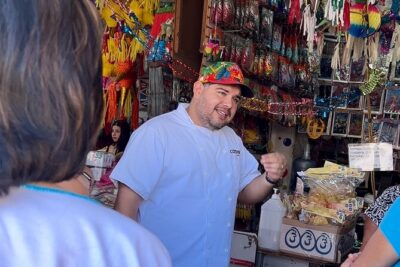
Cabo San Lucas Mexican Cooking Class Experience and Local Markets
Read our review →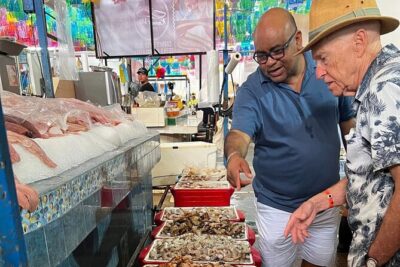
Puerto Vallarta Cooking Class Experience with Market Tour
Read our review →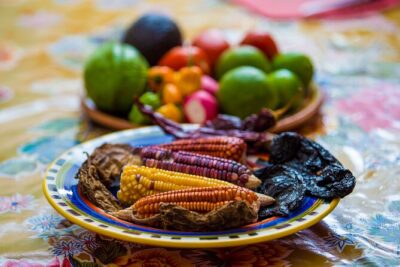
Mexican Cooking from Scratch in a Local Home in Tulum
Read our review →
Mexican Cooking Class with Food Market Visit in Mexico City
Read our review →
Flavors of Oaxaca: Cooking Class with No Set Menu and Local Market Tour
Read our review →
Taste of the Yucatan: Merida Cooking Class and Market Visit
Read our review →Browse the lists this tour appears in