
Reviewed · ANCIENT RUINS TOURS
Xihuacan Culture and Archaeology Tour
Xihuacan gives you a look at an ancient ceremonial city without the crowds and long drive associated with Mexico’s biggest ruins. The visit starts with a museum of about 800 objects, then moves outdoors to the ball court, Edificio B pyramid, and nearby Soledad de Maciel, where modern homes sit above an old pre-Columbian neighborhood.
I like the local guides, who bring the artifacts and ruins to life in clear English, and I like the family-run lunch, especially the hot handmade tortillas, guacamole, beans, and choice of seafood, chicken, or fish. The main drawback is timing: the advertised four hours can feel tight, since the drive, three-hour site visit, lunch, and return ride may take longer.
Key points to know before booking
- The museum comes first: About 800 objects, including shell work, ceramics, obsidian, copper, and carved stone, give you useful context before you see the ruins.
- You get more than a pyramid: The route includes the ball court, Edificio B, Soledad de Maciel, and views across fields and coconut plantations.
- Guides make the difference: Pablo, Francisco, Antonio, Paco, Juan, and Enrique have all led this outing, with history, local stories, and help interpreting Spanish displays.
- Lunch is part of the experience: Expect Mexican seafood or chicken, handmade tortillas, beans, chips, salsa, guacamole, and one beer, soft drink, or coconut milk.
- The ride is easy: Hotel pickup and drop-off use an air-conditioned 14-passenger van in Zihuatanejo or Ixtapa.
- Plan for sun and small extras: Bring a hat, water, and some pesos for coffee at a roadside stop and for tips.
Why Xihuacan is worth your half-day
I like Xihuacan because it puts archaeology into a local setting. You are not simply dropped beside a large pyramid, given ten minutes for photographs, and sent back to the resort. The museum, ruins, village, countryside, and meal work together to show how an old ceremonial center connects with life in this part of Guerrero today.
The excavated section is modest compared with Mexico’s famous archaeological parks. That is part of the appeal, but also something to understand before you book. You will not find a huge complex with dozens of restored structures. Instead, you get enough visible remains to picture the old city, while your guide explains how much more lies beneath surrounding fields and unexcavated ground.
The tour is especially useful if you have already spent several days on the beach and want a look at the region beyond Ixtapa and Zihuatanejo. It also suits families with older children, couples, and anyone who prefers a small group and a guide who can answer questions rather than a large bus tour with a fixed script.
More Ancient Ruins Tours in Mexico:
- Chichen Itza, Cenote, and Valladolid Tour
★ 5.0 · 24,293 reviews - Chichen Itza, Cenote & Valladolid Tour with Tequila and Lunch
★ 4.5 · 15,789 reviews - Teotihuacan, Guadalupe Shrine & Tlatelolco Day Tour with Lunch
★ 5.0 · 11,603 reviews
The drive from Ixtapa or Zihuatanejo
Pickup begins at about 9:00 a.m. on days other than Monday. The drive to the archaeological site takes roughly 45 minutes from your hotel, followed by about 35 minutes to the beach or lunch area and around 40 minutes back to your hotel after the meal.
That transport matters more than it may sound. Xihuacan is outside the resort zone, and having hotel pickup means you do not need to arrange a taxi, compare directions, or manage a rental car. The vehicle is an air-conditioned, comfortable 14-passenger van, with a maximum group size of 14. Several people have described the van as spacious and well maintained, while also praising the driving.
The road time gives your guide a chance to explain the area, Mexico’s past, local communities, and the history of the Xihuacan culture. Guides named Pablo, Francisco, Antonio, Paco, Juan, and Enrique have all been singled out for clear English and strong local knowledge. If you enjoy asking questions, this is where a small group can be a real advantage.
One practical note: the published duration is about four hours, but the stated drive times and roughly three hours at the site suggest that you should keep your schedule flexible. Add lunch, traffic, and hotel drop-offs, and the outing may occupy more of your day than a strict four-hour label suggests.
Start with the Xihuacan Site Museum
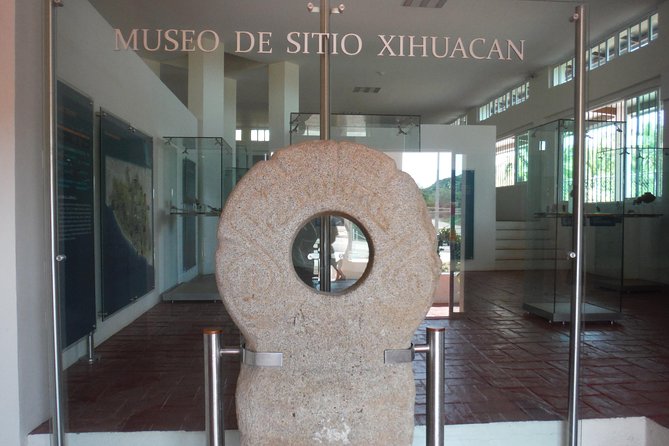
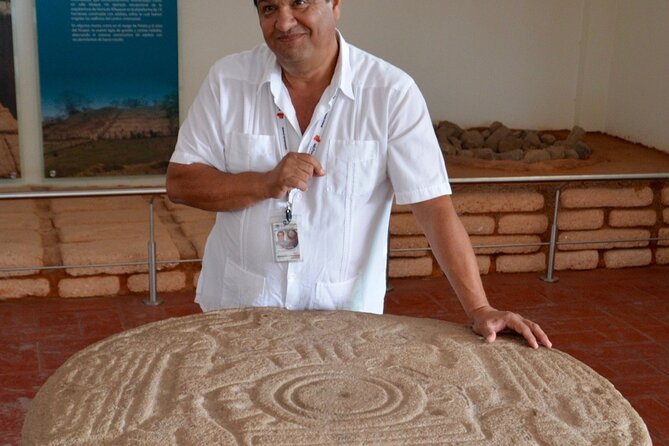
The museum is the best first stop because it gives you a framework for the outdoor remains. It holds about 800 objects, including work made from ocean shells, ceramic pieces, obsidian vases, bell necklaces, copper axes, stone artifacts, and granite carvings.
Some of the displays are in Spanish, so an English-speaking guide is particularly useful here. Francisco has been praised for carefully explaining the museum details, while Pablo and Antonio have also been noted for taking time with questions instead of rushing people through the rooms.
I would give the museum your full attention. It is easy to look quickly at a case of pottery and move on, but the small objects help you understand the trade, craft, and daily life behind the large stone structures outside. Ocean-shell work and obsidian point to connections beyond the immediate village. The bells, axes, and carved stones also make the culture feel more human than a row of anonymous ruins.
The museum was described as a local initiative, which adds another layer to the visit. This is not just a display built for a major international park. It helps preserve and explain the area’s own past, and your guide can connect what you see in the cases with the people and places around you.
The ball court and the meaning of the game
From the museum, you visit the ball court. In pre-Hispanic cities, the ball game was tied to religion and ceremony, not simply sport. The activity could be linked to human sacrifice, so the court had a serious role in the life of the city.
This is one place where a guide adds real value. Without explanation, the court may look like a simple open space bordered by stone. With context, you can think about the rules, ceremony, political power, and religious beliefs that shaped the game.
The site is not heavily crowded, based on the experiences described, and some outings have had only a handful of people. That can make it easier to stop, ask questions, and take in the setting. It also means you should expect a quieter, less polished archaeological visit rather than a large attraction with extensive visitor facilities.
A few more Mexico days worth comparing
- Private Ixtapa and Zihuatanejo City Tour
★ 5.0 · 137 reviews - Ixtapa Island Tour
★ 4.5 · 134 reviews - Baby Sea Turtle Releasing Sightseeing Tour with Luis de la Maza
★ 5.0 · 111 reviews - Las Gatas Kayaking and Snorkeling Tour
★ 5.0 · 110 reviews
Edificio B and the view across old farmland
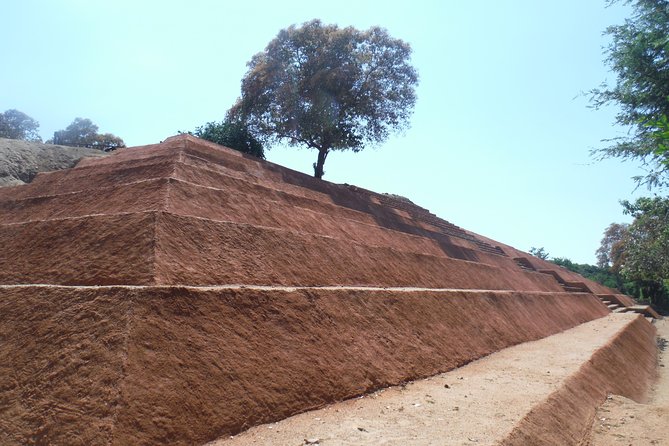
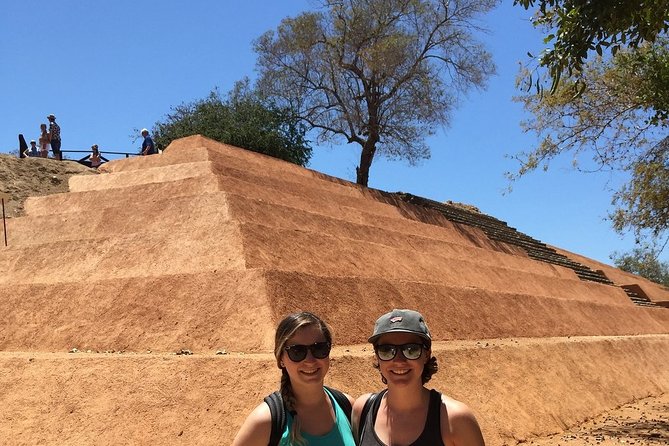
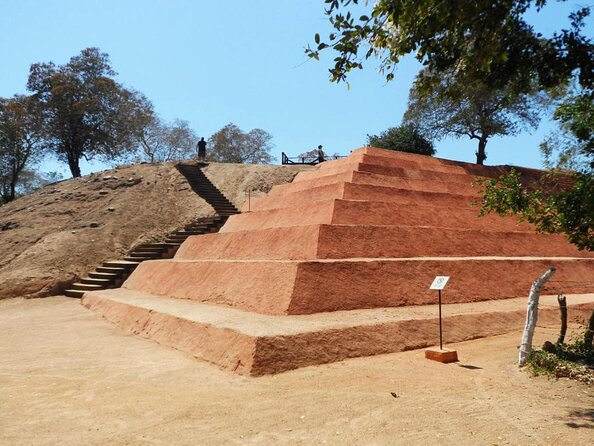
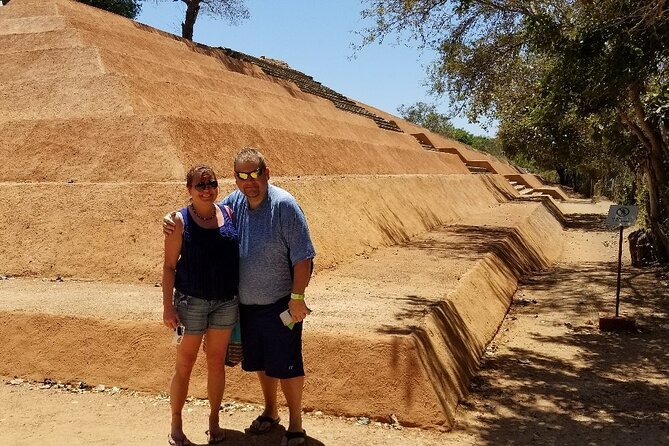
The next major stop is Edificio B, a pyramid built with bricks on the inside and modeling clay on the outside. The construction method is a useful reminder that ancient building materials were not always the massive stone blocks seen at better-known Mexican ruins.
From the pyramid area, you can look across the surrounding countryside. Modern corn fields and coconut plantations occupy ground that was once part of a trading city connected to visitors from other parts of Mexico. That contrast is one of the most memorable parts of the outing. You are not viewing the ruins in isolation. You are seeing them in the setting that still supports farming and village life.
Wear a hat and prepare for sun. One person’s practical advice was simply to bring head cover, and the outdoor portion includes time at the ball court and pyramid. Comfortable shoes are sensible, though no special hiking ability is stated as necessary. Most people can participate, but the tour is not recommended for children aged six and under.
The excavated area may seem small at first. Your guide helps you picture the full size of the ancient settlement, including areas that remain unexcavated. That is a different kind of archaeological experience from walking through a fully restored city. You use the visible remains, the countryside, and the guide’s explanation to imagine the larger place.
Soledad de Maciel and the living community
The tour also visits Soledad de Maciel, a rural community near the ruins. Villagers have built homes above what was once a neighborhood for high-status residents during the pre-Columbian period.
This stop keeps the past from feeling sealed away behind museum glass. You see how an existing community occupies the same ground as an older one, and your guide may add details about local economies, Indigenous languages, and current life in the area. Enrique, for example, has been praised for discussing how Indigenous languages continue to survive.
The visit can include the local church and additional artifacts, depending on the day’s route and guide. Because the outing passes through a working community, you should approach it with respect. This is not a staged historical village. It is a real rural place where people live, work, and run small businesses.
That is also why this tour feels different from a standard resort excursion. You spend part of the day away from the hotel zone, and the experience includes ordinary local surroundings rather than only prepared attractions.
The traditional lunch is part of the appeal
After the archaeology, you stop at a traditional Mexican restaurant away from the main resort town. The meal usually offers one of these choices:
- Shrimp with garlic sauce or breaded shrimp
- Fish fillet with garlic sauce, breaded, or grilled
- Chicken fajitas, grilled chicken, or breaded chicken
The meal comes with guacamole, chips, salsa, handmade tortillas, and beans. You also receive a beer, soft drink, or coconut milk. The exact setting can vary, but the descriptions point to a casual, family-run place where tortillas may be cooked close to your table.
I would treat lunch as one of the tour’s strongest features, not just a convenient inclusion. It gives you a taste of local cooking and a chance to sit down after the outdoor visits. The hot tortillas and fresh accompaniments are more interesting than a generic buffet at a resort.
Food quality can never be guaranteed in exactly the same way from one day to the next, and one person found lunch only average. Still, the meal is clearly intended to be a local stop, not an international chain or hotel restaurant. If you have dietary restrictions, ask about your options when booking or at pickup, since the listed choices focus on seafood and chicken.
Some routes have included a stop at Barra de Potosi or a small coffee hut. These details may depend on the day and the guide, so do not count on them as formal stops. Carrying some pesos is useful for coffee and for gratuities.
What the $95.61 price really covers
At $95.61 per person, the price is not simply an admission ticket to the ruins. It includes hotel pickup and drop-off, the air-conditioned van, an English-speaking driver-guide, the museum and archaeological visit, and lunch.
That package makes the cost reasonable if you value convenience and interpretation. Booking transport separately, finding the site, arranging a guide, and paying for lunch could take more work, especially if you do not speak Spanish. You are also paying for a small-group format, capped at 14 people, though some departures may be much smaller.
The strongest value comes when your guide is one of the people who has received repeated praise for patient explanations and local insight. Pablo, Francisco, Antonio, and Paco are names associated with especially personal outings, while Juan and Enrique have also been described as engaging guides. Assignments can change, so you should not assume a particular guide unless the operator confirms it.
Tips are not included. One person felt that repeated requests for gratuities added about 15 percent to the couple’s total cost. I would budget for tips, but decide what feels fair to you and carry small pesos if possible. The tour itself includes lunch, but drinks beyond the listed option and any coffee stop may cost extra.
Who should book this Xihuacan outing?
I would choose this tour if you want local history, a small archaeological site, and a meal in a non-resort setting. It is a good match for adults, older children, and teenagers who can handle several hours of explanation and outdoor sightseeing. Two teenagers, ages 14 and 16, reportedly found the outing more enjoyable than expected, even after initially preferring the beach and pool.
It is also a strong choice if you have visited Zihuatanejo many times and want to see a different side of the area. Several guides add information about Mexican history, food, villages, and present-day life, so the experience is broader than a walk among ruins.
I would think twice if you want a grand, fully restored archaeological complex, a fast four-hour schedule, or a day centered on swimming. You will spend substantial time in a van, and the outdoor site may be hot. Children six and under are not recommended, and the tour requires at least two paying adults per booking.
The tour does not include a lagoon visit. That matters because some outings in this region combine archaeological sites with lagoon time. Here, the focus is the museum, ruins, village, countryside, and meal.
Booking details and cancellation
Pickup begins at 9:00 a.m., and departures run daily except Monday. Confirmation is provided when you book, and children must be accompanied by an adult. A child rate applies only when the child shares with two paying adults.
Service animals are allowed, and the tour is near public transportation, though hotel pickup remains the main convenience. Most people can participate, but you should expect outdoor walking and sun at the site.
Free cancellation is available until 24 hours before the start time for a full refund. Changes or cancellations made inside that 24-hour window are not accepted or refunded. The experience requires a minimum number of participants, so if the operator cancels for that reason, you receive a different date or experience, or a full refund.
Should you book the Xihuacan Culture and Archaeology Tour?
Book it if you want an informative, personal day outside Ixtapa and Zihuatanejo, with a local guide who can explain both ancient objects and present-day communities. The museum, ball court, Edificio B, Soledad de Maciel, and traditional lunch create a fuller picture than the ruins alone.
The best reason to go is the combination of careful guiding and local food. The main caution is to allow more than four hours in your schedule, bring sun protection, and expect tips to be separate. If you accept those limits, the $95.61 price buys a practical and unusually local excursion rather than a quick photo stop.
FAQ
Where does the Xihuacan tour begin?
Hotel pickup is offered in Zihuatanejo or Ixtapa. The listed start time is 9:00 a.m.
On which days does the tour operate?
The tour is offered daily except Monday.
How long does the tour last?
The advertised duration is approximately four hours. The stated drive times, about three hours at the archaeological site, and lunch may make the full outing longer, so keep your schedule flexible.
What sites are included?
You visit the Xihuacan Site Museum, the ball court, Edificio B pyramid, and the rural community of Soledad de Maciel.
Is lunch included?
Yes. Lunch is included, with shrimp, fish, or chicken choices, plus guacamole, chips, salsa, handmade tortillas, beans, and one beer, soft drink, or coconut milk.
Is the tour offered in English?
Yes. The tour is offered in English, and the driver-guide provides commentary during the journey and site visits.
How many people can join the tour?
The maximum group size is 14 travelers, using an air-conditioned 14-passenger van. Some departures may be smaller.
Is the tour suitable for young children?
Children must be accompanied by an adult, and the tour is not recommended for children aged six and under. A child rate applies only when sharing with two paying adults.
Does the tour include a lagoon visit?
No. A lagoon visit is not included in this experience.
Can I cancel for a refund?
You can cancel at least 24 hours before the start time for a full refund. Cancellations or changes made less than 24 hours before the start time are not accepted or refunded.
Just added around Mexico
- Snorkel with Whale Sharks in La Paz★ 5.0 · 42 reviews
- La Paz Whale Shark & Sea Lion Snorkeling + Balandra Tour★ 5.0 · 78 reviews
- Private Trip Espiritu Santo Island★ 5.0 · 59 reviews
- All-Inclusive Catamaran Tour | Beaches & Sea Lions from Los Cabos★ 4.5 · 37 reviews
- La Paz Beaches Half Day Tour★ 4.5 · 54 reviews
- Gray Whale Watching Tour with Marine Biologist and Small Group★ 5.0 · 37 reviews
- Espiritu Santo Island and sea lions★ 5.0 · 50 reviews
- Full Day Gray Whale Watching Experience★ 5.0 · 53 reviews
Ancient Ruins Tours, compared.
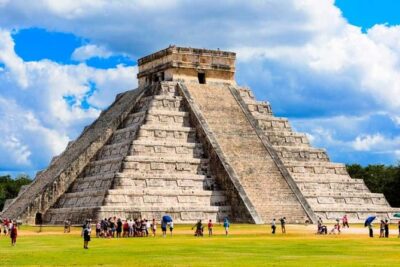

Chichen Itza, Cenote & Valladolid Tour with Tequila and Lunch
Read our review →
Teotihuacan, Guadalupe Shrine & Tlatelolco Day Tour with Lunch
Read our review →
Chichen Itza, Cenote & Valladolid Tour with Lunch
Read our review →
Early morning Chichen Itza Tour: Cenote and Tequila Tasting
Read our review →
Balloon flight + Breakfast in cave + Pyramids + Pick up CDMX.
Read our review →
Teotihuacan pyramids morning or afternoon without tourist traps
Read our review →
Balloon flight + pick up in CDMX + Breakfast in Cave + Pyramids
Read our review →Browse the lists this tour appears in