
Reviewed · MUSEUMS
Anthropology Museum Guided Tour
The National Museum of Anthropology is so large and packed with objects that a good guide can change the whole visit. Instead of seeing only impressive stones and carved figures, you get a timeline linking Olmec, Maya, Teotihuacan, Toltec, and Aztec cultures to modern Mexico.
I like two things right away: admission is included in the $39 price, and the morning schedule leaves your afternoon open. I also like that strong guides such as Alan, Ligia, Leonardo, Antonio, and Lili have helped visitors make sense of the museum’s difficult subjects with maps, drawings, and clear stories.
The main caution is consistency. Some groups report a superb English tour that runs beyond the scheduled two and a half hours, while others describe delayed starts, hard-to-understand commentary, confusing meeting arrangements, or groups larger than expected. Arrive early, and treat the guide as a major part of the value.
Key points to know before booking

- The Stone of the Sun anchors the visit: This famous Aztec object is one of the museum’s headline sights, but its meaning is easier to grasp with context.
- Olmec, Maya, and Aztec collections share the route: You see giant Olmec heads, Maya burial treasures, and material tied to the former capital of Tenochtitlan.
- Admission is included: The $39 fee covers the museum entrance and a professional English-speaking guide.
- The tour lasts about 2.5 hours: That is enough for a strong introduction, not enough to inspect every room at leisure.
- Group size may reach 25 people: Audio equipment may be used, but crowd control and sound clarity can affect the experience.
- Punctuality matters: The group may leave without late arrivals, and catching up later may not be possible.
Why the Anthropology Museum needs a guide
You can enter the museum and admire its famous objects on your own. The harder task is understanding how the pieces fit together.
The permanent galleries cover pre-Columbian cultures from the territory of present-day Mexico, as well as areas that were once part of Mexico and are now in the southwestern United States. That is a huge subject. The museum also presents material from different regions and time periods, so a visitor moving room to room can easily lose the thread.
This is where the guide should earn the fee. A strong presentation begins with the broad geography and timeline, then moves toward individual objects. Alan has been praised for starting with a wide view of the region before explaining particular cultures. That approach matters because it gives you a mental map before the details start arriving.
I especially like guides who use the museum’s own displays as teaching tools. One highly praised guide used personal photographs and drawings to explain how buildings were made. Another carried a binder with images and examples. Those simple aids can make a carved monument or half-seen architectural model far easier to read.
The museum’s written information is not always enough for an English-speaking visitor. Some exhibit text is in Spanish only, and the amount of explanation varies by room. A guide can fill in the gaps, though the quality of that explanation depends heavily on the person leading your group.
More Museums in Mexico City
- Chapultepec Castle & Anthropology Museum Tour
★ 4.5 · 1,348 reviews - Frida Kahlo VIP [Museum Tickets Included] Bike, Markets & Churros
★ 5.0 · 1,072 reviews - Frida Kahlo VIP [Museum Tickets Included] Walk, Markets & Churros
★ 5.0 · 982 reviews
Starting at Mexico City’s National Museum of Anthropology

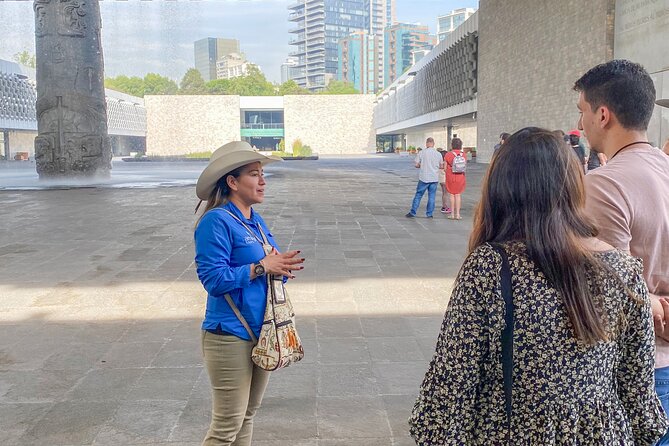
The meeting point is outside the museum at Avenida Paseo de la Reforma in the Polanco area of Chapultepec. The site is near public transportation, which is useful in a city where traffic can turn a short journey into a slow one.
The practical rule is simple: arrive early. One group missed the tour after arriving about ten minutes late, even after trying to send notice. The operator explained that the group cannot wait or be rejoined once it has left. Mexico City traffic is a real risk, so build in extra time rather than aiming for the exact meeting hour.
The start has not always been smooth. Some people have had trouble identifying the correct guide or locating the group among other museum visitors. Others have waited while tickets were checked or audio equipment was handed out. If you do not see your guide promptly, ask clearly where the English group is meeting and keep your booking details ready.
The tour has a maximum listed group size of 25. That is not a private visit, and it may feel crowded in popular galleries. A smaller group makes it easier to hear, ask questions, and stand close enough to see what the guide is pointing out.
The Stone of the Sun and the Aztec galleries
The Stone of the Sun, often called the Aztec Calendar, is the museum’s best-known object. Its size and carved design make it an obvious stop, but the real value comes from understanding what you are looking at rather than simply taking a photograph.
A guide can explain the object within the larger Aztec world and connect it to Tenochtitlan, the capital that once occupied the central area of present-day Mexico City. The museum includes a model showing the location and layout of that former city. This model is especially useful because it links the ancient capital to streets and places you may see elsewhere in Mexico City.
I like this part of the visit because it turns the museum into a bridge between ancient and modern Mexico. You are not looking at an isolated civilization from a distant past. You are learning about a capital whose site still shapes the city around you.
The Aztec material is also a good test of the guide. A clear explanation should establish dates, geography, and relationships before moving into symbols and rituals. If the presentation jumps between Aztec, Maya, Teotihuacan, and Toltec subjects without a clear sequence, the museum can become confusing fast.
Olmec heads from Tabasco and Veracruz

The giant Olmec heads are among the most memorable objects in the building. They were found in the jungles of Tabasco and Veracruz and are difficult to appreciate fully without some sense of their scale, age, and place within Mesoamerican history.
A good guide gives you a reason to pause here. The heads are not just enormous stone faces. They are evidence of a society capable of organizing labor, moving large stone, and producing monumental art. The object itself grabs your attention, while the explanation gives that attention a purpose.
This is also a room where group position matters. If the guide is speaking to 20 or more people, you may need to stand toward the front to hear and see properly. Ask questions when the guide pauses, rather than waiting until the group has moved several rooms away.
A completely different kind of day out, same trip:
- Balloon flight + Breakfast in cave + Pyramids + Pick up CDMX.
★ 5.0 · 6,335 reviews - Balloon flight + pick up in CDMX + Breakfast in Cave + Pyramids
★ 5.0 · 5,651 reviews - Balloon Flight + Cave Breakfast + Pick Up from CDMX or We Fly
★ 5.0 · 4,410 reviews - Hot Air Balloon Flight with Breakfast Cave and Pyramids Tour
★ 5.0 · 2,066 reviews
Maya tombs, Chichen Itza, and the southern galleries
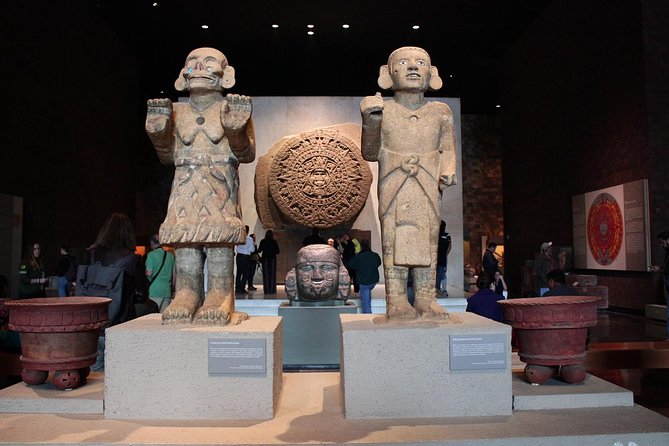
The tour includes treasures connected with the Maya civilization, including objects recovered from the Sacred Cenote at Chichen Itza. You may also see reconstructions of Maya tombs, which help show how artifacts relate to burial practices and ceremonial life.
This section adds welcome contrast to the Aztec galleries. The cultures are often grouped together in visitors’ minds, but the museum presents different regions, traditions, and time periods. A good guide should help you see those differences without turning the tour into a list of names and dates.
Maya rooms can be difficult if you are trying to absorb every object at once. I would focus on the guide’s main story, then note which galleries you want to revisit after the tour. Several people have found that the best use of the guided visit is to gain an overview first and return alone for closer inspection.
The museum also has visiting exhibitions, generally about other major cultures from around the world. The exact displays can change, so do not build your plans around a particular temporary show unless it has been confirmed for your date.
How the 2.5-hour route works

The stated duration is approximately two hours and thirty minutes. That gives the guide time to introduce major civilizations and key objects, but it does not give you enough time to study every hall in detail.
Some guides keep the group moving and explain selected objects. Others give you time to walk around a room before regrouping. That can be useful if you want to look closely, but the timing needs to be handled well. If the guide gives free time before explaining the objects, you may read or explore without knowing which pieces will matter later.
The best version of this tour follows a clear pattern:
- Establish the geography and broad timeline.
- Explain one civilization at a time.
- Use major objects to make the period memorable.
- Pause for questions.
- Leave you with a short list of rooms to revisit.
Guides such as Alan, Antonio, Leonardo, Ligia, and Lili have received strong praise for making the story clear, warm, and engaging. Some have answered questions in both English and Spanish. One guide continued well beyond the scheduled time, though you should not assume every guide will do so.
English delivery and audio equipment
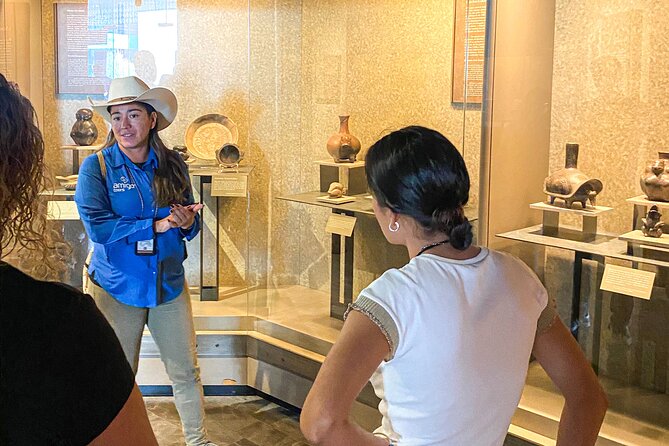
The tour is offered in English, and headsets may be used so the guide can speak while the group moves through the galleries. That system is helpful in crowded rooms, but equipment only works if it is distributed promptly and the sound is clear.
English ability has been uneven. Some people have found the guide easy to follow and praised the clear explanations. Others have struggled with accent, volume, or a fast one-way presentation. Since the subject is already complex, unclear speech can turn a potentially useful tour into a tiring one.
If you have trouble hearing, say so early. Move closer, ask the guide to repeat a key point, or request a short pause for questions. You are paying for interpretation, not just entry into the building.
Is $39 a good value?
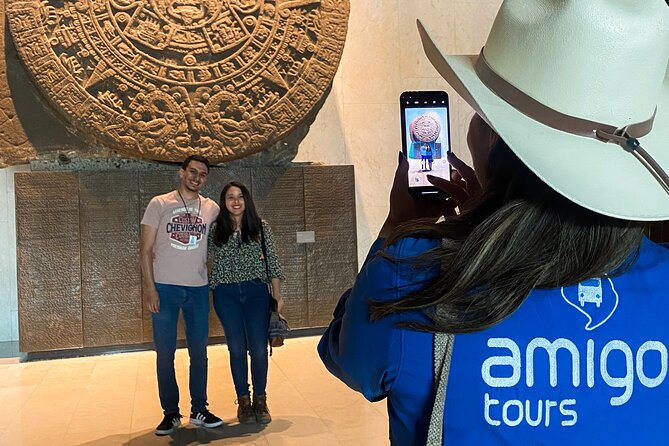
At $39 per person, this tour costs more than entering a museum alone, but the admission ticket is included. The real question is how much you value a structured introduction to a huge collection.
For a first visit, I think the price can be worthwhile if you receive a strong English-speaking guide. The museum is large, and some written material is not translated into English. A clear explanation of the Stone of the Sun, Tenochtitlan, Olmec monuments, and Maya objects can save you from spending the first hour simply trying to work out what belongs to which period.
The value drops sharply if the group is hard to find, starts late, or has poor audio. It also drops if the guide spends much of the time managing people instead of explaining the exhibits. Because guide quality varies, this is not a guaranteed bargain.
Group discounts may be available, which could help families or larger parties. Food and drinks are not included, and the museum does not allow food, drinks, or backpacks inside. Only a handbag is permitted, so plan what you carry before arriving.
Who should book this museum tour?
I would recommend it most strongly to first-time visitors who want a historical framework rather than a quiet museum walk. It also suits anyone who does not read Spanish comfortably and wants help with rooms where English information is limited.
Families can benefit when the guide uses drawings, photographs, and stories to keep the material moving. History and archaeology fans will have plenty to enjoy, though serious students may want more time than the tour allows.
Independent museum visitors should think twice. If you prefer to read every label, linger over small objects, or change direction freely, a group tour may feel restrictive. You can use the guided visit as an introduction, then return to the rooms that caught your attention.
This is not the best choice for anyone likely to arrive late. It is also a poor fit if you expect a private tour. The experience is a shared group visit, with up to 25 people, and some sessions may feel larger or less personal than expected.
Booking advice for a smoother visit
Book in advance if your schedule is fixed. The tour is often reserved about 15 days ahead, which suggests that popular dates can fill before your arrival.
Choose the morning option if possible. You get the museum’s main introduction early and keep the afternoon open for Chapultepec, nearby museums, or other parts of Mexico City.
Bring as little as possible. Backpacks, food, and drinks are not allowed, while only a handbag is permitted. Wear something comfortable for standing and walking, and arrive with enough time to identify the group before the scheduled departure.
The cancellation rule is generous if your plans change: cancel at least 24 hours before the start time for a full refund. Changes or cancellations inside that window are not accepted for a refund.
My verdict: book it with realistic expectations
I would book this tour if I wanted a fast, guided introduction to the National Museum of Anthropology and could arrive early. The collection is too important to rush past without context, and the strongest guides make the Aztecs, Maya, Olmecs, and other cultures easier to follow.
I would not book it expecting a private experience or a guaranteed perfect presentation. The sharp contrast between excellent guides and disappointing sessions is the central issue. If your group gets someone like Alan, Ligia, Leonardo, Antonio, Lili, or another strong presenter, $39 can be money well spent. If the meeting is disorganized or the English is difficult to understand, the value falls quickly.
For many visitors, the safest plan is to use the tour for orientation, then spend extra time exploring on your own. That gives you the benefit of expert guidance without asking two and a half hours to cover one of Mexico City’s largest and most demanding museums.
FAQ
Where does the Anthropology Museum tour start?
The tour starts at the National Museum of Anthropology, at Av. Paseo de la Reforma in Polanco, within Chapultepec.
Where does the tour end?
The activity ends back at the museum meeting point.
How long does the tour last?
The tour lasts approximately two hours and thirty minutes.
Is museum admission included?
Yes. The price includes entrance to the National Museum of Anthropology and a professional guide.
What language is the tour offered in?
The tour is offered in English.
How many people can join the group?
The activity has a maximum listed group size of 25 travelers.
Can I bring a backpack into the museum?
No. Food, drinks, and backpacks are not allowed. Only a handbag is permitted.
Is food included?
No. Food and drinks are not included in the tour.
What happens if I arrive late?
The group may leave at the scheduled time and may not be able to wait or accept late arrivals after departure. Arrive early, especially because Mexico City traffic can cause delays.
Just added around Mexico City
- Kayaking on the Island of Sacrifices★ 5.0 · 49 reviews
- Paragliding in Valle de Bravo★ 5.0 · 188 reviews
- Hot Air Balloon Flight and Tour of the Majestic Pyramids★ 4.5 · 38 reviews
- Balloon flight / Breakfast in the cave / CDMX pick-up + Pyramids★ 5.0 · 54 reviews
- Hot air balloon ride with breakfast in Cueva from CDMX★ 5.0 · 47 reviews
- Africam safari (private tour)★ 5.0 · 33 reviews
- Lucha Libre, Tacos, Margaritas,Tequila and Night Market Tour★ 5.0 · 64 reviews
- Riviera Maya: Frida Kahlo Museum Guided Tour 2025★ 4.1 · 54 reviews
Museums, compared.
Xochimilco, Coyoacan, Frida Kahlo Museum & Murals Tour
Read our review →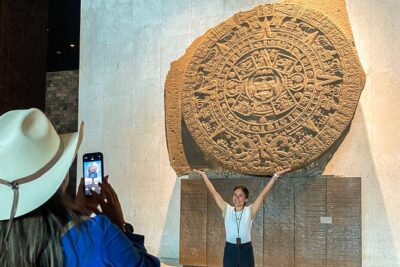
Chapultepec Castle & Anthropology Museum Tour
Read our review →
Frida Kahlo VIP [Museum Tickets Included] Bike, Markets & Churros
Read our review →
Frida Kahlo VIP [Museum Tickets Included] Walk, Markets & Churros
Read our review →
Exclusive Tour Frida Kahlo Museum – Small Groups
Read our review →
Coba Multun-Ha Cenote Tulum and Mayan Museum Small Group
Read our review →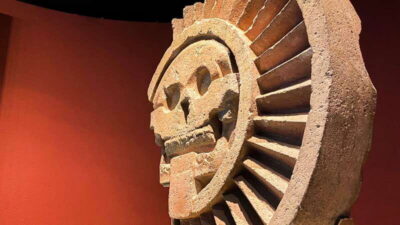
Frida Kahlo Museum Entry Ticket w/Digital Guide
Read our review →Browse the lists this tour appears in