
Reviewed · HISTORICAL TOURS
Mexico City: Historical walking tour of Tenochtitlan
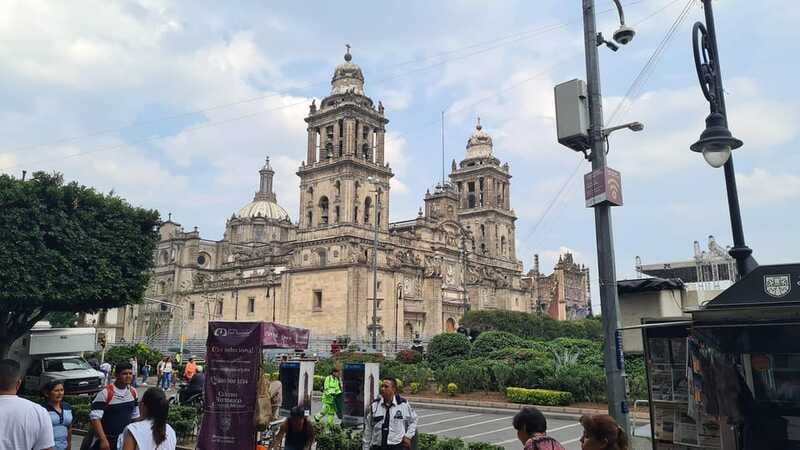
Mexico City’s historic center makes the most sense when someone connects the ruins beneath your feet with the colonial buildings above them. Professor Cristina Ríos, PhD, leads this three-hour walk from Templo Mayor to the Palace of Fine Arts, explaining how Tenochtitlan became Mexico City and how Aztec, Spanish, independent Mexican, and modern stories overlap.
I like the small groups of three to 10 and the tour’s strong focus on architecture and art, not just dates and famous names. I also like that Ríos may point out places you could easily miss, including Cortés’s tomb and lesser-known corners around the Cathedral. The main consideration is that this is an information-heavy walking tour, best suited to adults and children aged 10 or older who enjoy careful explanations.
Key points at a glance

- 700 years of history in three hours: Follow the story from Tenochtitlan through Spanish colonization, Mexican independence, and the modern city.
- Professor Cristina Ríos leads the walk: Her background in history and art history gives the tour a more academic feel than a standard sightseeing stroll.
- Seven major stops: See Templo Mayor, the Metropolitan Cathedral, Iturbide Palace, San Francisco Church, the House of Tiles, and the Palace of Fine Arts.
- Look beyond the obvious: The route includes the Calmecac site, Cortés’s former lodgings, murals, old facades, and other details easy to miss alone.
- A useful first-day activity: You’ll receive suggestions for places to visit, eat, and explore after the walk.
- Outdoor sightseeing with optional sweets: The tour does not enter Templo Mayor Museum, but you may stop at Dulcería Celaya for traditional Mexican candy.
Why this walk helps you understand Mexico City
Mexico City’s Centro Histórico can feel like a stack of different cities pressed into one. Aztec stones, Spanish churches, nineteenth-century palaces, murals, street traffic, and modern shops all share the same few blocks. Without context, you may see impressive buildings but miss the story tying them together.
This tour gives you that story in order. You begin with Tenochtitlan, the Mexica capital built around the lake system of the Valley of Mexico. You then move through the Spanish conquest, colonial society, independence, and twentieth-century art. The route is not simply a list of monuments. It is a lesson in how power, religion, architecture, and national identity changed the city.
I would consider this a strong first-day activity if you want to understand the center before exploring it on your own. Several people who took the tour used Ríos’s suggestions to plan later visits, including museums, restaurants, and additional historic sites.
At $43 per person, the value comes mainly from the guide rather than admission tickets. You are paying for three hours of interpretation, a small group, and a specialist who can answer questions about architecture, art, and Mexican history. Since tickets and food are not included, budget separately if you plan to visit museums or buy sweets.
More Historical Tours in Mexico City
- Historic Downtown Walking Tour
★ 5.0 · 1,289 reviews - Historic Center Food Tour in Mexico City
★ 5.0 · 1,263 reviews - Mexico City: Historic Downtown Walking Tour
★ 4.8 · 1,039 reviews
Meeting at Centro Cultural España and Templo Mayor
The stated meeting point is the entrance to the Centro Cultural España at Guatemala #18. The walk begins near the Templo Mayor models and the view toward the archaeological zone. You do not enter the Templo Mayor Museum or the archaeological site as part of this activity.
That detail matters. If you want to visit the museum and see the excavation area from inside, plan extra time before or after the tour. The walk gives you an outside introduction, which is useful because Ríos explains how the ruins fit into the streets and buildings around them. It also keeps the group moving through several important sites within the three-hour window.
This first stop sets up the whole tour. You begin by looking at the remains of the Mexica capital, then consider how Spanish Mexico was built over and around it. The physical layering is one of the most striking parts of the historic center, and a guide can make that connection clear in a way a quick photograph cannot.
Templo Mayor: beginning with Tenochtitlan

The Templo Mayor section lasts about 40 minutes, making it the longest stop on the route. That is sensible. The story of Mexico City begins here, and Ríos uses the models and outside view of the archaeological zone to explain the city’s founding and development.
You can expect discussion of Aztec society, the ceremonial center, and the way the old capital shaped the later city. The focus is not only on ruins. You learn to picture Tenochtitlan as a functioning capital and to understand why the Spanish conquest changed the city so thoroughly.
This is also where the tour’s historical method becomes clear. Ríos links physical remains to later buildings and political events instead of treating pre-Hispanic Mexico as a short introduction before moving on to colonial sights. That balance was one of the most praised parts of the experience.
If pre-Hispanic history is your main interest, you may want to allow extra time for the Templo Mayor Museum separately. The tour’s outside view cannot replace the museum visit, but it can give you a useful framework before you go inside.
Behind the Cathedral and the Calmecac site
The walk continues behind the Metropolitan Cathedral, where Ríos discusses the Ánimas del Purgatorio area and the Calmecac site museum at the Centro Cultural España. This part of the route is valuable because it moves you away from the biggest facade and into details many people miss.
The Calmecac was connected to elite education in Mexica society. You will not simply be looking at another old wall. Ríos explains why the site mattered and how pre-Hispanic remains survive within the modern center.
The Cathedral itself receives about 20 minutes of guided attention. The discussion connects its location and architecture to the colonial transformation of the city. You should expect explanation rather than an extended interior visit, and the route may be affected by activity in the main square or around the building.
The walk is generally paced with room for questions and short pauses. Still, this is a city-center walk, not a quiet museum tour. Crowds, traffic, and public events can make some explanations harder to hear. Earphones are provided when the group has more than seven people, and the guide has also used a microphone in loud areas.
More Walking Tours in Mexico City
- Frida Kahlo VIP [Museum Tickets Included] Walk, Markets & Churros
★ 5.0 · 982 reviews - Walking Tour of the Historic Center of Mexico City
★ 5.0 · 870 reviews - Anthropology Museum Private Experience Walking Tour
★ 5.0 · 355 reviews - Mexico City: Guided walking tour through the most historic parts of the city.
★ 4.5 · 172 reviews
Cortés’s lodgings and the old Aztec palace
One of the more revealing stops is the former Axayacatl Palace, associated with Moctezuma and later with Hernán Cortés’s lodgings. This is exactly the kind of place that benefits from a guide. On your own, you might walk past an ordinary-looking building without realizing how much political history is attached to it.
Ríos explains the transition from the old Aztec palace to Spanish occupation. The site helps show that the conquest was not an abstract event occurring somewhere else. It happened in the same streets, residences, and ceremonial spaces you are walking through.
The route may also include Cortés’s tomb, depending on the group and the guide’s judgment. That flexibility is a plus. Ríos has adjusted the walk for small groups and added nearby points of interest when time and conditions allowed. You should not treat every extra stop as guaranteed, but a small group gives the guide room to respond to questions and interests.
Iturbide Palace and the San Francisco Church facade

The Iturbide Palace, now the Banamex Cultural Center, brings the story into the colonial and later national period. Ríos discusses the building’s architecture and its place in Mexico City’s social and political life.
This stop is especially useful if you like buildings as historical evidence. The palace is not just a handsome facade. Its design, ownership, and later cultural role help explain how elite life changed as Mexico moved from colony to independent nation.
The Church of San Francisco is viewed from the facade. That means you should not expect a full interior tour, but the exterior still adds another layer to the city’s religious history. Ríos’s approach is to explain what you are seeing, including architectural details and the role of religious institutions in colonial Mexico.
The schedule allows about 20 minutes at each of these stops. That is enough for a focused explanation, but not enough for an extended architectural study. If you want to photograph every detail or enter each building, plan to return independently.
The House of Tiles and Orozco’s mural

The House of Tiles is one of the route’s visual highlights. Its blue-and-white tile exterior is easy to recognize, but the interior adds another reason to stop. Ríos gives a detailed explanation of the José Clemente Orozco mural inside.
This is where the tour shifts from buildings and political history to Mexican art. The mural is not treated as decoration. Ríos explains how it fits into the country’s artistic and historical story, helping you look at the imagery with more purpose.
The stop lasts about 30 minutes. That is a good amount of time for the facade, interior details, and mural discussion without turning the entire walk into an art lecture. If you have little background in Mexican muralism, this may be one of the most useful stops because it gives you a way to read public art rather than simply admire its size and color.
The House of Tiles is also an active public space, so conditions can be busy. Keep your group together and listen for instructions about where to stand. The value here is the explanation, not just the photograph.
Ending at the Palace of Fine Arts

The walk finishes at the Palace of Fine Arts after a 30-minute guided pass-by. The building provides a fitting endpoint because it represents Mexico’s later artistic and cultural ambitions.
You will not receive a full museum visit during the tour. Instead, Ríos places the palace in the wider story of Mexican art and the city’s changing identity. This final stop also gives you a practical choice: continue inside on your own or use the location as a starting point for more exploration.
If you plan to visit the Palace of Fine Arts, the Templo Mayor Museum, or both, leave extra time in your schedule. The walking tour introduces these places but does not include admission. That arrangement keeps the tour focused and helps you decide which museums deserve a separate visit.
What the guide adds

The main reason to book this walk is Professor Cristina Ríos. The strongest praise centers on her clear explanations, passion for Mexican history, strong English, and ability to answer detailed questions.
Her approach covers more than Aztec history. You can expect connections among Mesoamerican culture, Spanish colonization, early Mexican independence, architecture, customs, and Mexican art. She also recommends books and additional places to see, which can be useful if you want to continue studying after the tour.
I would describe the style as thorough and academic rather than light entertainment. One rating specifically characterized it as a traditional guided tour with many facts and an adult focus on architectural styles. That is not a flaw, but it is an important match issue. If you want jokes, quick photo stops, or a loose stroll, this may feel too detailed. If you want a guide who can explain why a building matters and answer follow-up questions, it should suit you well.
Ríos has also shown flexibility with small groups. The route has been adjusted for particular interests, and the pace can be shaped by questions. That personal attention is harder to get in a large bus tour.
Pace, comfort, and practical details
The activity lasts three hours and takes place on foot in central Mexico City. Wear comfortable shoes, bring a hat or sunglasses, and use sunscreen. The route includes several stops, but you should still expect a fair amount of standing and walking.
The tour is wheelchair accessible. Food and drinks are not included, and hotel pickup and drop-off are not offered. Meet at the Centro Cultural España entrance rather than assuming the activity begins inside the Templo Mayor Museum.
English and Spanish tours are available. Headsets are supplied when the group is larger than seven, while smaller groups may be able to hear the guide directly. If the center is unusually noisy, staying close to Ríos will help.
The optional stop at Dulcería Celaya adds a pleasant local touch. Traditional Mexican sweets can make a good break, but you pay for food separately. If you skip it, you still receive the main historical and architectural tour.
Who should book this tour?
I would choose this tour if you are interested in Mexican history, art, architecture, or the way pre-Hispanic and colonial Mexico overlap. It is also a smart choice for a first morning in the city center because it gives you a map of what you are seeing and ideas for the rest of your visit.
Families should note the minimum age of 10. An older child who enjoys history may find the tour engaging, while a younger child may struggle with the long explanations and walking pace.
At $43, the tour is a fair buy for a small group led by a specialist, especially if you value context and questions more than admission to individual attractions. It is less attractive if you want museum entry included or prefer to explore at your own pace.
The activity has a 4.9 rating from 69 reviews, with repeated praise for Ríos’s clarity, passion, English, and detailed knowledge of the city’s art and architecture. I would book it early in a Mexico City stay, then use the final stop at Bellas Artes to decide where to spend the rest of your day.
FAQ
Where does the tour meet?
Meet at the entrance of the Centro Cultural España at Guatemala #18. The group begins near the Templo Mayor models and the outside view of the archaeological zone.
Does the tour enter the Templo Mayor Museum?
No. The tour views the models, archaeological zone, and site from outside. Museum admission is not included.
How long does the walking tour last?
The tour lasts three hours.
What language is the tour offered in?
The live guide can conduct the tour in English or Spanish.
Who leads the tour?
Professor Cristina Ríos, PhD, leads the experience.
Are admission tickets included?
No. Tickets for museums or other attractions are not included. Food and drinks are also separate.
Is the tour suitable for children?
The activity is not suitable for children under 10. The tour has a detailed, adult-oriented focus on history, architecture, and art.
What should I bring?
Wear comfortable shoes and bring a hat or sunglasses. Sunscreen is recommended. Headsets are provided when the group has more than seven participants.
Just added around Mexico City
- Kayaking on the Island of Sacrifices★ 5.0 · 49 reviews
- Paragliding in Valle de Bravo★ 5.0 · 188 reviews
- Hot Air Balloon Flight and Tour of the Majestic Pyramids★ 4.5 · 38 reviews
- Balloon flight / Breakfast in the cave / CDMX pick-up + Pyramids★ 5.0 · 54 reviews
- Hot air balloon ride with breakfast in Cueva from CDMX★ 5.0 · 47 reviews
- Africam safari (private tour)★ 5.0 · 33 reviews
- Lucha Libre, Tacos, Margaritas,Tequila and Night Market Tour★ 5.0 · 64 reviews
- Riviera Maya: Frida Kahlo Museum Guided Tour 2025★ 4.1 · 54 reviews
Historical Tours, compared.



Mexico City Historical Centre Food Tour with 7 Authentic Tastings
Read our review →
Historical and Cultural Walking Tour of San Miguel de Allende
Read our review →
Historical and Cultural Walking Tour of San José del Cabo
Read our review →
Browse the lists this tour appears in