
Reviewed · HISTORICAL TOURS
Walking Tour of the Historic Center of Mexico City
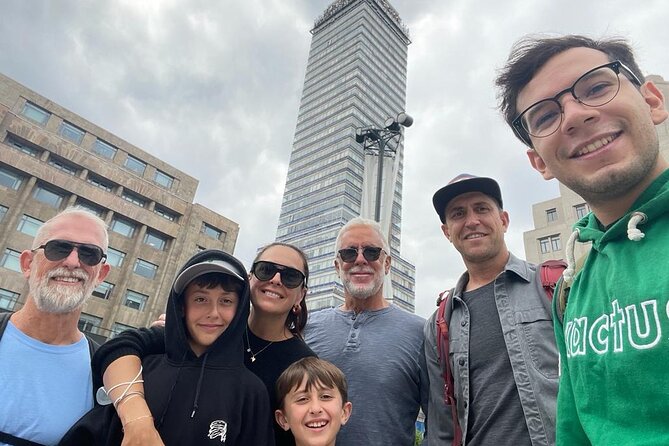
Mexico City’s historic center is a place where an Aztec temple, a Spanish cathedral, a revolutionary mural, and a grand post office can all appear within the same morning. This walk gives you a useful first look at that collision of cultures, moving from the Zócalo through colonial streets to the Palacio de Bellas Artes and House of Tiles.
I like the small group limit of 10, which makes it easier to hear the guide and ask questions. I also like the mix of major sights and less obvious details, especially the Diego Rivera murals inside the Ministry of Education and the archaeological window beneath a modern street. The main drawback is simple: this is a real three-hour walk, often over cobblestones, with limited chances to sit.
Key points to know before you book
- Aztec and Spanish Mexico share the same route: The walk connects Templo Mayor, the cathedral, colonial plazas, and modern Mexican culture.
- Diego Rivera murals are a highlight: You enter the Ministry of Education to see a large group of murals covering festivals, politics, work, and social struggle.
- Guides shape the experience: Fernanda, Luis, Alexia, Nat, Benjamin, Sarah, Gabby, and others have led recent departures, with strong praise for their storytelling and English.
- The pace depends on the group: Most people find it comfortable, but cobblestones, heat, and Mexico City’s altitude can make the route tiring.
- Several interiors are only viewed from outside: The cathedral, Palacio Postal, and some other buildings are explained externally, while the Ministry of Education and archaeological window offer included access.
- The ending is well placed: You finish near the Palace of Fine Arts and House of Tiles, two good landmarks for continuing your own exploration.
Why this walk is a smart first look at Centro Histórico
The historic center can feel confusing on your first day. The streets are full of grand facades, street vendors, government buildings, churches, archaeological remains, and layers of political history. A guide gives those sights an order.
This is not a long museum tour or a specialist lecture. It is a broad introduction that connects pre-Hispanic Mexico, the Spanish conquest, the viceroyalty, independence, revolution, and present-day life. That balance is one of the best reasons to take it early in your stay.
You should expect plenty of context, but not an in-depth visit to every building. The route gives you the main story and several strong visual stops. You can then return to the places that catch your attention.
The guide matters a lot here. Fernanda is described as warm, funny, and highly prepared, while Luis is praised for his clear English, local pride, careful street crossings, and useful recommendations. Alexia brings thoughtful comments about both past events and current life. Nat, Benjamin, Sarah, Gabby, Eduardo, Thomas, Oscar, and others have also led departures.
That range of guides means the tone may vary. The common thread is an accessible approach, with time for questions and practical care for the group. One guide even adjusted the visit so the group could spend extra minutes with the murals.
More City Tours in Mexico City
- Historic Downtown Walking Tour
★ 5.0 · 1,289 reviews - Historic Center Food Tour in Mexico City
★ 5.0 · 1,263 reviews - Mexico City: Historic Downtown Walking Tour
★ 4.8 · 1,039 reviews
Starting at the Zócalo and Mexico’s central story
The tour begins at Plaza de la Constitución, usually called the Zócalo. This enormous square is the right place to begin because it brings several eras together in one view.
You see the National Palace, the Supreme Court of Justice, and the cathedral area around the square. The guide explains how this space functions as the symbolic center of Mexico City, while pointing out the commercial side of the area, including silversmith shops.
The Zócalo can be crowded, sunny, and noisy. That is part of the experience, but it also means you need to stay close to your guide. Green shirts and umbrellas help identify the tour team, a useful detail when the square is full.
The opening stop lasts about 15 minutes. That is enough for orientation and context, not a full architectural study. I like this approach because it keeps the walk moving and saves your energy for the longer sections ahead.
The cathedral and the city beneath your feet
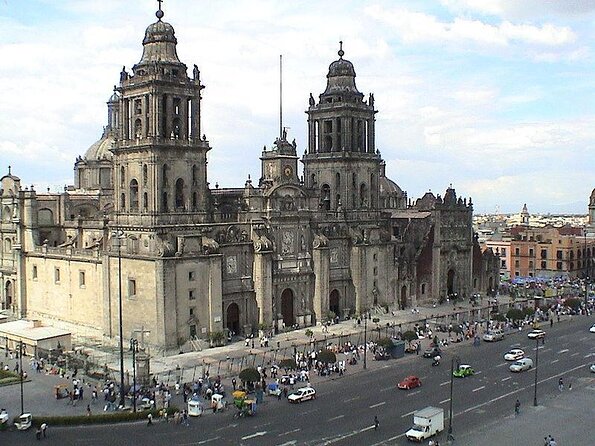
At the Metropolitan Cathedral, the guide explains the building from outside. You hear about its construction, origins, and blend of Baroque and neoclassical design.
The cathedral is one of the most important buildings in the center, but this tour does not include interior admission. If you want to see the chapels, altars, and interior details, you will need to return on your own.
The exterior explanation still has value. The cathedral helps you understand how Spanish colonial power reshaped the center, particularly when you learn that the current city was built over the Mexica capital of Tenochtitlan.
Near the cathedral, the route turns toward the remains of Templo Mayor. The ruins were dedicated to Tlaloc, the rain god, and Huitzilopochtli, the sun and war god. The guide explains why the temple mattered to the Mexica and how it fit into the layout of their capital.
This is one of the most important historical transitions on the walk. You move from the Spanish cathedral to the remains of the city it replaced. The contrast is not treated as a simple before-and-after story. It shows how old structures, beliefs, and urban plans continued to shape Mexico City.
The tour sees the ruins from outside. If you want a longer archaeological visit, you will need to plan separate time for the Templo Mayor museum and excavation area.
Diego Rivera’s murals inside the Ministry of Education
The Museo Vivo del Muralismo, located within the Ministry of Education, is the route’s strongest interior stop. You enter the building to see a large portion of the murals Diego Rivera painted during his career.
The murals show festivals, traditions, labor, political life, social struggle, and daily scenes from early twentieth-century Mexico. This is where the tour moves beyond buildings and dates. The guide can help you read the images as public art with a social purpose.
Allow about 25 minutes here. The exact time can depend on the group and the pace of the day. If murals interest you, pay attention to the guide’s explanations and ask questions. Fernanda, in particular, has been praised for giving the group extra time in the courtyard.
This stop also gives you a break from the street. You are still walking, but the building provides a calmer setting for looking closely. It is a good contrast with the open spaces of the Zócalo and the busy streets nearby.
I would not book this walk expecting a complete survey of Rivera. Instead, treat the Ministry of Education as a strong sample that may point you toward other mural sites later.
More Historical Tours in Mexico City
- Mexico City Historical Centre Food Tour with 7 Authentic Tastings
★ 5.0 · 723 reviews - Mexico City: Guided walking tour through the most historic parts of the city.
★ 4.5 · 172 reviews - Mexico City: Historical walking tour of Tenochtitlan
★ 4.9 · 69 reviews - Mexico City: Chapultepec & Reforma Historic Bike Experience
★ 4.5 · 30 reviews
Santo Domingo and the long reach of New Spain
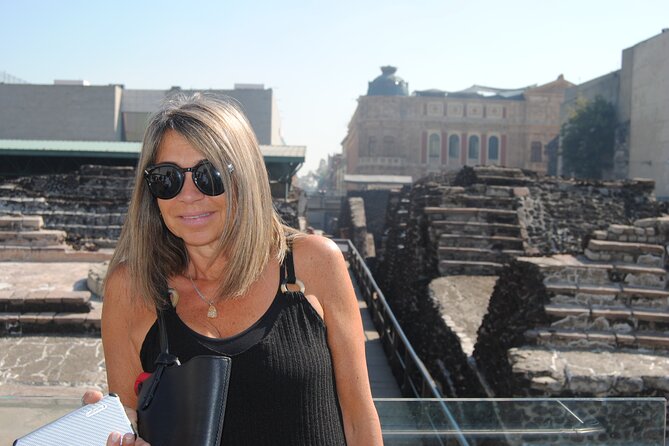
Plaza de Santo Domingo offers a change in mood. Here, the guide discusses the viceroyalty of New Spain, trade in spices and goods with Asia, the Spanish Inquisition, and French attempts to conquer Mexico.
That list may sound broad, but it reflects what makes the center so useful for learning. Mexico City was not an isolated colonial town. It was linked to trade routes, church power, imperial politics, and conflicts that reached far beyond the square.
The stop lasts about 15 minutes and is free. You will likely spend much of it looking at the surrounding buildings while the guide fills in the political and commercial background.
Resting at Plaza Tolsa with local context
Plaza Tolsa is a practical pause in the route. You stop in the shade and talk about subjects that connect the past to daily Mexican life: indigenous languages, Day of the Dead traditions, music, politics, and food.
This is one of the more personal parts of the tour because guides can bring their own perspective. Luis, for example, is praised for sharing useful recommendations and a strong sense of connection to Mexico City.
You also see the equestrian statue of Charles IV, often called the Little Horse, along with the exterior of the National Museum of Art and the Mining Palace. The square offers a chance to rest, but do not expect a long seated break. The stop is listed at about 20 minutes.
For me, this section helps prevent the tour from becoming a string of old facades. You get a chance to ask how historical themes still appear in language, food, celebrations, and public life.
The archaeological window and the city’s buried layers
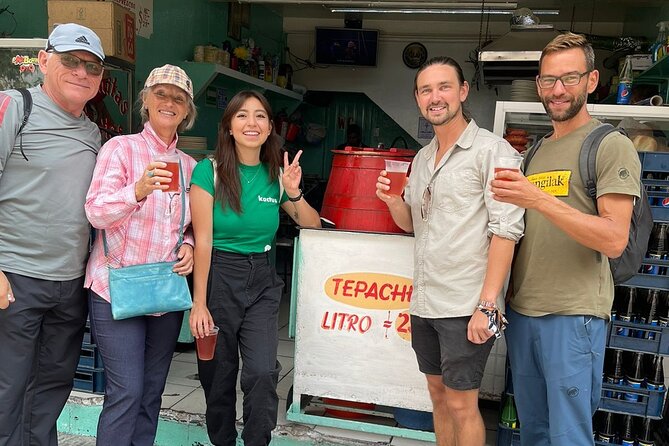
The Ventana Arqueologica is a short stop, only about five minutes, but it makes a memorable point. Through an opening beneath a street, you see evidence of the past near the main temple.
The guide explains how it was found and why many buildings in the center conceal earlier layers. Mexico City is not built on a blank surface. Its streets and foundations often sit above older structures, which makes even a quick look through a window meaningful.
Do not expect a long archaeological visit here. The value is the idea: the city’s past is not only displayed in museums. It can be directly beneath a sidewalk or building.
Palacio de Bellas Artes and the grand finish
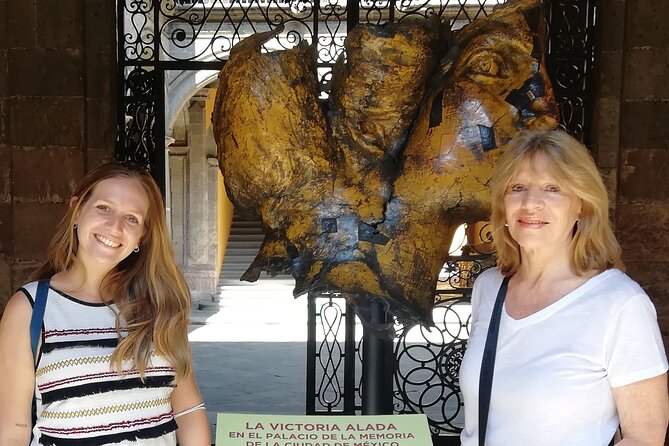
Palacio de Bellas Artes is one of the city’s essential sights. The tour spends about 15 minutes discussing its exterior and artistic importance.
The building is striking at first glance, with an exterior that reflects European design and a cultural role tied to Mexico’s own artistic identity. The guide helps you see it as more than a photogenic stop.
Admission is not included, and the tour does not promise a full interior visit. If you want to see the murals and performance spaces inside, return separately when you have more time.
The stop works well near the end because by now you have seen the city’s main historical layers. Bellas Artes then brings the focus to art, public culture, and the image Mexico City presents to the world.
Palacio Postal and the House of Tiles
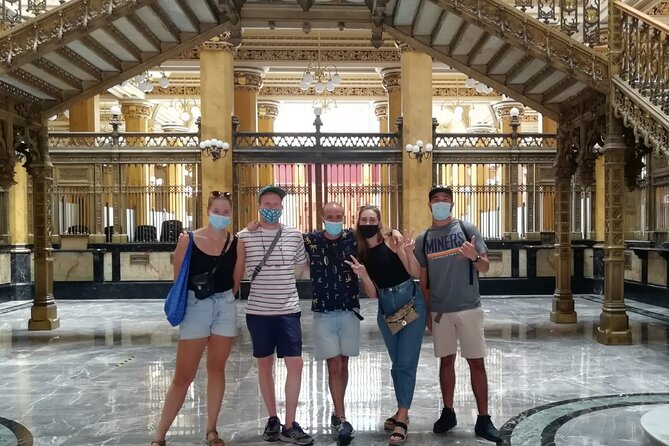
The Palacio Postal is still in operation, which gives the building a practical interest beyond its decoration. The guide explains the economic and political meaning of creating such a grand public palace.
You see it from outside, and admission is not included. That is enough for a quick introduction, but you may want to return if ornate interiors and historic public buildings are high on your list.
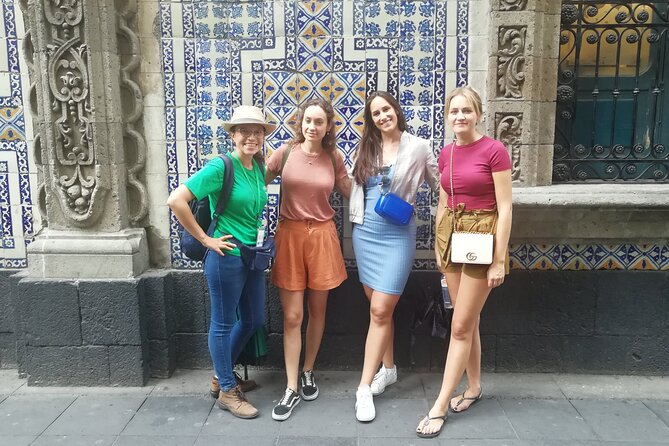
The last major stop is the House of Tiles, one of the city’s most photographed buildings. Its blue-and-white tile facade makes it easy to recognize, and the guide explains why it became such an icon of the center.
The tour ends near Edificio Guardiola, beside Bellas Artes and the House of Tiles. That location is useful. You are already in a central area with several places worth visiting on your own, rather than being left far from the route.
Walking conditions, group size, and timing
The tour lasts about three hours and is capped at 10 people. That is a meaningful advantage in the historic center. A small group is easier to gather at crossings, easier to hear, and more flexible when someone has a question.
You should still prepare for a steady walk. Some streets are cobbled, and there may be few places to sit. Mexico City’s altitude can make the route feel harder than the distance suggests, especially if you have just arrived or are not used to walking in the sun.
Wear comfortable shoes, carry water, and bring sun protection. Ask for a shade break if you need one. Guides have been praised for watching the heat, helping with street crossings, and making room for bathroom breaks.
The pace can slow if someone in the group has trouble walking. One departure did not reach every planned stop because of this. That is not a flaw in the route so much as a reminder that a small group still has to move together.
The tour is offered in English, and service animals are allowed. It is near public transportation, but transportation to the meeting point is not included. Most people can participate, though the walking surface and altitude deserve honest consideration.
Value, gratuities, and cancellation terms
The supplied details do not give a fixed price, so I cannot judge the exact cost in pesos or dollars. The value depends on the amount charged, but the route includes about three hours of guiding, a small group, the Ministry of Education murals, and the archaeological window.
One point deserves attention: this is marketed through a paid booking service, while the format resembles a free walking tour. One person felt it would be better to pay a college student directly. You should compare the listed price with local free-tour options before booking, then decide how much you value advance confirmation, a capped group, and the particular route.
Tips are not included. If your guide, such as Fernanda, Luis, Alexia, or Nat, gives you a useful introduction and thoughtful answers, plan to tip separately.
You can cancel up to 24 hours before the start for a full refund. Inside that window, changes and refunds are not accepted. Poor weather or failure to reach the minimum group size can lead to a new date or full refund.
Who should book this Mexico City walk
I would choose this tour for a first day or second day in Mexico City. It gives you a map in your head, introduces the main buildings, and helps you decide where to return for a longer visit.
It suits you best if you:
- Want a broad introduction to Mexican history and present-day culture
- Prefer walking and conversation to a bus tour
- Enjoy architecture, murals, archaeology, and public squares
- Want an English-speaking guide who can answer questions
- Are comfortable walking for three hours on uneven streets
It may not suit you if you need frequent seating, want detailed interior tours, or prefer to explore each museum at your own pace. The cathedral, Palacio Postal, and Bellas Artes are mainly explained from outside, and Templo Mayor receives a short exterior introduction rather than a full museum visit.
Should you book it?
Book this walk if you want Mexico City’s historic center to make sense quickly. The best parts are the clear progression from Templo Mayor to the cathedral, the Diego Rivera murals, the archaeological window, and the chance to discuss food, language, music, and politics with a local guide.
Before paying, check the current price against free walking tours in the area. If the cost feels fair for a small group and a structured route, this is a practical and engaging introduction. Just bring water, wear good shoes, and leave room in your schedule to revisit the sites that deserve more time.
FAQ
How long does the walking tour last?
The tour lasts approximately three hours.
Where does the tour begin?
It begins at Plaza de la Constitución, also known as the Zócalo, in Mexico City’s historic center.
Where does the tour end?
It ends at Edificio Guardiola, near the Palace of Fine Arts and the House of Tiles.
Is the tour offered in English?
Yes. The walking tour is offered in English.
How large is the group?
The maximum group size is 10 travelers.
Are entrance tickets included?
Admission is included for the Museo Vivo del Muralismo and the Ventana Arqueologica. The cathedral, Palacio Postal, and other listed sites are explained from outside, and some admissions are not included.
What happens if I cancel?
You receive a full refund if you cancel at least 24 hours before the experience starts. Cancellations or changes made within 24 hours are not refunded or accepted.
More Walking Tours in Mexico City
- Frida Kahlo VIP [Museum Tickets Included] Walk, Markets & Churros
★ 5.0 · 982 reviews - Anthropology Museum Private Experience Walking Tour
★ 5.0 · 355 reviews - Mexico City: Lucha Libre Show, Walking Tour & Tequila
★ 4.6 · 156 reviews - Mexico City: Diego Rivera’s Murals Guided Walking Tour
★ 5.0 · 49 reviews
Just added around Mexico City
- Kayaking on the Island of Sacrifices★ 5.0 · 49 reviews
- Paragliding in Valle de Bravo★ 5.0 · 188 reviews
- Hot Air Balloon Flight and Tour of the Majestic Pyramids★ 4.5 · 38 reviews
- Balloon flight / Breakfast in the cave / CDMX pick-up + Pyramids★ 5.0 · 54 reviews
- Hot air balloon ride with breakfast in Cueva from CDMX★ 5.0 · 47 reviews
- Africam safari (private tour)★ 5.0 · 33 reviews
- Lucha Libre, Tacos, Margaritas,Tequila and Night Market Tour★ 5.0 · 64 reviews
- Riviera Maya: Frida Kahlo Museum Guided Tour 2025★ 4.1 · 54 reviews
Historical Tours, compared.


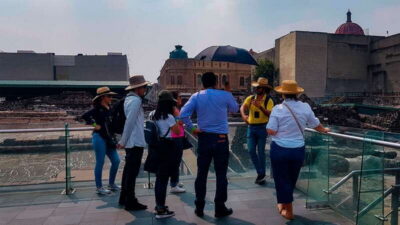

Mexico City Historical Centre Food Tour with 7 Authentic Tastings
Read our review →
Historical and Cultural Walking Tour of San Miguel de Allende
Read our review →
Historical and Cultural Walking Tour of San José del Cabo
Read our review →
Historical & Cultural Walking Tour of San Miguel de Allende
Read our review →Browse the lists this tour appears in