
Reviewed · MUSEUMS
Mexico City: Anthropology Museum Tour with Historian
The best thing about this three-hour museum tour is its big-picture approach. Instead of treating the Olmec, Mexica, Teotihuacán, and Maya galleries as separate rooms, your historian links their symbols, materials, beliefs, and artistic habits across centuries. The result is a clearer story of Mesoamerica, not a parade of famous objects.
I like two things here. First, guides such as Natalia and Hector bring academic training without making the visit feel like a lecture hall. Second, the route gives proper attention to objects many visitors might pass quickly, from agave fibers and natural pigments to the engineering behind Mexica chinampas. The main consideration is time: the museum is enormous, so three hours gives you a strong framework, not every gallery.
Key points to know before you book
- The Sun Stone is explained in context: You learn why calling it the Aztec Calendar is misleading and what the monument actually represents.
- A historian leads the way: Natalia and Hector are especially noted for clear explanations, humor, strong English, and their ability to answer questions.
- The route connects several cultures: Olmec influence, Teotihuacán’s mixed population, Mexica city planning, and Maya writing all fit into one story.
- The museum’s architecture is part of the visit: The opening covers the building, murals, replicas, and famous courtyard fountain.
- The group is limited to 10: Headsets are supplied for larger groups, and the tour is offered in English or Spanish.
- Allow room in your schedule: The planned time is three hours, but the museum is large and some visits have lasted considerably longer.
Why a guide changes the Anthropology Museum
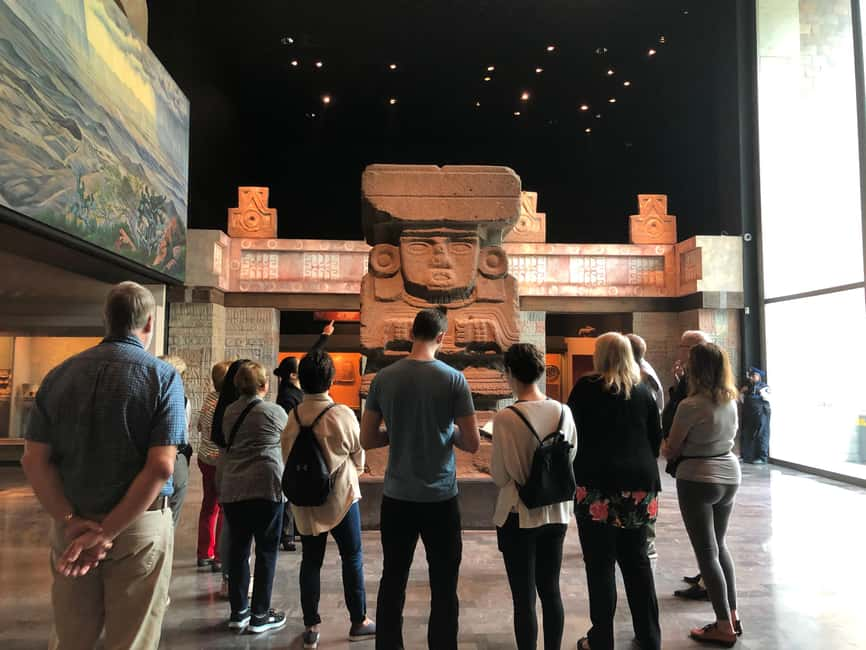
Mexico City’s National Museum of Anthropology can easily overwhelm you. Its galleries cover the major cultures of ancient Mexico, and the best-known pieces are often surrounded by objects whose importance is not obvious at first glance.
A historian gives you a thread to follow. You learn not only what an object is, but why it matters, how it was made, and what later cultures borrowed or changed. That is especially useful when a carved symbol, a ritual garment, or a ceramic vessel seems beautiful but unfamiliar.
The guides are a major part of the value. Natalia is described as having advanced degrees in art history and using slides or images on an iPad to make her explanations easier to follow. Hector brings a background as a former college professor, with a strong speaking voice and an easy way of handling detailed questions.
This is not a tour for rushing from one famous object to the next. It is aimed at helping you read the museum. If you enjoy asking follow-up questions, the small group makes that much easier than a large, fixed lecture.
More Museums in Mexico City
- Chapultepec Castle & Anthropology Museum Tour
★ 4.5 · 1,348 reviews - Frida Kahlo VIP [Museum Tickets Included] Bike, Markets & Churros
★ 5.0 · 1,072 reviews - Anthropology Museum Guided Tour
★ 4.5 · 1,035 reviews
Starting with the museum’s unusual design
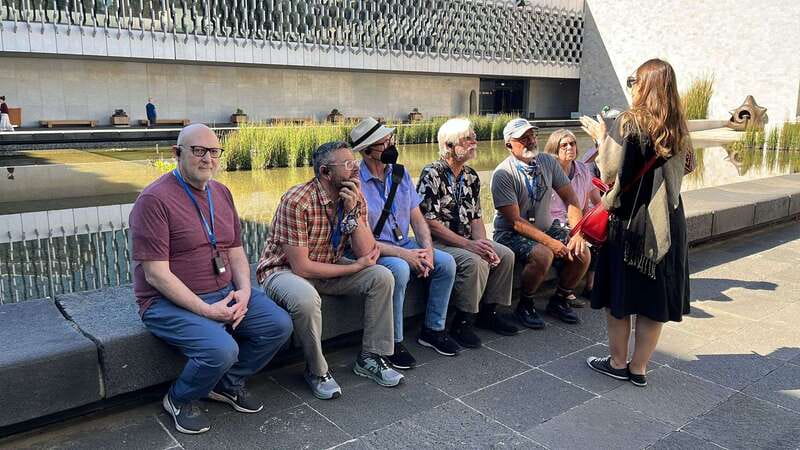
The visit begins in the main lobby, near the ticket booth, where you meet a guide carrying the Walk Mexico project logo. There is no hotel pickup, so you need to make your own way to the museum. Admission is included.
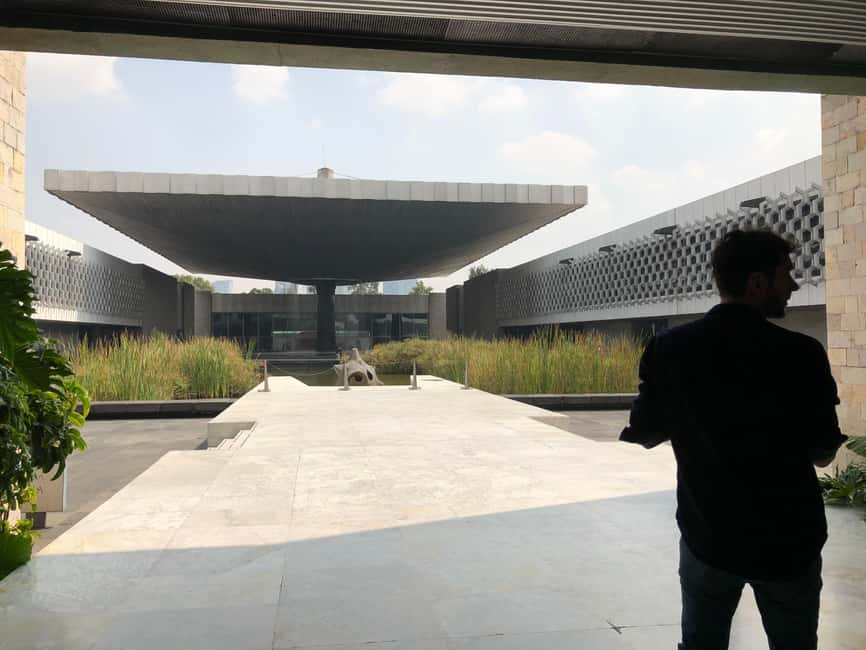
Before focusing on ancient objects, the tour introduces the building itself. That is a smart opening. The museum was designed as more than a container for artifacts, and its architecture uses murals, symbolism, open spaces, and monumental replicas to honor the cultures inside.
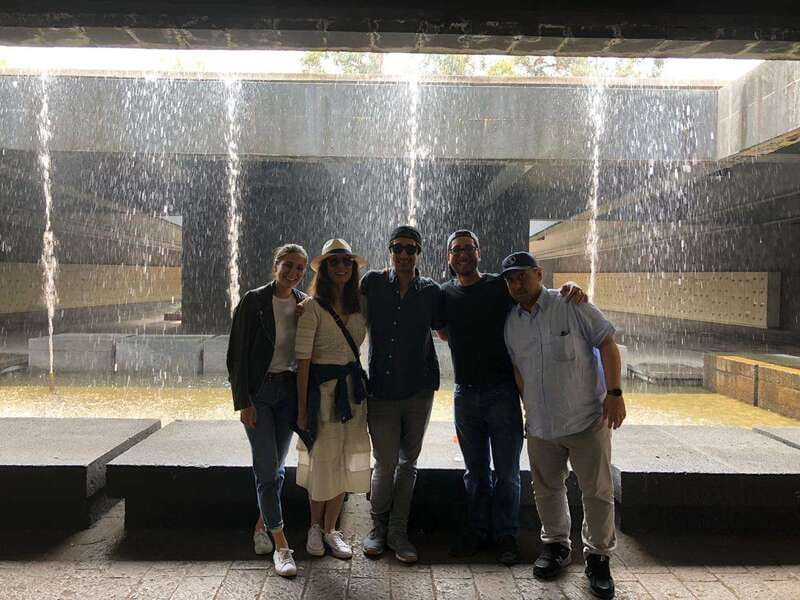
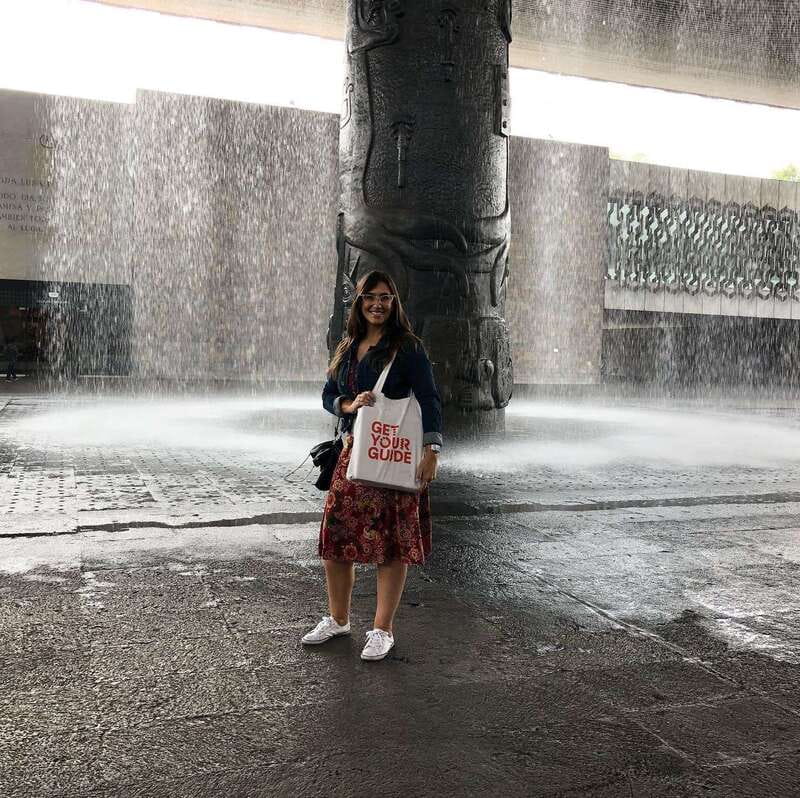
You then reach the famous central courtyard and its enormous fountain. The water feature is one of the museum’s most memorable sights, but the guide gives it more meaning than a quick photograph can provide. You learn how the structure fits the museum’s larger effort to present Mesoamerican ideas through modern architecture.
This opening also helps you get oriented. The museum’s scale can be confusing, particularly if you have only a morning or afternoon available. Knowing the purpose of the building and the route ahead makes the rest of the visit easier to follow.
What Mesoamerica actually means
One of the most useful early lessons concerns the word Mesoamerica. It does not refer to one empire or a single people. The term describes a broad cultural region where distant societies shared certain practices, ideas, languages, farming systems, and views of the universe.
That distinction matters. It prevents you from lumping every pre-Hispanic culture together, while also showing why connections appear across such a large area.
You will see how farming, trade, religious symbols, artistic forms, and materials traveled between communities. Some similarities came from contact, while others developed in different places for their own reasons. The guide helps you separate those possibilities instead of treating every resemblance as proof of direct influence.
For a first visit, this framework is invaluable. It turns the museum from a collection of isolated civilizations into a long conversation among peoples who lived in different periods and places.
Agave, looms, and the practical side of ancient life

The section on textiles and natural materials adds welcome balance to the grand stone monuments. You see looms, garments, and woven items from across Mesoamerica while learning how people spun, dyed, and worked fibers.
Agave is especially interesting because it was far more than a plant used for drinks. Its fibers could become cordage and textiles, while other parts served practical household and tool-making needs. The tour explains how a single plant could support daily life in several ways.
Natural pigments also receive attention. Color was not simply decoration. The process of making dyes and applying them to cloth or objects required local materials, technical skill, and knowledge passed between generations.
I like this part because it brings ancient societies down to human scale. You are not only looking at rulers, temples, and ceremonial art. You are also considering the work of spinning, weaving, coloring, building, and feeding a city.
A completely different kind of day out, same trip:
- Balloon flight + Breakfast in cave + Pyramids + Pick up CDMX.
★ 5.0 · 6,335 reviews - Balloon flight + pick up in CDMX + Breakfast in Cave + Pyramids
★ 5.0 · 5,651 reviews - Balloon Flight + Cave Breakfast + Pick Up from CDMX or We Fly
★ 5.0 · 4,410 reviews - Hot Air Balloon Flight with Breakfast Cave and Pyramids Tour
★ 5.0 · 2,066 reviews
Cultural exchange in ritual clothing and decoration

The route then moves through ritual attire and ceremonial objects. This is where the idea of cultural blending becomes more visible.
Festivals, body decoration, clothing, and religious objects could express identity, rank, belief, and local tradition at the same time. The guide explains how these forms changed through long periods of contact, rather than presenting each culture as sealed off from the others.
This is also a good place to ask questions. The objects can look similar at first, but small changes in pattern, material, or use may reveal a different setting or purpose. A trained guide helps you notice those differences without drowning you in dates.
If you are traveling with children or adults who do not usually visit museums, this section can be a friendly entry point. Clothing, color, and personal decoration are easy to connect with, and the discussion leads naturally into larger questions about power and belief.
The Olmec colossal head and the problem of influence
The Olmec gallery contains one of the museum’s great attention-grabbers: a colossal head. Its size and expression make it easy to remember, but the more useful question is what it tells you about the society that made it.
The tour presents the Olmec as a foundational culture in Mesoamerican history, often called the mother culture because of its broad influence on later peoples. You learn about artistic styles, religious concepts, and visual forms that appear again in later traditions.
That label needs care. It can make history sound too simple, as if one culture created everything that followed. A good explanation instead shows influence as a process of exchange, adaptation, and reinterpretation.
The colossal head works well as a starting point because it is so physical. You can see the scale, carving skill, and force of the image before turning to more subtle links among cultures. The guide gives the object a place within a larger story instead of leaving it as a stand-alone photo stop.
The Mexica city beneath modern Mexico City

The Mexica gallery brings the story closer to the city outside the museum. Here you examine key material connected with Templo Mayor, the Mexica capital, and the engineered chinampa system.
The chinampas were artificial agricultural islands, supported by waterways, bridges, and a wider hydraulic network. A detailed scale model helps show how the city worked and how much of that ancient urban world now lies beneath colonial and modern Mexico City.
This is one of the strongest parts of the route for anyone curious about the city you are visiting. The Mexica capital was not a crude settlement that happened to grow large. It relied on planning, farming systems, transport routes, water control, and political power.
Then comes the Sun Stone, often called the Aztec Calendar. The tour explains why that popular name is inaccurate and guides you through the monument’s imagery and meaning. You do not need prior knowledge to follow the explanation, but you will appreciate the stone more if you take time to look at its layers of symbols rather than simply photograph the center.
The gallery can be busy, and the famous objects naturally attract crowds. A guide helps you focus, but you should expect some moments when you need to wait for a clear view.
Teotihuacán as a city of many peoples
Teotihuacán is often introduced through its enormous pyramids, but the museum presents another important idea: this was a multicultural metropolis shaped by several peoples.
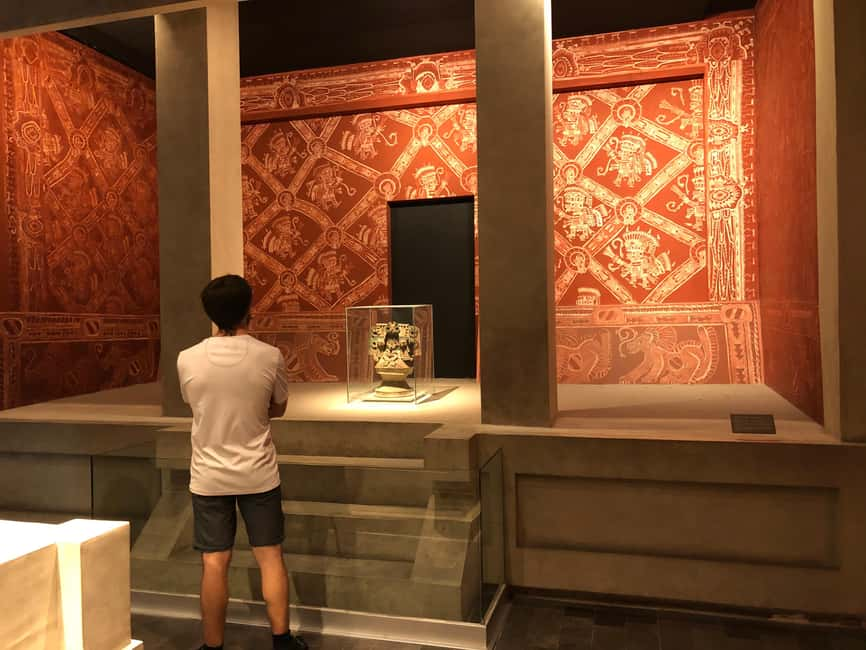
The gallery includes ceramics, obsidian objects, mural fragments, and colorful architectural replicas. Together, these pieces show a sophisticated city with skilled craft production, wide connections, and a distinctive visual culture.
The guide discusses theories about how Teotihuacán rose and why it later declined. Some questions remain open, so the tour should not give you a falsely neat answer. That uncertainty is part of the interest.
I find the multicultural focus particularly valuable. It challenges the habit of assigning a single identity to a complex city. You look at evidence from art, materials, and urban life, then consider how different communities may have lived and worked within the same major center.
The replicas help here because they restore some sense of color and scale. Museum displays can make ancient buildings look pale and fragmentary. Seeing how painted surfaces and architectural decoration may have worked gives you a more useful picture.
Maya writing and the story behind decipherment

The Maya gallery brings the tour to writing, portraiture, vessels, and jade. Ceramic portraits and painted containers show a high level of artistic control, while the jade carvings reveal the status and symbolic force of rare materials.
The story of Maya writing is one of the most memorable parts of the experience. Its decipherment involved colonial records, missing or destroyed manuscripts, surviving inscriptions, and the work of several scholars. The account includes a Russian soldier from the Second World War whose ideas helped move the process forward.
This is not just a tale about translating signs. It shows how knowledge can be lost, misunderstood, and gradually recovered through patience, comparison, and new ways of seeing old evidence.
If you have ever looked at Maya glyphs and felt that they were attractive but unreadable, this section changes that. You begin to understand that the signs recorded language and history, not merely abstract decoration.
Pakal’s tomb and a museum theft
The route ends at a replica of Pakal’s tomb, one of the museum’s most dramatic spaces. The setting gives the Maya gallery a strong final image and brings together the ideas of kingship, burial, art, and belief.
You also hear the strange story of the museum robbery on Christmas Eve in 1985, when Pakal’s mask and many other treasures were stolen. It is an unusual ending to a history tour, but it also underlines how famous and valuable these objects are.
The replica lets you examine the tomb setting without the practical limits of an archaeological site. You can focus on the design and symbolism while the guide explains why Pakal remains such an important figure.
Is $175 a fair price?
At $175 per person, this is not a budget museum visit. You can enter the museum without paying for a private historian, so the price only makes sense if you want interpretation, structure, and the chance to ask questions.
The value improves if you are short on time or visiting the museum for the first time. Three hours of focused guidance can save you from wandering through galleries without understanding how the pieces relate. It also gives you access to an academic guide rather than a general escort.
The small-group limit of 10 matters. A quieter group makes it easier to hear explanations, ask about a particular object, and stay with the story. Headsets are included when needed for larger groups.
There is also a practical point: the three-hour length is an estimate, not a guarantee that you will see everything. Some visits have stretched to around four and a half hours. If your schedule is tight, do not book an important appointment immediately afterward. If you have time, you can stay in the museum after the guided portion and continue on your own.
Who will get the most from this tour?
This tour suits you if ancient American cultures feel fascinating but confusing. It is also a strong choice if you want to understand Mexico City through the Mexica city beneath it, rather than seeing the museum as a separate attraction.
History fans will appreciate the connections among material, writing, art, and urban planning. Families can benefit from the stories and visual aids, though an adult must accompany children. The clear explanations also work well for people with little previous knowledge of Mexican history.
You should think twice if you prefer to move alone at your own speed. A guide-led visit follows a set route, and three hours can feel long if you mainly want quick photographs. The museum is also so large that you may want a second, self-guided visit for galleries not covered on the main route.
The experience is wheelchair accessible, and it is offered in English or Spanish. You meet at the museum lobby near the ticket booth, and transport, food, and drinks are not included.
Should you book it?
Book this tour if you want the Anthropology Museum to make sense as one connected story. Natalia and Hector are particularly strong choices if you value clear teaching, humor, and answers to detailed questions. Their academic backgrounds add substance without making the visit feel stiff.
Skip it if you are happy to read labels, choose your own galleries, and spend less than $175. But for a first visit, a small group, and a museum this large, the guided structure is the main reason to pay. You leave with more than a list of famous objects: you understand how symbols, materials, cities, and beliefs crossed Mesoamerica over time.
FAQ
How long does the Anthropology Museum tour last?
The scheduled duration is three hours. Because the museum is very large and discussions may continue, you should allow extra time in your day.
What languages are available?
The tour is offered in English and Spanish.
Is museum admission included?
Yes. The museum ticket is included in the price.
Where do I meet the guide?
You meet the guide in the museum’s main lobby, near the ticket booth. The guide will have the Walk Mexico project logo.
What is the maximum group size?
The tour is limited to 10 participants. Headsets are provided for larger groups so you can hear the guide.
Can I cancel or pay later?
You can cancel up to 24 hours before the activity for a full refund. Reserve now and pay later is available, so you do not need to pay at the time of booking.
Just added around Mexico City
- Kayaking on the Island of Sacrifices★ 5.0 · 49 reviews
- Paragliding in Valle de Bravo★ 5.0 · 188 reviews
- Hot Air Balloon Flight and Tour of the Majestic Pyramids★ 4.5 · 38 reviews
- Balloon flight / Breakfast in the cave / CDMX pick-up + Pyramids★ 5.0 · 54 reviews
- Hot air balloon ride with breakfast in Cueva from CDMX★ 5.0 · 47 reviews
- Africam safari (private tour)★ 5.0 · 33 reviews
- Lucha Libre, Tacos, Margaritas,Tequila and Night Market Tour★ 5.0 · 64 reviews
- Riviera Maya: Frida Kahlo Museum Guided Tour 2025★ 4.1 · 54 reviews
Museums, compared.
Xochimilco, Coyoacan, Frida Kahlo Museum & Murals Tour
Read our review →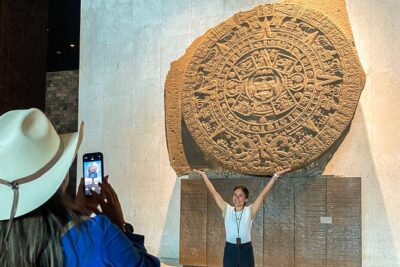
Chapultepec Castle & Anthropology Museum Tour
Read our review →
Frida Kahlo VIP [Museum Tickets Included] Bike, Markets & Churros
Read our review →
Frida Kahlo VIP [Museum Tickets Included] Walk, Markets & Churros
Read our review →
Exclusive Tour Frida Kahlo Museum – Small Groups
Read our review →
Coba Multun-Ha Cenote Tulum and Mayan Museum Small Group
Read our review →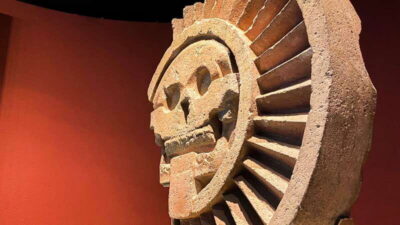
Browse the lists this tour appears in