
Reviewed · MUSEUMS
Guided Tour of the Museum of Anthropology
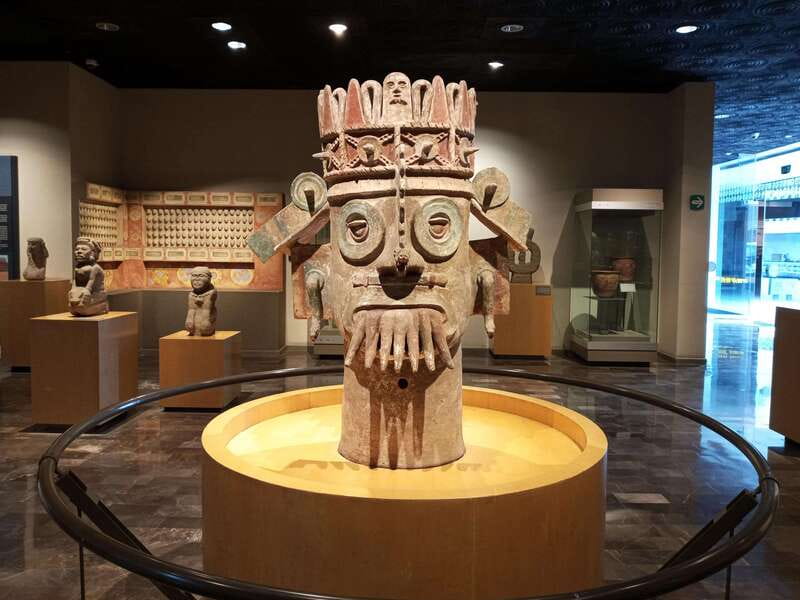
Mexico City’s Museum of Anthropology is huge, and its best-known objects can blur together without a good guide. This three-hour visit gives you a clear path through the museum’s major rooms, from Teotihuacan and Mexica art to Maya, Toltec, Olmec, and Gulf cultures. The Sun Stone, Coatlicue, Olmec Heads, and Mask of Pakal provide the big visual moments.
I like the small group, limited to eight, and I like that the guides, including Edith and Hector, focus on symbols and meaning rather than simply naming objects. The main trade-off is time: three hours allows for a thoughtful route through selected rooms, not every gallery in this very large museum.
Key points
- Three hours with an English-speaking Federal Tour Guide, usually offered in the morning or afternoon
- Small groups of up to eight people, useful in busy exhibition rooms
- Major cultures covered, including Teotihuacan, Mexica, Maya, Toltec, Olmec, and Gulf cultures
- Iconic objects explained in context, including the Sun Stone, Coatlicue, Olmec Heads, and Mask of Pakal
- Museum gardens included, giving the visit a calmer outdoor finish
- $38 per person, with admission included and free cancellation up to 24 hours before the tour
Why the Museum of Anthropology Needs a Guide

The Museum of Anthropology is not a quick stop where you glance at a few famous objects and leave. Its rooms cover major cultures that inhabited and continue to shape Mexico, and the displays can feel demanding if you are not familiar with the symbols, names, and periods.
I find a guide especially useful here because little of the museum signage is translated into English. You can certainly look at the objects on your own, but an English-speaking expert helps connect what you see to the wider story of Mexico.
The tour also discusses the construction of the museum and its purpose. That gives the building a place in the visit, rather than treating it as a plain container for artifacts. You learn why the museum was made to bring these cultures together and how the exhibition rooms and gardens work as one planned experience.
More Museums in Mexico City
- Chapultepec Castle & Anthropology Museum Tour
★ 4.5 · 1,348 reviews - Frida Kahlo VIP [Museum Tickets Included] Bike, Markets & Churros
★ 5.0 · 1,072 reviews - Anthropology Museum Guided Tour
★ 4.5 · 1,035 reviews
Meeting Beside the Mexican Flag

You meet at the entrance to the Museum of Anthropology, next to the Mexican flag. This is a simple location, but take care to arrive at the correct entrance since the museum grounds are substantial.
The tour is offered in English and led by a Federal Tour Guide. The guide names supplied for this experience include Edith and Hector. Edith is praised for a friendly manner, a good sense of humor, and an easy way of answering questions before moving the group along. Hector is noted for explaining both the objects and the symbolism found in them.
That difference matters. A museum guide can either rush you from display to display or let one object swallow half the morning. The best balance here seems to be a focused route with time for questions. You should still arrive ready to walk and stand for much of the three hours.
Teotihuacan and the First Major Galleries
The route includes the Teotihuacan rooms, one of the essential parts of the museum’s ancient Mexico collection. This section helps you place major architectural and artistic traditions within the larger story of the cultures that developed in Mexico.
The value of a guided visit is not just hearing the name Teotihuacan. You can ask about the meaning of the objects, their symbols, and their place in Mexican history. A guide can also point out visual ideas that return elsewhere in the museum, which helps you recognize them later during your trip around Mexico.
This is a good early part of the tour for getting your bearings. Instead of seeing unrelated stonework and sculpture, you begin to understand that the museum is organized around distinct cultures and periods. The route is selective, so you will not see every piece in the Teotihuacan rooms.
Mexica Art and the Sun Stone

The Mexica galleries contain some of the museum’s most famous objects, including the Sun Stone. This is the sort of display that can attract a crowd, and it is easy to take a quick photo and move on without understanding what you are looking at.
A guide gives the object a fuller role in the tour by explaining its symbolism and connection to Mexica culture. You can ask questions at the moment they occur, rather than trying to decode a Spanish-language label later.
The Sun Stone is also one of the places where the tour’s focus on symbols becomes useful. The guide does not simply point out an impressive carved disk. You are encouraged to look at its details and understand why it has become such a powerful image of Mexico’s ancient past.
The Mexica section is likely to be one of the busiest parts of your visit. A group limited to eight is helpful, although it cannot remove the normal crowds around the museum’s best-known pieces. Stay close to your guide and expect to pause rather than stroll freely through every case.
A completely different kind of day out, same trip:
- Balloon flight + Breakfast in cave + Pyramids + Pick up CDMX.
★ 5.0 · 6,335 reviews - Balloon flight + pick up in CDMX + Breakfast in Cave + Pyramids
★ 5.0 · 5,651 reviews - Balloon Flight + Cave Breakfast + Pick Up from CDMX or We Fly
★ 5.0 · 4,410 reviews - Hot Air Balloon Flight with Breakfast Cave and Pyramids Tour
★ 5.0 · 2,066 reviews
Coatlicue and the Power of Sculpture

Coatlicue is another major object included in the route. The sculpture has a strong physical presence, and it can be difficult to take in all its details in a quick visit.
This is where a guide’s interpretation makes a clear difference. The tour places the sculpture within the belief systems and visual language of the Mexica world. You can take time to ask about its form, its symbolism, and how it relates to other objects in the museum.
I like this stop because it shows why the museum is more than a collection of beautiful things. Some objects are impressive because of their size or carving. Others ask you to think about the culture that made them. Coatlicue gives the tour a chance to discuss both.
Maya Rooms and the Mask of Pakal

The Maya galleries form another central part of the three-hour route. Here, the Mask of Pakal provides a memorable focal point.
The guide explains the object and the ideas attached to it, helping you look beyond its surface. You can also connect what you see in the Maya rooms with recurring symbols and artistic choices discussed earlier in the visit.
A useful feature of the tour is its broad reach. You are not spending all three hours on one famous culture or one collection. Instead, the route moves across several important parts of Mexico’s past. That makes the experience a good introduction if you are visiting Mexico City for the first time or if you want a clearer framework for future archaeological sites.
The drawback is simple: the museum contains far more Maya material than you can cover in one guided route. If this culture is your main interest, plan to stay longer after the tour, assuming you have the energy and time.
Toltec, Olmec, and Gulf Culture Displays

The itinerary also includes Toltec, Olmec, and Gulf of Mexico cultures. This wider selection prevents the tour from presenting Mexico’s past as a single, simple story.
The Olmec Heads are among the key pieces highlighted. Their scale and distinctive faces make them easy to remember, but the guide’s explanation gives them more meaning than a photograph alone can provide.
The Toltec and Gulf culture rooms add further range to the visit. You will see how different cultures are represented in the museum and how the guide connects them to the broader story of the nations that inhabited Mexico.
This part of the tour is particularly useful if your knowledge begins and ends with the Maya and Mexica. It gives you a wider view of the museum and makes clear that Mexico’s ancient past includes many different traditions, not just the most famous names.
The Gardens Complete the Museum Visit

The museum gardens surround the exhibition halls and are included in the tour. They are not simply a route between rooms. They help create a change of pace after several hours indoors.
I appreciate this outdoor portion because the museum visit can be visually and mentally intense. The gardens give you a chance to breathe, look around, and see how the building and outdoor areas were planned together.
The gardens also help the tour feel like a complete visit rather than a string of indoor stops. You move from objects and explanations to a quieter setting that complements the exhibition rooms.
Do not expect the gardens to replace the galleries. Their value is as a pause and as part of the museum’s design. The core of the experience remains the guided route through the major cultural collections.
A Focused Three Hours, Not the Entire Museum

Three hours is long enough for a serious introduction, but not long enough to see everything. One useful approach is to treat the tour as your orientation, then return on your own to rooms that caught your interest.
The guides are praised for explaining objects in depth, and that can mean covering a relatively small portion of the museum. I consider this a strength if you want context and time for questions. It is a limitation if your goal is to walk through every gallery in one morning.
Give yourself extra time after the tour if you want to explore independently. The museum’s dining room can also be useful for a break afterward. Food is not included, and lunch is not available there until 1 pm, so a late breakfast or an early plan for food may help.
Comfortable shoes are important. You will spend three hours walking through large rooms and the gardens, with stops to listen and discuss. This is not the right place for stiff footwear or a rushed schedule.
What the $38 Price Delivers

The price is $38 per person, including museum admission and the guided visit by a Federal Tour Guide. Food, drinks, and souvenirs are extra.
For me, the value rests on the interpretation rather than the ticket alone. You are paying for a small group, an English-speaking guide, and a planned route through a museum that can otherwise feel overwhelming. The price makes more sense if you want help understanding symbols, objects, and the relationship between the cultures.
If you already have strong knowledge of Mexican history and prefer to read every label at your own pace, you may find the guided format less necessary. You can still use the tour as a shortcut to the museum’s major pieces, but the added value depends on how much you want explanation and conversation.
The flexible booking terms also reduce the risk. You can reserve and pay later, and cancellation is free up to 24 hours in advance. That is useful when you are organizing several Mexico City plans around weather, energy, and museum hours.
Who Will Get the Most From This Tour
I would choose this experience if you want a clear introduction to Mexico’s ancient cultures without trying to manage the museum alone.
It suits:
- First-time visitors to Mexico City
- English-speaking visitors who want more than untranslated labels
- People interested in symbols, sculpture, and cultural context
- Couples and families who prefer a small group
- Anyone who wants a focused introduction before exploring more archaeological sites
- Visitors who enjoy asking questions during a museum visit
It may be less suitable if you want a silent, self-directed visit or if you hope to cover every gallery in three hours. The guide’s explanations take time, and that is exactly why the route cannot include everything.
The tour also works well for visitors who want history connected to present-day Mexico. The focus is on the cultures that inhabited and continue to inhabit the country, so the visit is not treated as a distant, sealed-off past.
Practical Advice Before You Go
Wear comfortable shoes and allow enough time to reach the entrance beside the Mexican flag. The tour is available in the morning and afternoon, so choose the time that leaves room for a slower museum visit afterward if you want one.
Keep your group small and close to the guide, especially around the Sun Stone and other famous displays. A group of up to eight is manageable, but the museum’s popular rooms may still have other people moving through them.
Bring questions. The guides are praised for responding clearly and then keeping the tour moving. That balance lets you ask about details without losing the structure of the visit.
If you want lunch in the museum dining room, remember that lunch is not available until 1 pm. Food and beverages are not included in the $38 price.
Should You Book the Museum of Anthropology Tour?
Book it if you want the Museum of Anthropology to make sense, not just look impressive. The English-speaking guides, small group, major cultural rooms, and explanations of the Sun Stone, Coatlicue, Olmec Heads, and Mask of Pakal give you a strong three-hour introduction.
Skip it only if you prefer to explore alone and are happy to spend extra time working through the displays without much English signage. For most first-time visitors, the guided format is the better value. It gives you a firm foundation, then leaves you free to return to the museum’s other rooms on your own.
FAQ
How long is the Museum of Anthropology tour?
The guided visit lasts three hours.
What language is the tour offered in?
The tour is offered in English with a live Federal Tour Guide.
What is included in the $38 price?
The price includes entrance to the Museum of Anthropology and the guided visit.
How many people are in the group?
The group is limited to eight participants.
Which cultures are covered?
The tour includes Teotihuacan, Mexica, Maya, Toltec, Olmec, and Gulf of Mexico cultures.
Which famous objects will I see?
The tour highlights the Sun Stone, Coatlicue, Olmec Heads, and Mask of Pakal.
Where do I meet the guide?
Meet at the entrance to the Museum of Anthropology, next to the Mexican flag.
Just added around Mexico City
- Kayaking on the Island of Sacrifices★ 5.0 · 49 reviews
- Paragliding in Valle de Bravo★ 5.0 · 188 reviews
- Hot Air Balloon Flight and Tour of the Majestic Pyramids★ 4.5 · 38 reviews
- Balloon flight / Breakfast in the cave / CDMX pick-up + Pyramids★ 5.0 · 54 reviews
- Hot air balloon ride with breakfast in Cueva from CDMX★ 5.0 · 47 reviews
- Africam safari (private tour)★ 5.0 · 33 reviews
- Lucha Libre, Tacos, Margaritas,Tequila and Night Market Tour★ 5.0 · 64 reviews
- Riviera Maya: Frida Kahlo Museum Guided Tour 2025★ 4.1 · 54 reviews
Museums, compared.
Xochimilco, Coyoacan, Frida Kahlo Museum & Murals Tour
Read our review →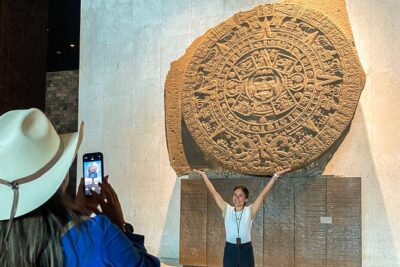
Chapultepec Castle & Anthropology Museum Tour
Read our review →
Frida Kahlo VIP [Museum Tickets Included] Bike, Markets & Churros
Read our review →

Frida Kahlo VIP [Museum Tickets Included] Walk, Markets & Churros
Read our review →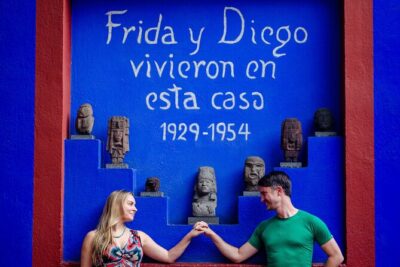
Exclusive Tour Frida Kahlo Museum – Small Groups
Read our review →
Coba Multun-Ha Cenote Tulum and Mayan Museum Small Group
Read our review →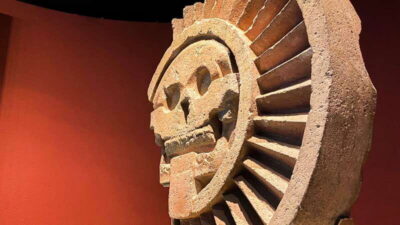
Browse the lists this tour appears in